
Quick Answer
The right hole saw for metal depends on the metal type, wall thickness, hole size, tool speed, cooling method, and how many repeat cuts the job requires. For thin steel panels and electrical boxes, a TCT cutter can be fast and stable when the drill is controlled. For stainless steel, thicker sheet, or mixed maintenance work, bi-metal or M42 options may be easier to manage because they tolerate interrupted cutting and moderate vibration better. The cleanest result comes from matching the cutter to the material and then using the correct pilot drill, arbor, speed, feed pressure, and coolant.
A hole saw for metal should not be chosen by diameter alone. A 25 mm hole in thin mild steel is a different job from a 60 mm opening in stainless sheet or a curved pipe wall. When the cutter style, drill setup, and workholding all match the application, the cut is smoother, the plug releases more predictably, and the tool lasts longer.
What Makes Metal Cutting Different From Wood or Plastic?
Metal is less forgiving than wood, plastic, or gypsum board. It conducts heat into the cutter, resists the teeth, and can harden or burr if speed and pressure are wrong. A hole saw for metal must keep its teeth engaged without rubbing. Too much speed creates heat. Too much pressure can break teeth, stall the drill, or distort thin sheet. Too little pressure lets the teeth polish the surface instead of cutting.
The workpiece also matters. Flat sheet metal can flex if it is not supported. Stainless steel can work-harden when the cutter rubs. Curved pipe can make the pilot drill walk. Painted panels can chip if the cutter grabs. In maintenance work, the operator may also have limited access, uneven surfaces, or existing wiring behind the panel.
For these reasons, the hole saw for metal should be viewed as part of a cutting system. The cutter, arbor, pilot drill, drill speed, lubrication, clamping, and chip clearing all decide whether the hole is clean or rough.
Match the Cutter Type to the Metal and the Job
The main comparison is between TCT, HSS, bi-metal, and M42 style cutters. Each can be useful, but each behaves differently. A hole saw for metal used in a production panel shop may need fast repeatability, while one used by a maintenance team may need broad compatibility and predictable handling.
| Cutter option | Best fit | Main advantage | Watch point |
|---|---|---|---|
| TCT hole saw | Sheet steel, metal panels, repeated holes | Fast cutting and strong tooth tips | Needs stable drilling and controlled feed |
| HSS hole saw | Lighter metal and general workshop use | Simple, economical, easy to understand | Can wear faster on harder materials |
| Bi-metal hole saw | Mixed metals, maintenance work, pipe and panel jobs | Tough body, flexible for varied use | Cutting speed must stay moderate |
| M42 bi-metal hole saw | Stainless steel and harder metal applications | Better heat and wear resistance | Still needs coolant and steady pressure |
| Arbor and pilot set | Any larger hole saw job | Keeps the cutter centered and replaceable | Poor arbor fit causes vibration and rough holes |
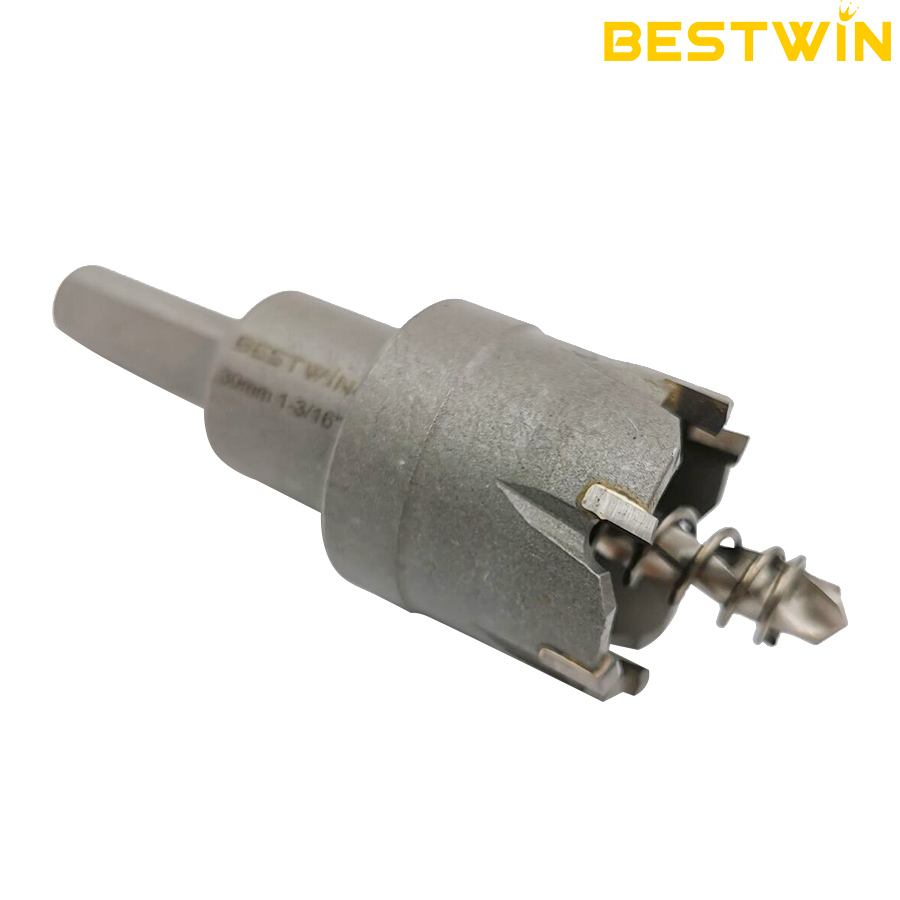
TCT options are common when speed matters. The carbide tips can cut cleanly through suitable metal, especially in sheet steel and panel applications. The operator must avoid side loading and chatter because chipped teeth can shorten tool life quickly. For repeat holes in controlled conditions, a TCT hole saw for metal can be efficient.
Bi-metal and M42 options are often useful when the job is less predictable. Maintenance teams may cut mild steel one day, stainless cover plates the next, and pipe or thin sheet later. A bi-metal hole saw for metal can tolerate more vibration than a rigid cutter, but it still needs the right speed and cooling.

Choose Diameter, Depth, Arbor, and Pilot Drill Together
Diameter is the visible choice, but it should not be the only one. A hole saw for metal also needs enough cutting depth, a compatible arbor, and a pilot drill that suits the workpiece. If the pilot drill is dull, too long, or poorly secured, the cutter can wander before the teeth engage. On thin sheet, that small movement may leave an oversized or uneven hole.
Arbor fit is especially important for repeat work. A loose arbor creates vibration, which leads to tooth damage and rough edges. A stable arbor helps keep the cutter square to the surface. When the hole diameter is large, the arbor and pilot drill do more work because the cutting force is farther from the center.
Cutting depth should be checked before starting. Some cutters are built mainly for sheet and panel openings, while others can handle deeper profiles. When the workpiece is thicker than the cutter depth, chips can pack inside the saw. Packed chips create heat and make plug removal difficult. The operator should pause, clear chips, and avoid forcing the cutter.
Control Speed, Feed, and Heat
Most poor cuts come from speed and heat. A hole saw for metal generally needs a slower speed than a similar cut in wood. Large diameters need slower speed than small diameters because the outer teeth travel faster. Harder metals also require lower speed and better cooling.
Feed pressure should be firm but controlled. If pressure is too light, the teeth rub and heat builds. If pressure is too heavy, the drill may stall or teeth may chip. A steady feed lets the cutter produce chips instead of dust or discoloration. Chips are useful feedback. Blue chips, burning smell, or smoke usually indicate excessive heat.
Coolant or cutting oil helps reduce friction and carries heat away from the tooth edge. For stainless steel, cooling is especially important because heat can harden the surface and make the next rotation harder. For overhead or vertical work, use a method that controls mess while still reducing heat. Even a small amount of suitable lubricant can improve the cut.
Cutting Sheet Metal Panels
Sheet metal panels are common in electrical enclosures, ductwork, access covers, sign frames, machine guards, and repair brackets. A hole saw for metal used on sheet needs support behind the cut. If the panel flexes, the cutter can grab at the exit side and leave a distorted edge.
Mark the center clearly, make a small center punch if the surface allows it, and confirm there are no wires, components, or hidden supports behind the panel. Start with the drill square to the surface. Once the pilot drill breaks through, let the teeth engage evenly. If the cutter catches, stop and check clamping, speed, and pilot stability rather than forcing the drill.
For painted or coated panels, protect the visible face. Some operators apply tape over the cut area to reduce scuffing and make layout marks easier to see. The tape does not replace correct speed, but it can help protect the finish during setup.
Cutting Stainless Steel
Stainless steel is demanding because it can work-harden when heat and rubbing are allowed to build. A hole saw for metal used on stainless should be sharp, run at controlled speed, and receive steady feed pressure. Stop-start rubbing is the enemy. If the cutter polishes the surface without producing chips, the next pass becomes harder.
M42 bi-metal or suitable TCT options may be used depending on thickness and tool control. Use cutting fluid, keep the drill square, and clear chips often. Do not let the cutter spin against the surface after the cut is complete. That creates heat without useful cutting.
For stainless panels in food, textile, chemical, or outdoor equipment, burr control may also matter. Plan for deburring after the cut. A clean hole reduces assembly problems and makes gaskets, cable glands, and fittings seat more evenly.
Cutting Pipe, Tube, and Curved Surfaces
Pipe and tube are more difficult because the pilot drill meets a curved surface first. A hole saw for metal can skate if the center is not prepared. Use a center punch, a guide, or a fixture when possible. Secure the pipe so it cannot roll. If the hole must be placed accurately, avoid freehand drilling on a loose part.
As the cutter breaks into the curved surface, tooth contact is uneven. The operator should reduce side pressure and let the cutter settle. On thin-wall tube, the exit side can grab. On thicker pipe, chip clearing becomes more important. Pause and remove packed chips before heat builds.
A pipe cut may also leave a crescent-shaped plug or burr. That is normal for curved surfaces, but it should be removed before assembly. A deburring step protects cables, hoses, seals, and hands.
Common Mistakes That Ruin a Metal Hole
The first mistake is using a cutter meant for wood or soft materials. It may cut briefly, but tooth wear and heat will appear quickly. A real hole saw for metal has tooth shape and material suitable for metal cutting.
The second mistake is using drill speed that is too high. High speed may look efficient at the start, but it can overheat the edge, discolor the workpiece, and shorten cutter life. The third mistake is ignoring pilot drill condition. A dull pilot makes the main cutter unstable before the cut even starts.
Another common mistake is cutting unsupported sheet. Thin metal needs backing or clamping. Without support, it vibrates, bends, or grabs. Operators also forget plug removal. A stuck plug inside the cutter increases heat on the next hole and slows the job.
Finally, many users do not separate rough opening work from finish work. A hole saw for metal can create the main opening, but deburring, cleaning, and checking diameter are still part of a professional result.
Setup Checklist Before the First Cut
Use a short checklist whenever the hole size or material changes. It prevents small setup errors from becoming damaged cutters or rejected parts.
- Confirm the material: mild steel, stainless steel, aluminum, galvanized sheet, pipe, or painted panel.
- Choose the hole saw for metal type that suits the material and expected number of holes.
- Match arbor size, pilot drill, and cutter diameter.
- Clamp or support the workpiece so it cannot flex, roll, or vibrate.
- Mark the center and check clearance behind the workpiece.
- Set drill speed lower for larger diameters and harder metals.
- Apply suitable cutting oil or coolant when the material needs it.
- Start square, feed steadily, and listen for chatter.
- Clear chips and remove the plug before the next hole.
- Deburr the edge before installing fittings, glands, or fasteners.
This checklist is simple, but it improves repeatability. In workshop and maintenance settings, repeatability is often more valuable than the fastest single cut.
Inspect the Hole Before Installing Fittings
A metal hole should be checked before a cable gland, conduit fitting, pipe saddle, or fastener is installed. The opening should be round enough for the part, free of sharp burrs, and clean on both sides. A rough edge can damage insulation, stop a gasket from sealing, or make a fitting sit at an angle. Even when the main cut is made with a good hole saw for metal, a quick deburring step is still part of the job.
Inspect the plug that comes out of the cutter. If the plug is blue, heavily torn, or difficult to remove, the next cut may need lower speed, more coolant, better support, or a sharper cutter. A hole saw leaves clues in the chips and plug. Smooth chips and a manageable plug usually mean the setup is close. Powdery chips, smoke, or a ringing sound suggest rubbing or chatter.
For repeated holes, measure the first opening before continuing. It is easier to correct speed, feed, clamping, or pilot drill alignment after one test cut than after a full batch of panels. A hole saw for metal performs best when inspection is built into the work rhythm instead of left until the end.
When a Kit Makes More Sense Than Single Sizes
A single cutter is practical when the job uses one fixed opening size. A kit is better when maintenance staff cut several common diameters for cable glands, conduit fittings, pipe penetrations, panel buttons, and brackets. A hole saw for metal kit also keeps arbors, pilot drills, and sizes together, which reduces time spent searching for matched parts.
The kit should match the real size range used by the team. Too many unused sizes add cost and clutter. Too few sizes force operators to enlarge holes by hand, which often leads to rough edges. In a small shop, a focused set of common sizes may be better than a very large kit. In a maintenance department, a wider kit can reduce downtime when an unexpected repair appears.
Bestwin offers TCT and bi-metal hole saw options for different cutting conditions, along with related arbors and kits. The useful choice is the one that fits the material, the drill, and the work pattern already used on site.
Maintenance and Storage
A hole saw for metal lasts longer when it is cleaned and stored properly. After cutting, remove the plug, brush away chips, and wipe off excess oil. Check the teeth for chips, wear, or discoloration. If the pilot drill is dull, replace it before it damages the next cut.
Do not throw cutters loosely into a toolbox where the teeth can strike other tools. A divided case or rack protects the cutting edge and helps the team find the correct size faster. Keep arbors and pilot drills with the cutters they fit. A missing arbor can make a good cutter unusable on the job.
When a cutter begins to slow down, inspect it rather than increasing pressure. More pressure on a worn cutter creates heat and makes the result worse. Replacing a worn cutter at the right time is usually cheaper than damaging the workpiece, drill, or fitting.
Final Takeaway
Choosing a hole saw for metal is a practical decision, not a guess. Start with the material, thickness, diameter, and number of holes. Then match cutter type, arbor, pilot drill, speed, feed, and cooling. TCT can be fast for stable sheet and panel work. Bi-metal and M42 options can be flexible for mixed maintenance jobs. With good setup and careful handling, a hole saw for metal can produce clean repeatable openings while reducing burrs, heat, and wasted time.










 English
  العربية
  Français
  Português
  Português do Brasil
  Italiano
  简体中文
简体中文  繁體中文
繁體中文  日本語
日本語  한국어
한국어  Deutsch
  Español
  Slovenčina
  ไทย
ไทย  Türkçe