

A hydroponic grow channel can look ready for assembly until the first net pot sits loose, a return fitting will not pass through the reservoir wall, or a row of openings drifts far enough to disturb plant spacing. These are not only layout problems. The cutter diameter, tooth form, pilot arrangement, arbor stability, plastic thickness, and support under the workpiece all influence the finished opening. For greenhouse equipment makers, indoor-farm installers, distributors, and OEM kit programs, the useful choice is a hole saw system that can repeat the required fit across channels, lids, tanks, and service panels without cracking the material or leaving excessive cleanup.
Quick Answer
Choose a hole saw for hydroponic grow channels and reservoirs from the actual net pot, bulkhead fitting, grommet, drain outlet, or pipe adapter that will occupy the opening. Confirm the component’s required cutout rather than relying on its nominal pipe or pot size. Then match the cutter to the channel or tank material, wall thickness, available backing, drill interface, and number of repeated holes.
Bestwin manufactures hole-making tools for greenhouse equipment producers, distributors, installers, importers, and OEM customers. Our range includes HSS, bi-metal, and carbide-tipped product directions for different work materials, together with arbors and pilots. A hole saw should be approved as part of a complete assembly on the same plastic, metal, or composite used in production.
The Installed Component Defines the Finished Diameter
Hydroponic equipment uses circular openings for several different functions. A net pot may rest on a shoulder above the channel. A bulkhead fitting passes through the wall and clamps against a gasket. A rubber grommet depends on a controlled interference fit. A drain adapter or return pipe may need clearance for a nut, flange, or seal. These components do not share one sizing rule even when their catalog descriptions use similar nominal dimensions.
The first product decision is therefore the finished cutout, including its acceptable tolerance. A hole saw selected from the nominal pipe size can be wrong because the fitting body, thread, grommet groove, or retaining nut may be larger. A loose opening can prevent a gasket from compressing evenly. A tight opening may require force that deforms the channel wall or damages the component during assembly.
For net-pot rows, the top flange and the tapered basket both matter. The opening must support the flange while allowing the basket to enter to the intended depth. If the cut is oversized, plants may tilt and spacing can become uneven. If it is undersized, forcing the basket into a thin lid can produce stress cracks that spread during cleaning or handling.
Metric and inch dimensions also need deliberate control. A nearby nominal size is not automatically an acceptable substitute. The small difference between two cutters becomes important when the fitting relies on a gasket, snap feature, or narrow support lip. The approved product list should therefore record the hole saw diameter together with the exact component or drawing revision it serves. This keeps every hole saw size connected to a finished assembly rather than a general pipe or pot label.
A representative fit test is more useful than measuring the opening alone. Install the real net pot, grommet, bulkhead fitting, or outlet after the cut. Confirm seating, gasket contact, flange coverage, thread access, and resistance to normal handling. That completed interface is the acceptance standard for the cutter size.
Channel and Reservoir Materials Need Different Cutter Directions
Grow channels and nutrient reservoirs are commonly made from plastics, but “plastic” does not describe one cutting condition. Rigid PVC, ABS, polyethylene, polypropylene, acrylic, fiberglass-reinforced panels, foam-core profiles, and molded tank lids can differ in stiffness, heat response, brittleness, and wall shape. Stainless or aluminum service panels may appear in commercial systems as well.
HSS and suitable bi-metal constructions are practical directions for many wood, plastic, thin-sheet, and non-ferrous applications when the product rating covers the actual material. The important point is not the alloy name by itself. Tooth geometry, sharpness, diameter, wall thickness, speed, feed, and chip clearance determine whether the hole saw cuts cleanly or rubs and heats the edge.
Thin PVC channel can flex as the pilot and teeth enter. If the profile is unsupported, the wall may bow away from the cutter, creating an oval opening or a rough exit. A sharper cutter and stable backing generally matter more than using an unnecessarily aggressive tooth pattern. Foam-core or multilayer profiles also need a sample because the outer skin and internal structure may respond differently.
Polyethylene and polypropylene reservoirs can soften when friction builds. A dull cutter, excessive speed, or prolonged rubbing may smear the edge instead of producing a clean chip. The resulting ridge can prevent a gasket from lying flat. Product approval should therefore include the cut edge after it has cooled, not only the appearance immediately after drilling. A hole saw that leaves a stable, assembly-ready edge is more valuable than one judged only by initial cutting speed.
Acrylic and other brittle transparent plastics require particular care because cracking may begin at the edge and continue beyond the visible opening. The selected hole saw, pilot, support method, and operating range must be confirmed on the actual grade and thickness. If the supplier of the sheet or vessel specifies a different machining method, that requirement takes priority.
Stainless steel covers, pump plates, and fabricated brackets introduce a different load. A carbide-tipped or metal-rated option may be more suitable than the cutter used for plastic channels. One kit can include several product families, but every cup should be labelled by material and application rather than treated as interchangeable.
Table 1. Cutter Direction by Hydroponic Component
| Component condition | Product direction to evaluate | Main approval point |
|---|---|---|
| Rigid PVC or ABS grow channel | Sharp HSS or suitable bi-metal cup | Clean entry, round fit, manageable chip removal |
| Polyethylene or polypropylene tank wall | Plastic-capable cutter with controlled heat generation | No melted ridge, distortion, or gasket interference |
| Molded reservoir lid | Cutter matched to resin, ribs, and local thickness | Lid remains supported and free from spreading cracks |
| Acrylic cover or inspection panel | Product and method confirmed for brittle plastic | No edge chipping or crack propagation |
| Fiberglass or reinforced composite panel | Material-rated cutter selected for abrasive reinforcement | Stable edge and acceptable tool wear |
| Stainless or aluminum service plate | Metal-rated HSS, bi-metal, or carbide-tipped option | Burr control, heat, and repeatability |
Thin Profiles Need Support Before Tooth Aggressiveness
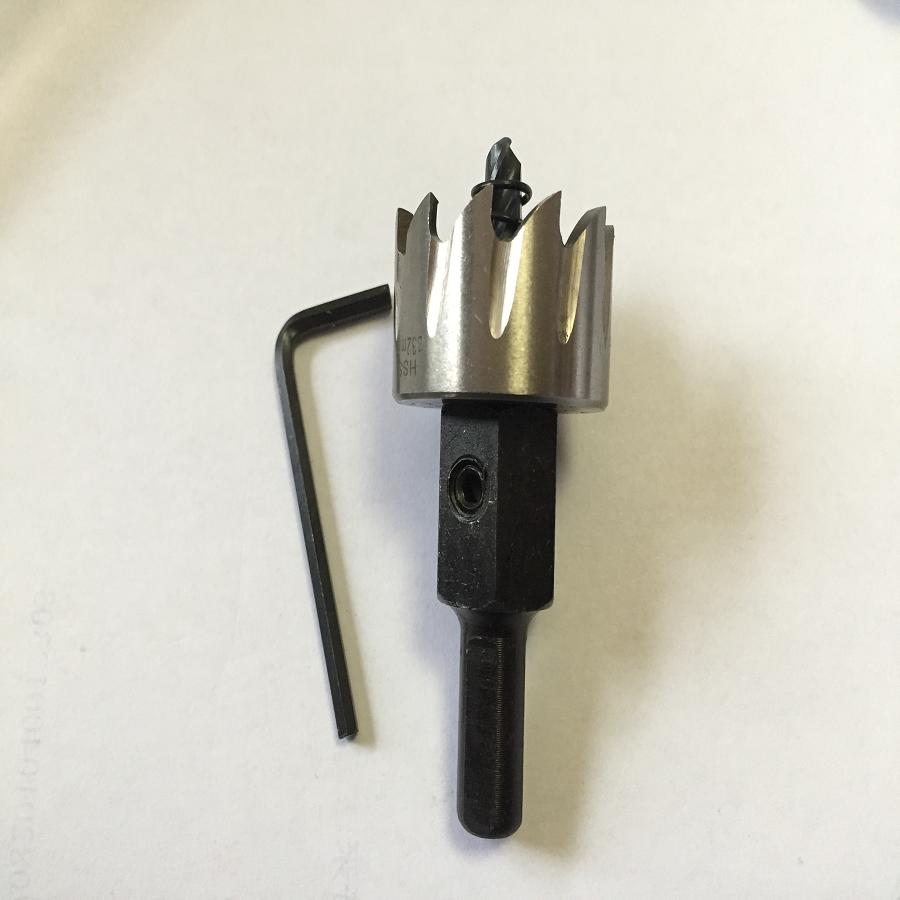
The same hole saw can behave very differently on a loose channel and on a channel supported in a fixture. Hydroponic profiles are often light enough to flex under the pilot drill. Once the first teeth contact an unsupported surface, the material can vibrate, pull upward, or chatter against the cutting edge. The result may be an opening that is technically present but unsuitable for a seal or a neat row of plants.
A support block or fixture under the cut zone helps keep the wall close to its designed shape. It can also reduce exit breakout and prevent the pilot from pushing a thin lid downward. The backing material must not contaminate the system or become mistaken for the production workpiece, but its mechanical role is important when evaluating a hole saw for repeat assembly.
Curved reservoir walls add another variable. A cup meets the high point first, so only a small part of the cutting edge is engaged at the beginning. The pilot may enter square while the body still rocks on the curve. For a bulkhead fitting, the surrounding wall also needs enough flat area for the gasket and nut. Cutter selection cannot correct a fitting location that lacks a suitable sealing surface.
Ribs, molded bosses, double walls, and hidden reinforcing features can change the local thickness. A tank may be described by a nominal wall value even though the intended outlet position is substantially thicker. The usable depth of the selected hole saw and the clearance behind the wall must cover the real cutting section.
Production fixtures should hold the part without crushing it. A clamp position that deforms the channel during cutting can hide an out-of-round opening until the part is released. Sample inspection after unclamping reveals whether the hole saw and support arrangement preserve the intended geometry.
For long grow channels, the location fixture and the cutting assembly need to be considered together. The hole saw is responsible for forming the opening, while the fixture controls center-to-center spacing and orientation. Keeping those responsibilities separate makes it easier to identify whether a rejected row came from cutter runout, part movement, or layout error.
Net-Pot Rows Put Repeatability Ahead of One Fast Cut
A single clean opening does not prove that a cutter is suitable for a full channel. A commercial grow profile may require many equally spaced holes, and a production order may contain hundreds of profiles. Heat, retained plugs, plastic chips, pilot wear, and cup runout can accumulate across that sequence.
The selected hole saw needs to release plugs and chips without long interruptions. Slots in the cup can help provide access, but their position and size determine how easily the operator can clear the retained disc. A cutter that makes the first hole quickly but traps every plug may slow the complete production cycle and increase the chance of damage during removal.
Edge consistency should be checked at the beginning, middle, and end of a representative hole saw sample run. The net pot or collar needs similar support in every opening. If the later holes become larger, rougher, or more heat-marked, the product direction, cutting conditions, or replacement interval needs adjustment before bulk supply.
Runout matters because it changes the effective diameter. A labelled 50 mm hole saw can produce a larger opening if the cup, arbor, pilot, chuck, or fixture does not run concentrically. When a net pot feels loose, the correct response is not automatically to order a smaller cup. The complete assembly should be inspected for seating, wear, and spindle alignment.
Plant spacing also raises the cost of a miscut. A rejected opening in an isolated cover may allow a local repair, while one misplaced opening in a long channel can make the whole profile unsuitable. Stable arbors, pilots, and product dimensions therefore have direct purchasing value for repeated channel work.
As a hole saw manufacturer, Bestwin can supply consistent cutter families and accessory combinations for sample approval and repeat orders. Product references should remain tied to the validated diameter, arbor, pilot, work material, and expected batch rather than being reduced to the cup size alone.

Arbor and Pilot Stability Protect the Opening Center
The arbor transfers torque from the drill to the cup, while the pilot establishes the center before the teeth reach the surface. Thread fit, drive pins, locking features, shank size, pilot retention, and supported diameter range all influence whether the hole saw enters smoothly.
A loose connection can let the cup orbit around the pilot. This widens the opening, roughens the edge, and increases vibration in a thin channel. The problem may look like inconsistent cutter diameter even though the main cause is the interface between the cup and arbor. Product approval should record the complete arbor arrangement used in the successful sample.
The pilot must project far enough to establish the center, but excessive projection can flex and enlarge the guide hole. On a hollow profile, a long pilot may also strike the opposite wall before the cup completes the near side. That can mark a surface that was not intended to be cut. Pilot length, channel depth, and internal clearance need to work together.
Reservoir lids sometimes have ribs or hardware underneath. The pilot can reach these features before the teeth have formed the opening. A hole saw assembly cannot detect hidden reinforcement, cables, pipework, or installed equipment. The production drawing and inspection process must establish a clear cutting location.
Quick-change arbors can be useful when one workstation alternates between net-pot, drain, service, and pipe-opening sizes. The benefit depends on secure locking and verified compatibility with each cup. A quick connection does not excuse mixed product codes or an unapproved combination.
The drill chuck must also match the shank. A secure hex or round shank connection reduces slipping only when the chuck size and condition are suitable. The drill should provide controlled rotary operation for the cutter diameter and material. Impact or percussion action is not appropriate unless the specific product system expressly permits it.
Heat and Chips Affect Plastic Fit More Than Appearance
Plastic cutting creates two types of evidence: the chips leaving the teeth and the condition of the finished edge. Clean chips usually indicate that the cutter is removing material rather than rubbing it. Dust, melted strings, glazing, or a smeared rim can signal an unsuitable cutting condition, a dull edge, poor clearance, or excessive heat.
Heat is especially important around bulkhead fittings and grommets. A raised melted ridge can hold a gasket away from the wall even when the opening diameter is correct. Trimming the ridge by hand adds variation and may leave a notch that becomes a leak path. It is better to approve a hole saw and operating range that produce an assembly-ready edge on the target material.
Chip evacuation also affects reservoir cleanliness. Plastic spirals and discs can remain inside a tank or channel after cutting. The tool choice should minimize unnecessary fragmentation, while the production process still needs a defined cleaning and inspection step before the component enters service. The cutter does not replace cleanliness controls.
Cooling or lubrication must be compatible with both the cutter and the hydroponic component. A fluid appropriate for metal cutting may be unsuitable for a food-growing environment, a plastic resin, an adhesive joint, or later cleaning. When dry cutting is required, the approved product and operating conditions need to manage heat without relying on an unapproved substance.
The hole saw is an annular cutter, so it removes a ring and leaves a center plug. That geometry reduces the amount of material removed compared with drilling the full diameter, but the retained plug still needs controlled extraction. In repeated channel work, plug release and edge quality are part of the product decision, not minor operator details.
Stainless Frames and Service Panels Need a Separate Approval
Commercial hydroponic installations may combine plastic channels with stainless pump plates, aluminum covers, coated steel cabinets, or metal support panels. A cutter approved for PVC should not be assumed suitable for these parts. Metal thickness, grade, coating, curvature, and required finish all change the cutting load.
For thin stainless or steel sheet, a stable metal-rated hole saw and secure workholding help limit chatter and grabbing. Carbide-tipped products may suit some harder or repeated metal applications, while HSS or bi-metal directions may fit others. The choice depends on the declared material, diameter, thickness, machine, and production quantity rather than a universal hierarchy.
The surrounding finish can be more valuable than the removed plug. Burrs can interfere with a gland, pipe fitting, or protective grommet. Scratches beyond the flange may expose coated metal or fail a visible-finish requirement. A sample should therefore be inspected from both faces after deburring and after the real fitting has been installed.
This separation also improves kit clarity. A greenhouse-equipment kit can contain one hole saw family for polymer channels and another for metal service panels, with clear labels for each. Mixing them in one case without application guidance encourages operators to use the nearest diameter rather than the validated product.
For a hole saw supplier supporting mixed-material equipment programs, stable item codes and refill availability are important. High-use plastic-channel sizes may need more frequent replacement than occasional service-panel cutters. Separate refill codes allow the proven assembly to remain in service without replacing an entire assortment.
Sample Approval Should Reproduce the Real Production Part
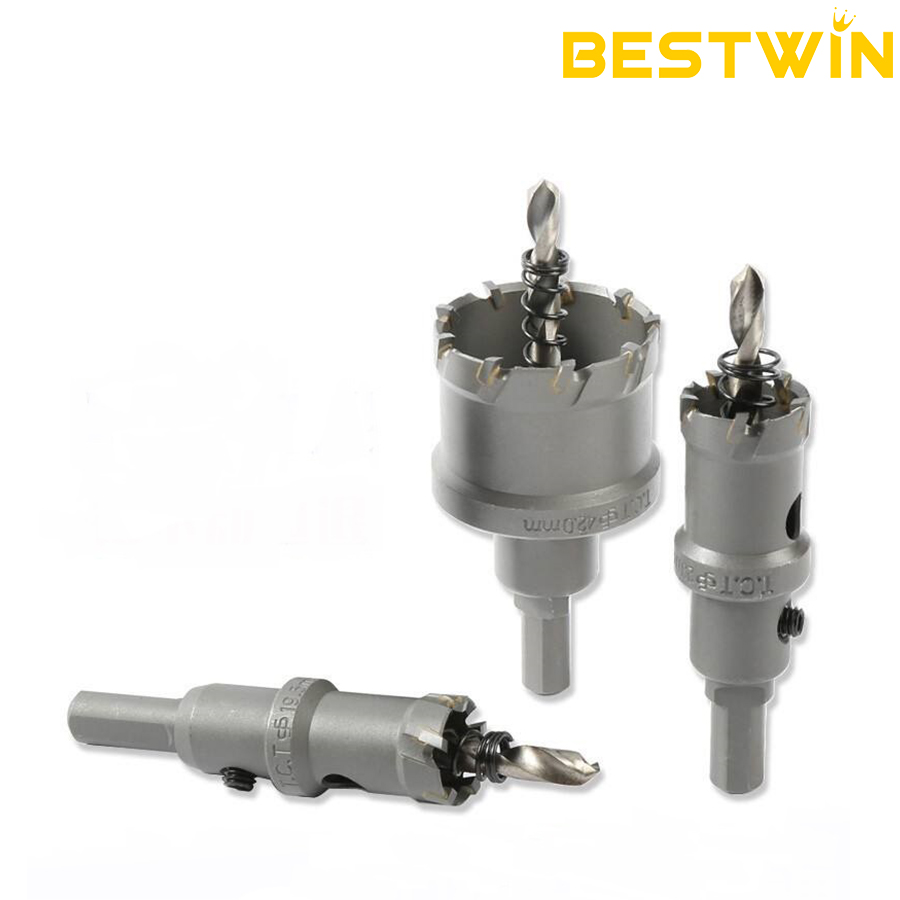
A flat scrap sheet can confirm that a cutter is sharp, but it may not reproduce the flex, curvature, ribs, wall transitions, or finish of a molded reservoir or extruded channel. Sample approval is stronger when it uses the actual production material and the same support, drill, arbor, pilot, and orientation planned for routine work.
The trial should cover every critical opening type. Net-pot holes are checked for flange support and row consistency. Bulkhead and drain openings are checked with the gasket, nut, and fitting installed. Grommet holes are checked for seating and pipe insertion. Metal service openings are checked for burr, coating damage, and accessory fit.
Repeated cuts matter. A useful sample run includes enough holes to reveal heat buildup, chip retention, plug-removal time, and dimensional drift. Inspection can compare several positions across the sequence rather than accepting only the cleanest example.
Table 2. Sample Acceptance for Hydroponic Openings
| Check | Acceptable result | Product factor to revisit if it fails |
|---|---|---|
| Net-pot seating | Flange is supported and pot remains upright | Cutter diameter, runout, edge condition |
| Bulkhead or drain fit | Body passes through and gasket seats evenly | Finished diameter, melted ridge, wall flatness |
| Grommet installation | Grommet seats without tearing or excessive looseness | Cutout tolerance, burrs, cutter geometry |
| Channel integrity | No spreading cracks, collapse, or permanent distortion | Material suitability, support, feed, pilot action |
| Repeated-hole consistency | Early and late openings show comparable fit | Tool wear, heat, chip clearing, arbor stability |
| Metal panel finish | Burr and surrounding marks remain within acceptance limits | Cutter family, workholding, operating range |
The approved sample becomes the reference for purchasing and receiving checks. It should identify the hole saw, size, arbor, pilot, material, workpiece thickness, and relevant production conditions. That record helps prevent a visually similar but mechanically different replacement from entering the line.
Bestwin supports sample-based product matching, OEM marking, packaging, and batch supply for validated applications. The result is a defined hole saw assembly for each recurring opening rather than an assortment that leaves compatibility to guesswork.
Kits and Refill Plans Should Follow the Equipment BOM
Hydroponic projects often need several diameters, but a large generic set is not always the best purchasing format. The useful assortment follows the equipment bill of materials: net-pot size, drain fitting, return connection, overflow, sensor port, service opening, and any metal-panel cutout.
Each hole saw diameter needs a stated material range and compatible arbor. If two cups use different threads or drive arrangements, the kit must include the required interfaces. The pilot and replacement pilot reference should also be clear. A missing low-cost accessory can stop production even when every cutter is present.
Packaging should protect the hole saw teeth and keep sizes identifiable. Diameter markings, product family, suitable material, compatible arbor, and refill code are more useful than a case that only looks complete. For distributors and OEM customers, private labels or inserts can organize the assortment around the finished equipment rather than around generic tool categories.
Consumption is rarely equal across all sizes. A net-pot cutter may make dozens of openings per channel, while a drain size is used once per reservoir. Refill planning should reflect those different rates. Supplying the highest-use cups and pilots separately reduces waste and helps preserve the approved kit configuration.
Receiving inspection can compare the new hole saw batch with the approved sample for dimensions, cup seating, arbor fit, pilot retention, tooth condition, marking, and packaging. A short cutting check on the real production material is more informative than visual inspection alone.
Common Problems Point Back to Specific Product Factors
An oversized net-pot opening can result from the wrong nominal hole saw diameter, but it can also come from cup runout, a loose arbor, or part movement. An undersized fitting opening may reflect an inch-metric substitution or a component change. The symptom needs to be connected to the responsible product factor before the order is changed.
Cracked acrylic or a split lid points toward material brittleness, local support, pilot action, tooth engagement, or an unsuitable hole saw direction. A melted plastic edge points toward rubbing, speed, heat, or dull teeth. An oval opening often suggests flexing, curved geometry, an angled entry, or insufficient support.
Rapid wear on reinforced panels may indicate that the abrasive material needs another cutter family. Heavy burrs on metal may point to tool condition, product type, speed, feed, or workholding. Slow production may be caused by trapped plugs rather than cutting speed.
These distinctions make replacement decisions more precise. A different hole saw may be required, but changing diameter or material without identifying the cause can introduce a second problem. The complete cutting assembly and representative workpiece should be reviewed together.
FAQ
Is the net-pot size the same as the required hole saw diameter?
Not necessarily. Net-pot labels may refer to a general product size, while the support flange, basket taper, and intended seating depth determine the actual cutout. Use the component drawing or a controlled fit test with the real pot.
Can one cutter be used for PVC channels and stainless service panels?
Only when the specific hole saw is rated and approved for both materials under the required conditions. Many programs use separate cutter directions because plastic heat response and metal cutting loads are different.
Why does a correct-size bulkhead opening still leak?
The opening may have a melted ridge, burr, crack, ovality, or local wall curvature that prevents even gasket contact. The fitting, gasket, wall surface, and finished edge all need inspection.
Does a deeper cup solve every reservoir-wall access problem?
No. Hole saw cutting depth, rear clearance, pilot reach, ribs, double walls, and tool access are separate issues. A taller cup does not correct an obstructed or unsuitable fitting location.
What belongs in a production hole saw kit?
Include only validated diameters, the compatible arbors and pilots, replacement references, material labels, and application mapping required by the equipment BOM. High-use cups should be available as separate refills.
Match the Cutter to the Finished Hydroponic Assembly
A reliable opening begins with the component that must fit it. From there, the channel or reservoir material, wall shape, support, usable depth, arbor, pilot, drill, edge requirement, and repeat quantity define the suitable hole saw direction. Net pots, grommets, bulkheads, drains, and metal service panels deserve separate fit checks because each places a different demand on the finished edge.
Bestwin manufactures and supplies hole saw families, arbors, pilots, and related assortments for OEM, distributor, greenhouse-equipment, and installation programs. Stable product codes, sample validation, packaging options, and repeat supply help keep an approved cutting assembly consistent from the first production trial through replenishment.








 English
 العربية
 Français
 Português
 Português do Brasil
 Italiano
 简体中文
 繁體中文
 日本語
 한국어
 Deutsch
 Español
 Slovenčina
 ไทย
 Türkçe