

A refrigeration cabinet can pass its cooling test and still create avoidable installation work when a line opening is undersized, an exit burr damages insulation, or a pilot drill tears the inner liner before the outer skin is fully cut. The problem becomes more demanding in cold rooms and display cases because one opening may pass through stainless steel, painted sheet, plastic liner, insulation, and a second skin. For equipment manufacturers, cold-room contractors, service teams, and distributors, the right cutting assembly must match the complete panel rather than the visible surface alone.
Quick Answer
Choose a hole saw by matching the cutter to the actual layer stack, finished opening, usable cutting depth, arbor, and pilot arrangement. HSS or bi-metal cutters suit many thin steel, aluminum, plastic, and mixed workshop duties. Carbide-tipped cutters are a stronger direction for harder stainless steel and thicker metal skins. Insulated panels also require controlled pilot breakthrough, reliable plug clearance, and a method that protects both faces of the panel.
Bestwin manufactures HSS, M42 bi-metal, TCT, and accessory ranges for industrial cutting applications and supports OEM assortment planning, product inspection, and batch supply for distributors and equipment manufacturers. A refrigeration project normally needs more than one hole saw family because cabinet skins, removable service plates, plastic liners, and composite cold-room panels place different demands on the cutting edge.
Start With the Finished Opening, Not the Pipe Name
Refrigeration work uses round openings for refrigerant lines, drain tubes, cable glands, sensor leads, condensate fittings, pressure equalization devices, and small ventilation components. The nominal pipe or cable size is not always the cutter diameter. A bulkhead fitting has a threaded body, shoulder, sealing washer, and retaining nut. A rubber grommet needs enough material around the edge to remain seated. A split sleeve may require a different cutout from a rigid tube carrying the same service.
The practical dimension is the finished cutout required by the installed component. That value can come from a component drawing or a verified sample. An equipment manufacturer defines the required dimensions, materials, wall depth, and production quantity for the cabinet line. Clearance must be sufficient for assembly but not so generous that a gasket loses support or a trim ring cannot cover the edge. On thin cabinet skins, a hole saw that is only a few millimeters too large can create a visible edge and a difficult seal.
A hole saw also produces a kerf and may leave a slightly different result depending on runout, tooth wear, feed, backing, and panel movement. For repeated production, the opening is accepted by the fit of the real fitting and the condition of the edge, not only by the size printed on the cutter. A short sample run can reveal whether the selected hole saw remains consistent across the beginning and end of a batch.
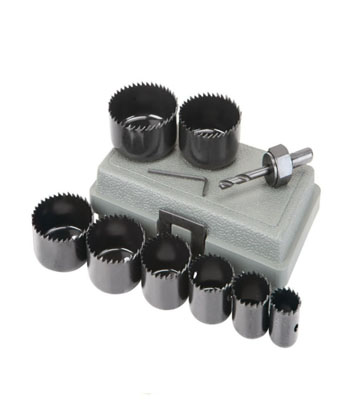
hole saw sizes for a refrigeration kit can therefore be organized around installed components: line sleeves, drain fittings, wiring glands, sensor bushings, and service-access hardware. This creates a usable range that reflects the cabinet or cold-room bill of materials.
The Complete Panel Stack Determines the Cutter Family
A refrigerated cabinet rarely behaves like one uniform sheet. The outside may be stainless steel or painted steel, while the inside may be ABS, PVC, aluminum, or another hygienic liner. Foam insulation fills the space between them. Cold-room panels often use two metal skins around a thick insulated core. The same opening can therefore combine a hard entry surface, a soft core, and a second skin that is difficult to support.
Thin steel and aluminum skins
HSS and bi-metal cutters cover many routine openings in thin sheet, non-ferrous metal, plastic, and mixed workshop materials. A bi-metal hole saw combines a high-speed steel cutting edge with a more flexible alloy body, making it useful where one range must handle several common cabinet materials. The teeth still need a controlled start. An unsupported skin can vibrate, grab, or distort even when the material itself is within the cutter’s capability.
Painted and coated skins add a finish requirement. A clean circular edge reduces the amount of deburring and limits damage outside the area hidden by the fitting flange. Masking, proper support, and a stable arbor help, but they cannot compensate for a dull or unsuitable hole saw. If the cut becomes a rubbing operation, heat can discolor coating and increase the exit burr.
Stainless service panels
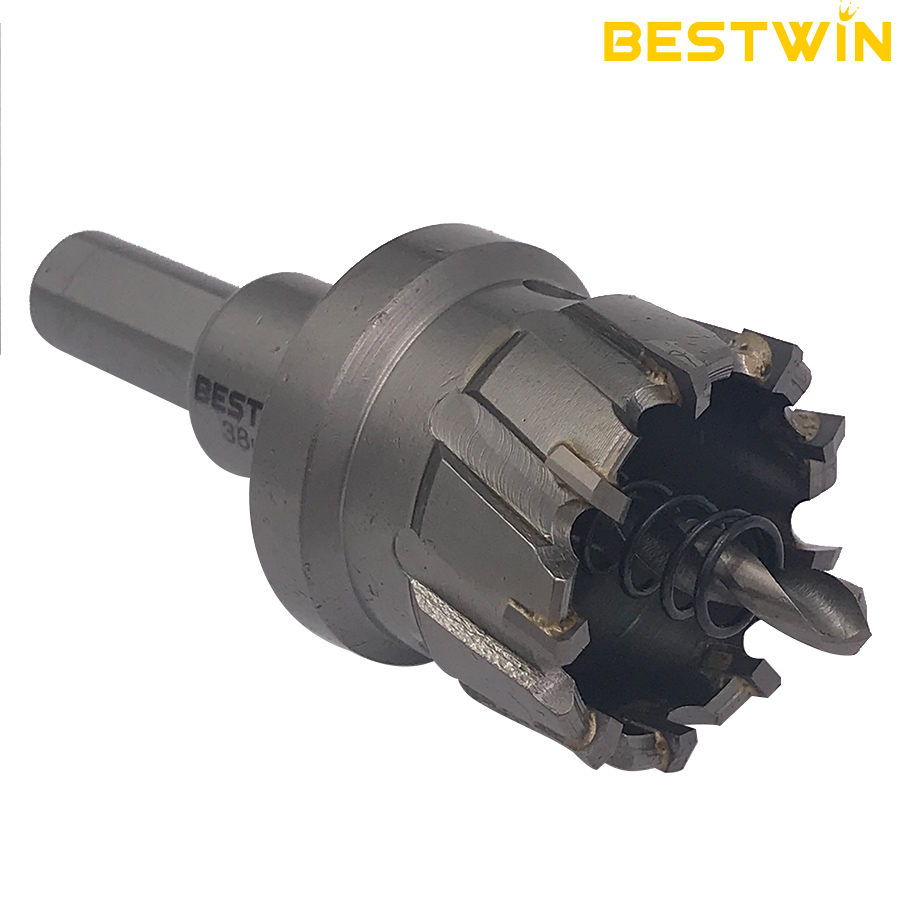
Stainless steel resists cutting and work-hardens when the edge rubs without advancing. Carbide-tipped cutters are a practical direction for harder stainless panels and thicker metal sections, provided the specific product grade, cutting depth, machine condition, and panel thickness are compatible. The hole saw must enter squarely and continue cutting rather than skating around the surface.
The refrigeration application makes edge condition especially important. A burr can cut a grommet, abrade cable insulation, or prevent a sealing washer from sitting flat. The correct hole saw reduces secondary work, but the process still needs secure clamping and suitable operating conditions. A product sample should be evaluated on the actual stainless grade and finish used in production.
Plastic liners and formed inner walls
Plastic can cut quickly, yet heat and low stiffness create different problems. Excess speed, a dull edge, or prolonged rubbing can melt the rim and leave a raised bead. A formed liner may flex away from the teeth, producing an oval opening or a cracked edge around a molded radius. Support close to the cut is often more important than aggressive feed.
An HSS hole saw is commonly suitable for plastic and thin non-ferrous work, while a bi-metal hole saw may be preferred when the same kit also covers metal. The finished result should be checked after the material cools, because a warm, distorted edge can appear acceptable before it returns toward its original shape.
Table 1. Refrigeration Panel and Cutter Direction
| Refrigeration component | Typical material condition | Product direction | Main acceptance point |
|---|---|---|---|
| Stainless service plate | Single hard metal sheet | TCT or a suitable metal-cutting range | Flat sealing face with controlled burr |
| Painted cabinet skin | Thin coated steel | HSS or bi-metal, subject to grade and thickness | Limited coating damage outside the flange |
| Aluminum panel | Thin non-ferrous sheet | HSS or bi-metal | Round opening without grabbing or heavy burr |
| Molded inner liner | ABS, PVC, or similar plastic | Sharp HSS or bi-metal | No melted ridge, cracking, or ovality |
| Insulated cabinet wall | Outer skin, foam, and inner liner | Cutter and depth matched to the full stack | Both faces remain aligned and undamaged |
| Cold-room sandwich panel | Two metal skins with a deep insulated core | Staged cutting or approved deep-reach setup | Complete cut without uncontrolled pilot breakout |
Cutting Depth Must Cover the Real Construction
Cup height is not automatically usable cutting depth. Threads, arbor parts, a shoulder inside the cup, trapped swarf, and the center plug can limit how far the cutting edge advances. This distinction is easy to miss when a cold-room panel is much thicker than a normal cabinet skin.
For a single service plate, the material may be thin enough that depth is not the main constraint. For an insulated cabinet wall, however, the hole saw may break through the outer skin and enter the foam while the inner face remains far away. Continuing without a planned method can pack the cup with insulation, bend the pilot, or let the tool wander before reaching the second skin.
A deep panel does not always need one uninterrupted pass. Cutting each skin from its accessible face can produce a cleaner result when the hole centers are transferred accurately. Another method is to establish a pilot reference and complete the far skin from the opposite side. The selected method must fit the cabinet construction and access conditions; it is not a reason to assume that any extra-deep hole saw is universally suitable.
When the opening passes through a structural rail, internal bracket, pipe, wire, or refrigeration component, the problem is no longer only depth. The planned center point and pilot travel must remain clear throughout the cut. A hole saw with adequate cup depth can still damage concealed parts if the internal path has not been checked.
Arbor and Pilot Stability Protect Both Panel Faces
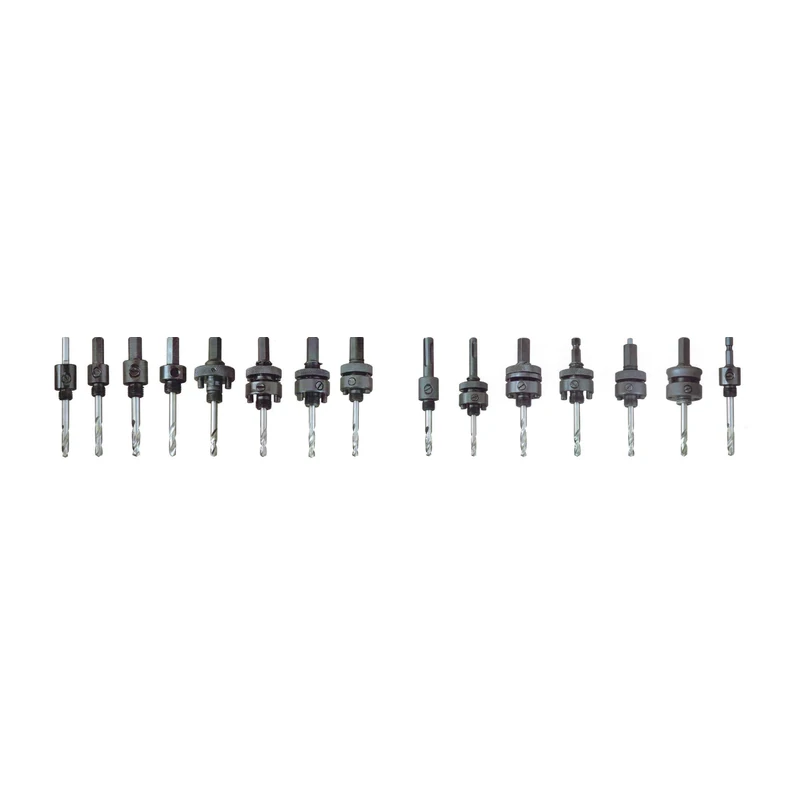
The arbor connects the cutter to the drill and controls how accurately the assembly rotates. Thread compatibility, drive pins, shank size, pilot retention, and the cutter’s diameter range all matter. A loose connection or worn pilot creates runout, enlarges the opening, and makes the teeth strike the panel unevenly.
Bestwin supplies round, hex, and SDS Plus arbor options within its accessory range, as well as quick-change configurations for faster cutter changes. The correct choice depends on the cutter interface and the drill. For cabinet production, the practical goal is a rigid, concentric assembly that can be changed without introducing inconsistent seating from one size to another.
The pilot drill has two jobs: establish the center and stabilize the hole saw until the teeth form a complete circular track. On a sandwich panel, it also reaches the second skin before the cup. Too much projection can cause an abrupt exit, strike a hidden component, or flex inside a thick foam core. Too little projection may fail to hold the center before the teeth engage.
A worn or bent pilot can spoil a new cutter. Pilot condition belongs in the same inspection routine as the hole saw teeth and arbor threads. When a workshop uses several kits, matching pilots, arbors, and cutters by interface prevents a convenient-looking but poorly seated combination from reaching the line.
Support and Entry Direction Control Edge Damage
The visible outside face and the hygienic inside face may not tolerate the same defect. A stainless outer panel can show scratches around the opening, while a plastic liner may crack or tear at breakthrough. Before cutting, the workshop needs to decide which face receives the initial cut and which face is most sensitive to exit damage.
Backing material reduces vibration in thin sheet and supports the far edge. It is particularly useful for removable service plates and flat cabinet panels that can be clamped on a bench. On an assembled cabinet, direct backing may be impossible. In that case, a controlled pilot, light final feed, and cutting from both accessible faces may offer better control than forcing the hole saw through in one movement. The hole saw remains easier to guide when each skin has adequate local support.
Curved cabinet surfaces and formed liners need extra attention. The teeth do not contact the full circle at once, so the first contact can push the cutter sideways. A rigid template or guide can help establish the location where a pilot drill cannot be used. The guide must remain fixed; a loose template merely transfers the wandering problem to a larger surface.
For prefinished panels, protection around the cut should not hide the actual condition of the teeth. Tape can reduce surface marking and make layout lines easier to see, but it cannot turn a worn cutter into a clean-cutting tool. The hole saw needs to create chips rather than polish the panel with heat.
Heat, Chips, and Plug Removal Affect Repeated Work
Refrigeration cabinet work often involves small batches of repeated openings rather than one isolated cut. The first opening may be clean while later cuts show heat marks, rougher edges, or slower progress. That change can indicate tooth wear, packed chips, an unstable arbor, or a process that does not clear the cup between cuts.
Metal chips need a path out of the kerf. If they remain trapped, they increase friction and can score the finished surface. Plastic strings and insulation fragments can wrap around the pilot or collect inside the hole saw cup. The hole saw should be withdrawn as needed for chip clearance, with the tool stopped before material is removed by hand.
Coolant or cutting fluid may be appropriate for some metal-cutting operations, but refrigeration equipment introduces cleanliness and material-compatibility concerns. The fluid must suit the hole saw and workpiece and must not leave unacceptable residue on a hygienic liner, coating, adhesive, or insulation. Production approval therefore includes cleaning as well as cutting performance.
Plug removal also affects output. A deep plug or a stack of metal, plastic, and foam can lock inside the cup. Clearance slots, spring or ejection features, and access to the plug become important when the same diameter is used repeatedly. Time spent prying out every plug can outweigh a small difference in cutting speed.
The term hole saw describes the annular cutting form, but product families differ considerably in tooth material, body construction, depth, arbor interface, and intended workpiece. Those details determine whether a model is suitable for repeated refrigeration-panel work.
Sample Approval Should Reproduce the Actual Panel
A meaningful sample uses the production panel stack, not a convenient scrap of similar-looking metal. The inner liner, insulation density, adhesive, coating, skin thickness, and internal clearances can all change the result. The drill, arbor, pilot, clamping method, and operator access should also reflect the real workstation.
The trial should include more than the first opening. Repeated holes reveal chip packing, plug retention, heat buildup, and changes in diameter or edge quality. A useful sequence checks an early cut, a middle cut, and a later cut with the same hole saw. The test stops before a damaged edge is accepted merely because the tool still rotates.
Inspection should be based on the installed component. A grommet must seat without being cut or pulled loose. A line sleeve must pass through without forcing. A drain fitting or pressure equalization device needs a flat sealing area. Cable insulation must not contact a sharp edge. Any trim ring should cover the cut without hiding a structural crack or excessive distortion.
Table 2. Opening Approval Checks
| Check | Acceptable result | Product or setup issue indicated by failure |
|---|---|---|
| Diameter and roundness | Fitting enters correctly and remains supported | Runout, wrong cutter size, panel movement, or worn teeth |
| Outer finish | No visible scratch or coating damage beyond the flange | Unstable entry, trapped chips, or poor surface protection |
| Inner liner | No crack, tear, melted ridge, or uncontrolled breakout | Excess heat, low support, unsuitable feed, or poor exit control |
| Sealing surface | Gasket or washer sits flat around the opening | Burr, distortion, oversized cut, or damaged coating |
| Plug removal | Core clears without excessive prying or cutter damage | Inadequate cup access, packed layers, or unsuitable depth |
| Repeat consistency | Later openings match the approved first cut | Wear, chip buildup, arbor loosening, or changing support |
A Refrigeration Kit Works Best as a Matched System
A useful kit is not simply a case filled with the largest possible number of diameters. It covers the recurring openings on the target equipment and pairs them with compatible arbors and pilot drills. A display case line may prioritize smaller cable, sensor, and drain openings. A cold-room installation kit may need larger sleeves for services passing through deep sandwich panels. A service organization may need a compact selection that fits several cabinet brands without carrying redundant sizes.
The kit list can identify each finished diameter, hole saw family, material range, cutting-depth limit, arbor, pilot, and replacement item. This avoids mixing a metal cutter with an incompatible arbor or treating a hole saw approved for a removable plate as automatically suitable for a deep insulated wall.
A hole saw manufacturer can support this structure with consistent interfaces, logical size coverage, replacement cups, pilot drills, arbors, and packaging that keeps the matched parts together. Bestwin’s product range includes HSS, M42 bi-metal, TCT, and arbor options that can be configured around common cabinet and installation duties. Product direction should remain tied to the actual panel construction rather than to a universal refrigeration label.
For distributors and equipment manufacturers, refill planning matters as much as the initial set. Frequently used line and drain diameters may need individual replacement stock, while less common sizes remain in the kit longer. Separate replacement references for pilots and arbors prevent an entire set from being retired because one accessory is worn.
Common Problems Point Back to the Cutting Assembly
An oversized opening often indicates arbor runout, a loose hole saw cup, a bent pilot, or panel movement rather than an incorrect nominal diameter alone. A triangular or irregular entry mark suggests that the teeth did not establish a stable circular track. Burnished metal without chips points to rubbing, while blue discoloration or coating damage shows excessive heat.
A cracked plastic liner usually directs attention to support, pilot breakthrough, tooth condition, and feed near the exit. Foam wrapped around the pilot indicates poor debris control inside the panel. A plug that cannot be removed may mean the cup is too shallow for the layer stack or lacks practical access for ejection. Heavy burr on the far skin can result from unsupported breakthrough or an unsuitable cutter condition.
These symptoms should lead to a concrete correction: restore support, replace the pilot, tighten or change the arbor, select a more suitable hole saw family, reduce accumulated heat, clear chips, or revise the cutting sequence. Simply increasing drill power can make grabbing and damage worse.
The same troubleshooting logic helps a hole saw supplier maintain a practical product program. Products are easier to specify when cup depth, arbor interface, material direction, pilot arrangement, and replacement availability are clear. That information supports repeatable use without turning the cutter into a promise for every material stack.
Frequently Asked Questions
Can one hole saw cut both cabinet skins and the insulation between them?
It may be possible when the cutter’s material capability and usable depth suit the complete panel, but the result depends on both skins, the core, plug clearance, and access. Thick sandwich panels often benefit from staged cutting or completion from the opposite face.
Is a bi-metal cutter suitable for stainless refrigeration panels?
Some bi-metal hole saw products are designed for stainless and other tough materials, but grade, thickness, heat control, and batch requirements matter. Carbide-tipped products are another direction for harder stainless and thicker metal. The actual panel should be sampled before the tool is released for production.
Why does the inner plastic liner crack when the outer metal cut looks clean?
The liner may be unsupported, brittle, curved, or struck abruptly by the pilot or teeth. Cutting direction, pilot projection, backing, feed near breakthrough, and a cut from the opposite face can all affect the result.
Does the nominal refrigerant pipe size equal the required cutter diameter?
Not necessarily. The finished opening depends on the sleeve, grommet, bulkhead, insulation allowance, or other installed component. Use the component cutout dimension and verify the fit with an actual assembly.
What belongs in a commercial refrigeration hole saw kit?
The kit should cover recurring service openings and include compatible cups, arbors, pilots, adapters, and replacements. Each size should be tied to its panel material, usable depth, and installed component rather than listed only by diameter.
Match the Cutter to the Whole Refrigeration Panel
The most reliable selection starts with the finished fitting and follows the opening through every layer of the cabinet or cold-room wall. Diameter, material stack, usable depth, arbor stability, pilot travel, surface finish, plug clearance, and repeated-cut consistency all affect the result. Bestwin manufactures hole saw and arbor ranges for metal, plastic, wood, and other common workshop materials, with HSS, M42 bi-metal, and TCT directions available for different refrigeration-panel duties. A matched, sample-approved assembly gives manufacturers and contractors a cleaner path from the first cabinet opening to repeat supply.










 English
  العربية
  Français
  Português
  Português do Brasil
  Italiano
  简体中文
简体中文  繁體中文
繁體中文  日本語
日本語  한국어
한국어  Deutsch
  Español
  Slovenčina
  ไทย
ไทย  Türkçe