
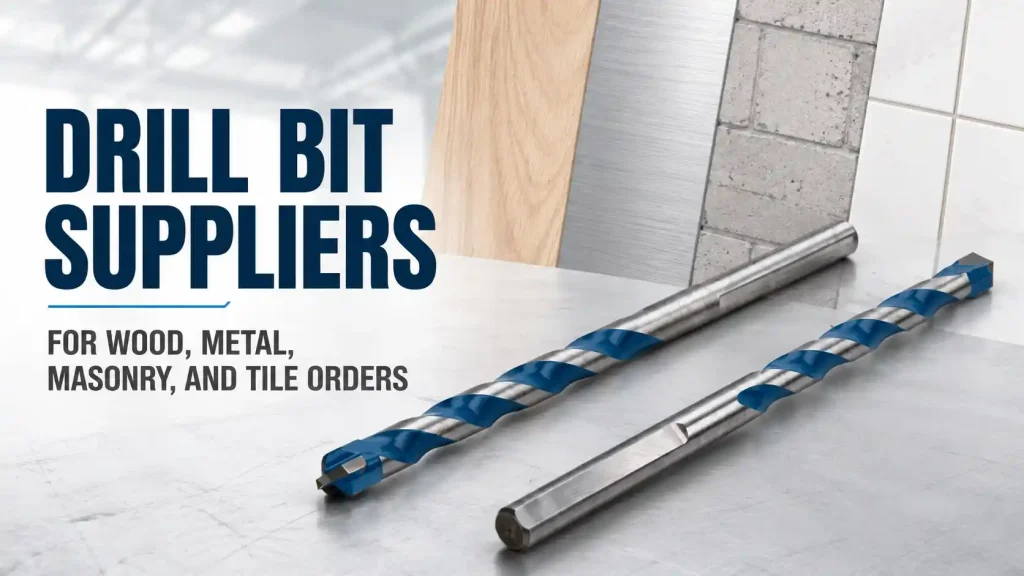
A distributor or OEM tool brand can place one purchase order for bits used in wood, mild steel, concrete, and ceramic tile, but those products cannot be controlled as one identical cutting tool. Each material changes the point, cutting edge, flute, body material, heat treatment, carbide or diamond component, shank, and field test. The commercial range may share packaging and brand identity, while the factory controls behind it remain product-specific. Reliable Drill Bit Suppliers make those differences visible in samples, specifications, inspection records, and replenishment data. That is how a broad product program stays useful to contractors, workshops, dealers, importers, and project customers without turning into a collection of sizes that only look complete in a catalog.
Quick Answer
Drill Bit Suppliers supporting wood, metal, masonry, and tile orders need separate product definitions and test methods for each material family, then a common system for dimensions, batch identity, packaging, labeling, and repeat orders. One Drill Bit cannot represent the whole range. Wood products are checked for fiber cutting and chip clearance, metal products for edge geometry and heat control, masonry products for carbide and impact durability, and tile products for controlled entry and chipping.
Bestwin manufactures and supplies drilling tools for B2B customers, including distributors, wholesalers, OEM tool brands, contractors, and equipment-set producers. Bestwin matches each Drill Bit family to the customer’s working material, hole size, machine interface, expected use, target price level, packaging, and order quantity, then uses factory samples to confirm the agreed direction before repeat production.
Divide the Product Range by Working Material and Hole Result
A mixed-material order becomes manageable when every line begins with the workpiece and the required hole. “General purpose” is too broad for production control. A general-purpose Drill Bit that can make an occasional hole in several materials may not deliver the speed, finish, life, or safety expected from a dedicated product. The range therefore needs clear boundaries: which materials are intended, which drilling mode is used, what hole sizes are included, and what result defines acceptable performance.
For a wood Drill Bit, the important result may be a centered hole with clean entry, good chip removal, and limited breakout. For metal, it may be diameter, roundness, burr size, cutting temperature, and hole count. For masonry, the tool must survive impact while maintaining the carbide tip and drilling rate. For ceramic tile, the first requirement is often controlled entry without skating, followed by limited surface chipping and no crack propagation.
Drill Bit Suppliers also need to know the machine interface. A straight shank used in a hand drill is not the same program as an SDS shank used in a rotary hammer. A drill press sample is not automatically representative of a cordless tool in the field. Chuck capacity, runout, speed range, impact mode, feed, fixture, cooling, and operator access all affect the sample result.
Table 1. Mixed-Material Drill Bit Program
| Product family | Typical workpiece | Factory sample focus | Order data that must stay clear |
|---|---|---|---|
| Wood cutting | Softwood, hardwood, plywood, MDF | Centering, fiber cutting, chip clearance, entry and exit condition | Point style, diameter, working length, overall length, shank, set mix |
| Metal cutting | Mild steel, stainless grades, aluminum, sheet metal | Point symmetry, cutting edge, runout, heat, burr, hole count | Tool material, coating or finish, point angle, diameter tolerance, hardness |
| Masonry cutting | Brick, block, concrete, stone | Carbide tip, brazing, impact resistance, dust removal, drilling rate | Tip grade, flute form, shank system, diameter, working length |
| Tile and glass cutting | Ceramic tile, porcelain, glass | Start control, surface chipping, crack risk, cooling method | Tip material, geometry, diameter, intended surface, packaging protection |
Keep Wood Cutting Geometry Consistent Across Sizes
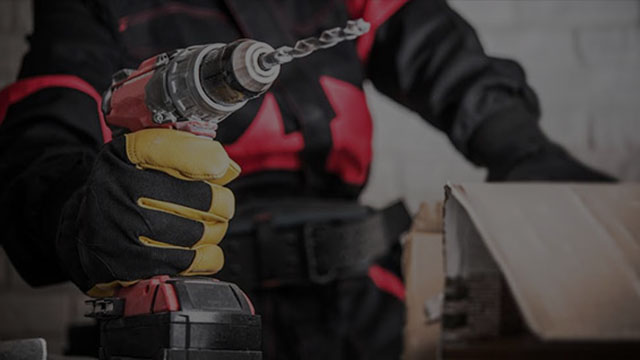
Wood products often look simple, yet point and flute differences change how they start, pull into the workpiece, and clear chips. A brad-point Drill Bit needs a centered point and balanced outer spurs to locate the hole and cut the circumference cleanly. An auger style needs a sound lead screw, effective cutting lips, and enough flute volume to move chips through deeper holes. A general twist form used in wood serves a different cost and performance position.
The sample needs real material. Soft pine can hide an edge problem that becomes visible in hardwood or laminated board. MDF produces fine dust and tests chip evacuation differently from solid timber. Plywood can show veneer tear-out at entry and exit. The customer can provide the materials most common in the sales market, and Bestwin can manufacture and test the proposed Drill Bit direction against those samples.
Across a Drill Bit size range, dimensional consistency matters as much as one attractive sample. Check diameter, working length, overall length, shank dimensions, straightness, point centering, and flute finish. In a retail or OEM set, the size progression must also match the promised assortment. A missing common size or two nearly duplicated sizes can reduce the practical value of the whole kit.
Packaging protects the point and keeps the assortment identifiable. A long wood Drill Bit can be bent by weak inner support. Sharp lead screws and spurs can damage neighboring tools or the package. The inner tray, sleeve, clip, or case needs to hold every item during transport and let the user return it to the correct position.
Control Metal Cutting Edges, Heat Treatment, and Hole Count
Metal drilling makes edge quality and thermal behavior immediately visible. A Drill Bit that is slightly dull, asymmetric, soft, brittle, or poorly relieved may rub instead of cut. The result can be high thrust, heat, squealing, oversize holes, heavy burrs, short life, or breakage. These symptoms are influenced by speed, feed, coolant, workpiece alloy, thickness, and machine rigidity, so the test method needs to stay consistent.
Drill Bit material must match the promised product level. High-speed steel, cobalt-alloy options, carbide-related products, coatings, and bright or oxide finishes serve different applications and price positions. The name alone is not enough. Factory records connect the material specification to heat treatment, hardness range, grinding, surface treatment, dimensions, and final inspection.
Point symmetry is easy to overlook in a quick visual check. Unequal cutting lips make one side carry more load and can move the hole away from the center mark. Check the point under suitable magnification, measure runout in the intended shank area, and drill the agreed metal sample. Hole diameter, roundness, entry condition, exit burr, chip shape, sound, cutting time, and edge condition after repeated holes provide a more complete result.
One test plate is not enough for a program sold across several metals. Mild steel, stainless steel, aluminum, and thin sheet create different failure modes. Drill Bit Suppliers can define separate sample directions rather than claiming that one finish and geometry will deliver the same life everywhere. The product description and packaging then stay aligned with the approved use.
Verify Masonry Tips, Brazing, Flutes, and Shank Fit
Masonry tools convert rotation and impact into crushing and cutting at the tip. The carbide component, brazed joint, body, flute, and shank all carry part of the load. A Drill Bit with a strong-looking body can still fail early if the carbide seating, joint, tip alignment, or heat control is weak.
The first Drill Bit sample review checks carbide shape, centering, edge condition, brazing coverage, visible voids, and contamination. Dimensional checks cover diameter, working length, overall length, and shank features. For SDS products, the shank grooves need to fit the intended holder and permit the designed movement without excessive looseness or binding.
Drill Bit performance testing uses a defined masonry material and tool. Concrete strength, aggregate, brick type, block density, impact energy, rotation speed, applied force, depth, and dust-clearing interval influence the result. Keep those conditions in the test record. Compare drilling time, hole diameter, tip wear, brazed-joint condition, body damage, and shank wear after the agreed number of holes.
Dust evacuation is a production issue, not just an operator habit. The flute must move crushed material out of the hole. Poor evacuation increases heat, friction, and drilling time. Deep holes may require periodic withdrawal even with a suitable flute, so the sample method needs to reflect how the product will actually be used.
Protect Tile Cutting Tips From Chipping and Transport Damage
Tile and glass products face brittle surfaces where a small defect can become a crack. The Drill Bit needs a controlled start, stable tip geometry, suitable cutting material, and clear use instructions. Impact mode is inappropriate for many tile operations, while cooling or lubrication depends on the product and workpiece. The sample test must follow the intended method.
Ceramic tile, porcelain, and glass are not interchangeable test materials. Porcelain is denser and can expose wear quickly. Glazed surfaces show entry chipping. Glass needs particularly controlled pressure and support. Define the exact sample material, thickness, backing, drilling speed, cooling method, and acceptance limit for chips or cracks.
Drill Bit tip protection continues after production. A sharp spear point, carbide edge, or diamond-related cutting surface can be damaged when loose products strike each other. Individual sleeves, separated tray positions, caps, or rigid compartments help preserve the condition that passed inspection. Packaging drop and vibration checks are useful when the product travels through international distribution.
For a mixed range, the label needs to separate tile products from masonry products even when the diameter is similar. Color, icon, family name, shank, intended material, and use warning can help, but the factory code and product identity must remain stable enough for replenishment and quality tracing.
Approve Factory Samples With the Customer’s Materials and Tools
A useful sample approval connects the drawing to a hole in the intended workpiece. The customer provides representative materials, machine details, drilling mode, hole sizes, expected life, finish limits, packaging direction, and target price position. As a Drill Bit manufacturer, Bestwin uses that information to manufacture or match a sample from its own range and define a repeatable test.
The Drill Bit sample record states the product identity, material, dimensions, geometry, finish, shank, workpiece, machine, speed, feed or operator method, cooling, hole depth, hole count, and acceptance result. For hand-tool applications, natural operator variation cannot be eliminated, but the basic procedure can be controlled. Using the same trained operator or a suitable fixture makes comparisons more useful.
Do not approve only the best-looking Drill Bit from a small group. Review several samples and record variation. If the order includes many sizes, test representative small, middle, and large diameters because heat, strength, grinding, and packaging challenges change across the range. Critical sizes and high-volume items deserve direct tests.
Drill Bit Suppliers can then use the signed sample, drawing, inspection data, packaging proof, and product code as the production reference. A later sample that merely looks similar is not enough when the material, point, shank, coating, or tolerance has changed.
Record Raw Material, Heat Treatment, Grinding, and Packaging by Batch
Repeat orders depend on the controls behind the finished product. Incoming material identity, wire or bar dimensions, carbide components, heat-treatment parameters, grinding setup, brazing, surface treatment, cleaning, marking, and packaging all influence performance. The exact route differs by Drill Bit family, but each route needs a stable production record.
Heat treatment needs defined parameters and verification appropriate to the product. Too soft can mean rapid edge wear or bending. Too brittle can mean chipping or breakage. Hardness readings are useful only when the specified location, method, and acceptance range are clear. A result on the shank does not automatically describe the cutting edge.
Grinding control covers diameter, point, lip relationship, relief, flute finish, and burr removal. Worn wheels, incorrect setup, or poor coolant control can change several features at once. First-piece inspection after setup and checks during the run help prevent a long batch from drifting before the final inspection.
Brazed masonry products add carbide placement, joint preparation, brazing material, heating, cooling, and joint inspection. Coated metal products add surface preparation, coating process, appearance, and adhesion-related controls. Marking and packaging close the traceability chain by connecting the physical Drill Bit to a model, size, batch, and order.

Use Dimensional Checks and Hole Tests Together
Drill Bit dimensions can catch many problems quickly, but they do not replace a cutting test. Diameter, length, shank, straightness, runout, point position, and visible finish describe the product. The hole test shows how those features work together with material and machine conditions.
Table 2. Batch Inspection by Product Family
| Inspection area | Wood | Metal | Masonry | Tile and glass |
|---|---|---|---|---|
| Identity | Size, style, shank, set position | Size, tool material, finish, shank | Size, tip style, shank system | Size, tip type, intended surface |
| Dimensional check | Diameter, length, straightness, point centering | Diameter, point symmetry, runout, hardness location | Diameter, length, tip alignment, shank features | Diameter, tip alignment, straightness |
| Visual check | Spurs, lead screw, cutting lips, flute finish | Cutting edges, point, coating or finish, marking | Carbide, brazing, flute, shank wear surfaces | Tip edge, coating or abrasive surface, protective cap |
| Performance check | Entry, exit, chip removal, deep-hole behavior | Cutting time, heat, burr, hole size, repeated holes | Drilling rate, dust removal, tip and joint durability | Start control, chipping, cracking, repeated holes |
| Packaging check | Point protection, straight support, size layout | Edge protection, corrosion control, labels | Weight support, shank separation, set identity | Individual tip protection, movement control, warnings |
Drill Bit sampling frequency depends on the order, risk, process capability, and agreement. High-volume dimensions may receive more checks. First production after a setup change needs early confirmation. A process that has shown stable capability can use a different plan from a new product or a family with a recent material change.
The measurement system also needs attention. Gauges must suit the tolerance and be calibrated. A runout fixture needs a defined reference. Hole diameter must be measured consistently. Visual limits are stronger when boundary samples or clear photographs show acceptable and unacceptable conditions under the same lighting.
For deeper technical background, the general form and terminology of a Drill Bit can help establish common language. Factory approval still relies on the customer’s material, product specification, and controlled sample because general descriptions do not define batch performance.
Keep Product Codes, Labels, and Assortments Stable for Reorders
A mixed-material program can contain dozens or hundreds of combinations. Product code structure prevents confusion. The code can identify family, diameter, working length, overall length, shank, material or finish, package quantity, and customer version where needed. The system must remain readable for the factory, warehouse, distributor, and customer service team.
Labels need the commercial description and the manufacturing identity that supports traceability. Barcode, model, size, quantity, batch, country or compliance information, and customer artwork vary by market. Review all languages, units, and symbols before production. A correct Drill Bit packed under the wrong size label creates a failure even when the tool itself is perfect.
Assortments need their own control. The inner tray, printed size map, and packing list must agree. Count every position. Confirm that similar sizes cannot be swapped easily. For replacement sales, the individual item code needs to connect back to the kit position so distributors can replenish high-use sizes without replacing the entire set.
Drill Bit packaging samples are part of approval. Check color, artwork, dimensions, material, closure, hanging or shelving method, inner restraint, corrosion protection where required, and shipping carton strength. A broad range looks more professional when the visual system is consistent, but the material family and intended use remain unmistakable.

Control OEM Artwork, Private Labels, and Approved Changes
OEM and private-label programs add customer colors, logos, model names, packaging, manuals, barcodes, and market-specific statements. Bestwin can coordinate these elements with the product specification so branding does not separate from the approved Drill Bit identity. The artwork proof, physical package sample, and product sample need to agree before batch release.
Drill Bit change control protects that agreement. A different steel grade, carbide component, heat-treatment route, point geometry, coating, shank, package, or sub-supplier can affect performance or identity. The factory record identifies which changes require notice, a new sample, a limited confirmation test, or full reapproval.
Customer changes also matter. A new workpiece, harder alloy, denser tile, stronger concrete, different drill, higher speed, deeper hole, or revised life target may move the product outside the original approval. Drill Bit Suppliers need the revised conditions so they can confirm whether the current product still fits or whether another family is more appropriate.
Batch consistency does not mean every manufacturing value is mathematically identical. It means controlled variation stays inside the agreed limits and continues to produce the required hole result. That requires both process records and final checks.
Include Material, Machine, Sizes, Quantities, and Packaging in the RFQ
A strong Drill Bit RFQ gives the factory enough information to propose the correct range. State the working materials and grades, hole diameters and depths, machine or chuck type, impact mode, speed range, cooling method, expected hole count, finish or burr limits, required tool material or coating, shank, lengths, size assortment, order quantity, packaging, logo, barcode, certifications, target market, and sample plan.
If several product levels are needed, describe them separately. A promotional set, standard wholesale range, and industrial production line can use different materials, tolerances, tests, and packaging. One vague request for the lowest price forces assumptions that later create rework.
Send representative workpieces when performance is important. A named material can still vary by supplier, heat treatment, coating, thickness, or aggregate. The actual material gives Bestwin a stronger basis for sample testing. Where shipping a workpiece is impractical, provide drawings, standards, photographs, hardness, thickness, and other relevant data.
Use the same terms across quotation, sample, purchase order, artwork, inspection, and shipment. A Drill Bit described one way in the quotation and another way on the package can create ambiguity about what was approved. Stable codes and attached specifications reduce that risk.
Build a Broad Range Without Losing Product-Specific Control
Wood, metal, masonry, and tile products can share one supplier relationship, one commercial program, and one packaging system, but they cannot share one technical assumption. Geometry, materials, production steps, and performance tests must follow the workpiece and drilling method. Common batch identity, inspection records, artwork control, and reorder codes then hold the broad range together.
As a Drill Bit supplier, Bestwin serves mixed-material wholesale and OEM programs. Customers define their markets, materials, machines, sizes, quantities, packaging, and performance targets; Bestwin matches suitable Drill Bit directions, prepares samples, records the agreed controls, and coordinates batch supply. For wholesale and OEM buyers, the value of experienced Drill Bit Suppliers lies not simply in offering more products, but in turning market requirements into a range that can be sampled, verified, repeated, and supplied consistently. This is how Bestwin helps customers build Drill Bit programs that are practical for their markets and reliable for long-term supply.










 English
  العربية
  Français
  Português
  Português do Brasil
  Italiano
  简体中文
简体中文  繁體中文
繁體中文  日本語
日本語  한국어
한국어  Deutsch
  Español
  Slovenčina
  ไทย
ไทย  Türkçe