

Electrical control cabinets need round openings for cable glands, conduit fittings, pushbuttons, indicator lamps, ventilation hardware, meters, connectors, and service access. The visible result may be one clean circle, but the cutting conditions vary with sheet material, thickness, coating, hole diameter, edge clearance, machine, and production volume. A tool that works in a mild-steel test coupon may behave differently in a painted enclosure door, stainless terminal box, aluminum panel, or assembled cabinet. For enclosure manufacturers, panel builders, electrical contractors, distributors, and OEM tool programs, the hole-saw specification must follow the actual opening and workpiece.
Quick Answer
As a hole saw manufacturer for electrical control cabinet openings, we match the cutting material, tooth or cutter direction, diameter, cutting depth, pilot arrangement, arbor, shank, machine, and packaging to the enclosure task. We separate thin-sheet production from field modification, validate samples on representative panels, and preserve the approved geometry, interface, label, and refill code for repeat orders.
At Bestwin, we manufacture and supply hole saws, arbors, pilot tools, accessories, and sets for panel manufacturers, electrical equipment factories, system integrators, distributors, importers, and OEM customers. Our hole saw manufacturer review connects each tool code to a declared material, panel thickness, hole function, machine interface, sample result, and batch requirement rather than treating diameter as the complete specification.
Cable, Conduit, Ventilation, and Instrument Openings Need Different Checks
A control enclosure can require small gland entries for sensor or communication cables, larger conduit openings for power circuits, holes for pushbuttons and indicators, circular cutouts for fans or filters, and openings for meters, connectors, or service fittings. Some cuts are made in flat sheet before forming and painting. Others are made in a finished door, wall, or terminal box after assembly.
Our hole saw manufacturer work begins by grouping the openings by function. A cable gland needs a diameter that matches the fitting and leaves enough material around the hole. A conduit entry must fit its hub or coupling and may need a sealing surface. A fan opening can have a larger diameter, mounting-hole pattern, and nearby louvers. A pushbutton or indicator cutout may have a visible edge and a strict anti-rotation or accessory requirement.
The workpiece condition changes the acceptance boundary. A flat blank can be supported and clamped on a machine. An assembled cabinet may have wiring, devices, gaskets, or a back plate behind the surface. The hole saw manufacturer sample plan should reproduce the access, support, and protection conditions that will exist in production or installation.
Table 1. Control Cabinet Openings and Product-Matching Information
| Opening | Common workpiece condition | Product direction | Information we need |
|---|---|---|---|
| Cable gland entry | Mild steel, stainless, aluminum, or plastic wall | Matched bi-metal, HSS, TCT, or another suitable cutter | Finished diameter, material, thickness, edge clearance |
| Conduit or hub opening | Steel or stainless enclosure | Metal-cutting hole-saw direction with stable pilot and arbor | Fitting standard, finished size, coating, machine |
| Pushbutton or indicator hole | Painted or powder-coated door | Clean-entry product with controlled breakthrough | Visible face, accessory size, burr and coating limits |
| Fan or filter cutout | Larger thin-sheet opening | Diameter and tooth direction matched to sheet and machine | Panel support, diameter, depth, hole volume |
| Meter or circular fitting opening | Finished cabinet door or plate | Accurate, low-runout cutting system | Drawing tolerance, sealing face, location, backing clearance |
| Field modification | Assembled enclosure with limited access | Portable-machine-compatible tool and clear size code | Drill model, chuck, obstruction, quantity, safety controls |
We use this map to complete the hole saw manufacturer match before fixing samples. When a cabinet series changes material, coating, wall thickness, fitting standard, or machine, the affected tool code can be reviewed directly instead of replacing the complete assortment by assumption.
Material and Thickness Determine the Cutting Family
Control cabinets may use low-carbon steel, galvanized sheet, powder-coated steel, stainless steel, aluminum alloy, engineering plastic, or a combination of panels and terminal boxes. These materials produce different cutting loads, chip forms, heat, and edge conditions. Even within one material name, grade and thickness can change the result.
As the hole saw manufacturer, we ask for the material grade or supplier specification, thickness, coating, finished diameter, number of holes, machine, and acceptable edge condition. A request that says only “metal cabinet” does not identify whether the sample represents mild steel, stainless, aluminum, or a laminated surface.
Thin sheet offers limited support as the cutter breaks through. Excessive feed, runout, or tooth engagement can pull the tool into the panel, distort the edge, or leave a heavy exit burr. Thicker plate keeps more teeth engaged and produces more heat and chip volume. Our hole saw manufacturer review matches the cutting direction to both material and thickness.
Plastic or composite enclosures can melt, chip, or grab if the product and process are unsuitable. We need the resin or panel type, wall thickness, reinforcement, surface requirement, and production method. A tool approved for a steel enclosure should not be transferred to a plastic terminal box without a separate review.
Finished Diameter, Tolerance, and Fitting Define the Hole
The drawing diameter is only one part of the finished opening. A cable gland, conduit hub, pushbutton, lamp, meter, fan, or circular fitting may use a clearance fit, threaded adapter, locknut, gasket, or sealing shoulder. The useful acceptance criteria can include roundness, burr height, coating damage, edge distance, and whether the fitting seats evenly.
Our hole saw manufacturer team requests the fitting drawing or part number together with the panel drawing. The mating component confirms whether the listed dimension is a nominal trade size, cutter size, clearance diameter, thread size, or finished fit. This prevents an order from being built around a familiar label that does not match the actual hardware.
Tolerance must reflect the process and the fitting. A very tight number can be unnecessary for a locknut-covered gland, while a sealing fitting or visible control may require a more controlled edge. The hole saw manufacturer sample should be evaluated with the real fitting, gasket, washer, or nut so the purchasing decision follows the assembled function.
Edge distance matters. If the cutter approaches a bend, flange, adjacent hole, hinge, reinforcement, or cabinet corner, the pilot and body may not have enough flat support. The panel can also be weaker around a closely spaced group of large openings. The enclosure designer confirms the layout, and we match the tool after receiving the usable cutting area.
TCT and Bi-Metal Directions Fit Different Metal-Cutting Programs
Tungsten-carbide-tipped and bi-metal hole saws can both serve metal applications, but they are not automatic substitutes. Cutter construction, tooth form, body design, pilot system, diameter range, cutting depth, and intended material all influence the correct direction. Our hole saw manufacturer review uses the actual cabinet material and production method to narrow the family.
A TCT hole saw direction can suit repeat openings in steel, stainless, or another declared metal when the specific product, machine, speed, feed, and workpiece are compatible. The cutting inserts need stable engagement and adequate chip clearance. Rigid machine setups can support a different product choice from a handheld drill on an installed cabinet.
Bi-metal hole saws can provide a flexible direction for mixed workshop and field programs, especially when mild steel, aluminum, plastic, and other approved materials appear across the assortment. Tooth pitch, body depth, arbor connection, and pilot behavior still need to match the intended panel. A broad material description does not remove the need for sampling.
We match metal-cutting hole saw families to the customer’s drawings, panels, machines, and order structure. Our hole saw manufacturer recommendation identifies the intended material range and application boundary so a distributor or OEM program can keep TCT, bi-metal, and other cutters separated by product code.
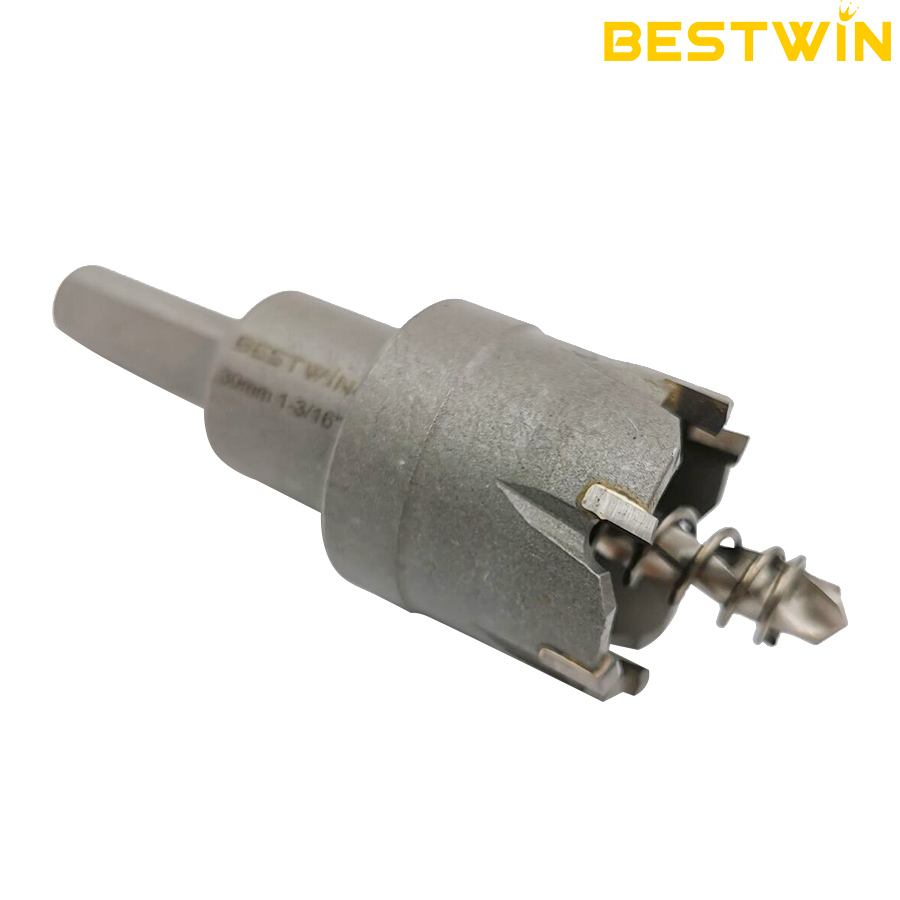
Pilot, Arbor, Shank, and Machine Must Work as One System
The cutting body is only part of the assembly. The pilot tool starts the location, the arbor transfers torque, and the shank connects the system to the drill or machine. Runout, pilot projection, connection security, chuck capacity, and available torque can affect entry position, vibration, edge quality, and tool life.
Our hole saw manufacturer inquiry asks for the drill press, magnetic drill, bench machine, pneumatic tool, corded drill, or cordless drill used at each station. We need chuck type and capacity, spindle or arbor interface, speed range, available torque, feed method, and whether the machine is fixed or handheld. A shank that fits the chuck physically may still be unsuitable for the required diameter and load.
Pilot projection must suit the workpiece and what lies behind it. On a flat blank, the pilot can pass through open space. On an assembled cabinet door, it could contact wiring, a back plate, devices, or a gasket. The customer defines a safe clearance and protection method. We provide the pilot and arbor data needed for the approved process.
Quick-change or standard arbor systems can be useful when a station cuts several diameters. The commercial value depends on secure connection, correct size pairing, replacement availability, and operator process. The hole saw manufacturer product map should list which cutter, arbor, pilot, and shank codes form each approved combination.
Entry Support and Breakthrough Control Protect the Panel
Thin cabinet sheet can flex as the teeth contact the surface. If the panel is unsupported, the cutter may chatter, mark the coating, or produce an uneven opening. As breakthrough begins, a sudden increase in feed can grab the remaining material and pull the tool forward. The finished result may show burrs, distortion, or a ring around the entry.
The hole saw manufacturer selection cannot replace proper fixturing, clamping, guarding, and machine controls. However, product construction and cutting direction must be compatible with the intended setup. We ask whether the panel is flat or formed, whether it is cut before or after painting, how it is supported, and whether the operation is automated, fixture-guided, or handheld.
For a production blank, the sample can use the same support and orientation as the line. For a field opening, the review should include limited access, a portable drill, a finished surface, and the actual cabinet wall. These are different hole saw manufacturer application conditions even when material and diameter match.
Feed and speed belong to the validated process. Excessive speed can increase heat and reduce control. Too little feed can rub instead of cutting, while too much feed can overload the teeth or grab the sheet. We provide product-specific guidance where available, and the equipment owner establishes the final safe procedure for its machine, panel, and workplace.
Chips and the Cut Plug Need a Planned Exit Path
An annular cutter removes a ring of material and leaves a circular plug. In a workshop, chips and the plug can fall onto a table or into a collection area. In an assembled enclosure, they can land on terminals, circuit boards, contactors, drives, or wiring. That contamination can create a serious equipment problem even when the visible hole looks acceptable.
Our hole saw manufacturer review therefore asks whether cutting occurs before or after cabinet assembly. Pre-assembly cutting is usually easier to support, clean, deburr, and inspect. If field modification is unavoidable, the electrical contractor or equipment owner establishes isolation, internal shielding, plug capture, chip collection, cleanup, and inspection controls suitable for the cabinet.
Cutting depth also matters. The hole saw must pass through the material and any approved laminate or reinforcement without colliding with internal components. A double wall, folded flange, back plate, or hidden stiffener can exceed the expected depth. The customer provides a section drawing or measured clearance so we can match the hole saw manufacturer product to the actual stack.
Plug removal should be considered during sample review. A plug that jams frequently can interrupt production and encourage unsafe improvisation. Cutter slots, body depth, material, coating, and cutting state can all affect removal. We record the approved product and process condition rather than promising that every plug in every material will release identically.

Coated and Painted Enclosures Need a Visible-Surface Limit
Powder coating, paint, galvanizing, anodizing, film, and protective laminates can change the visible result at entry and exit. A clean metal edge may still be unacceptable if the coating lifts, scratches, burns, or shows a wide witness ring. The fitting may cover part of the edge, but it should not be assumed to hide every mark.
As a hole saw manufacturer, we ask which face is visible, whether the hole is cut before or after finishing, what fitting covers the opening, and what rework is permitted. The sample acceptance can include coating lift, scratch radius, entry mark, exit burr, roundness, and fit with the real gland, hub, pushbutton, or circular fitting.
Protective film can help during fabrication but can also affect chip movement or tear around the opening. The enclosure manufacturer decides whether it remains during cutting. Our hole saw manufacturer sample should use the same surface state planned for production so the approved result is meaningful.
Post-cut edge treatment, corrosion protection, grounding, and sealing belong to the completed cabinet process. We can match the cutter to the declared material and appearance requirement, while the panel builder defines deburring, touch-up, coating repair, gasket installation, and inspection according to its equipment standard.
Production Machines and Field Drills Need Separate Product Codes
A cabinet factory can use drill presses, fixtures, magnetic drills, CNC-assisted stations, or dedicated panel-processing equipment. An electrical contractor may use a handheld cordless or corded drill on a finished enclosure. The rigidity, available torque, speed control, support, access, and hole quantity are different.
Our hole saw manufacturer program can separate production and field codes even when the diameter is the same. A factory code can prioritize the declared production material, machine, and hole volume. A field code can prioritize compatibility with the approved portable machine, clearer identification, and the range of materials encountered in installation or modification.
This separation prevents a service kit from being refilled with a product approved only for a rigid factory setup. It also prevents a production station from receiving a general-purpose field cutter when the line requires a controlled TCT or bi-metal specification. The hole saw manufacturer label and packaging should make the boundary visible.
Distributors can keep common diameters in both lines if their customers serve factories and field projects. Separate SKU descriptions, color bands, case layouts, or labels can reduce substitution. We confirm those OEM and packaging fields after the technical sample is approved.
Samples Must Use Real Panels, Fittings, and Machines
A useful sample represents the order. We tie the hole saw manufacturer sample plan to the panel material, thickness, coating, finished diameter, fitting, support, machine, arbor, pilot, speed range, feed method, hole quantity, and visible-surface limit. A test in an uncoated mild-steel coupon does not approve a stainless, aluminum, or powder-coated enclosure by implication.
The sample can be checked in practical terms: the cutter starts at the intended location, the opening accepts the real fitting, the panel remains within the drawing limit, the edge and coating stay within the agreed boundary, the arbor connection remains secure, the plug and chips can be handled by the process, and the observed wear supports the planned order quantity.
The annular tool concept and central pilot arrangement are described in the neutral reference linked here, giving a common vocabulary when a project team works with a hole saw manufacturer. The final match still depends on the customer’s actual cabinet material, fitting, machine, access, and acceptance criteria.
Sample quantity follows the qualification program. One cutter may support an early fit check, while several may be needed for different diameters, materials, machines, production stations, installer teams, or longer trials. As a control cabinet hole saw supplier, we identify the exact cutter, arbor, pilot, shank, label, and configuration intended for the order in our hole saw manufacturer sample record.
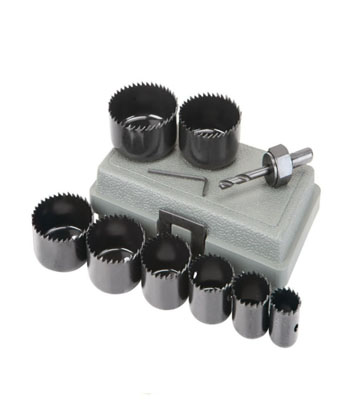
Batch Control Must Preserve Cutter, Arbor, Pilot, and Label Identity
After approval, the production record needs more than a diameter. The hole saw manufacturer specification can include cutter construction, tooth or insert direction, body depth, pilot, arbor, shank, size marking, surface treatment, label, packaging, inspection fields, and any customer-specific requirement. These fields connect the repeat order to the sample.
At Bestwin, we support OEM labeling, product coding, inspection, packaging, and repeat batch supply. As an industrial hole saw factory, we carry the approved product identity into manufacturing records and separate customer variants that should not share one finished-goods code.
Change communication should be defined before the order. The customer can state which material, geometry, tooth, insert, heat-treatment, finish, pilot, arbor, label, document, or packaging changes require notice and whether a new sample is needed. Our hole saw manufacturer quality record can then follow that approval path.
Inspection can focus on decision-relevant characteristics. Diameter and body depth affect the opening. Interface dimensions affect fit with the arbor and machine. Pilot alignment and runout affect starting. Marking and package identity affect replenishment. The exact checks depend on the approved product and order, so they are confirmed in the commercial specification.
Sets and Refill Codes Should Follow the Cabinet Hole Map
A useful set is based on the diameters and materials used in a real cabinet program. Including many uncommon sizes can increase package cost and weight without helping production. Excluding a high-use gland, conduit, pushbutton, or fan size can force the customer to buy an unrelated refill immediately.
Our hole saw manufacturer set review uses the customer’s hole map. We list each finished opening, fitting, material, cutter size, arbor, pilot, production location, and expected frequency. The result can be a factory station set, installer kit, distributor assortment, or OEM case with the combinations actually required.
Refill demand is not equal across a set. Common gland and conduit sizes may wear or be issued more often than large fan or meter sizes. Separate cutter, pilot, and arbor codes allow replenishment without replacing the whole kit. The hole saw manufacturer quotation can therefore include set quantity and expected refills as separate lines.
Packaging must protect cutting edges and keep interfaces identifiable. A molded case can support a portable kit, while industrial cartons or divided trays can suit factory replenishment. Labels can show diameter, material direction, cutter family, arbor compatibility, customer code, and batch information where requested.
Drawings, Materials, Machines, Samples, and Quantity Complete the RFQ
A useful RFQ gives our hole saw manufacturer team enough information to narrow the product family without repeated assumptions. The technical fields include finished opening diameter, fitting drawing or part number, panel material and grade, thickness, coating, cutting depth, edge distance, tolerance, visible-surface limit, acceptable burr, machine, chuck or spindle, speed range, support condition, and estimated holes per tool or per batch.
The application fields identify cable glands, conduit hubs, pushbuttons, indicator lamps, fan and filter openings, meters, circular connectors, or service access. They also state whether cutting occurs in a flat blank, formed part, painted door, stainless box, aluminum panel, plastic enclosure, or assembled cabinet.
The commercial fields include sample quantity, diameter mix, annual or project volume, refill quantities, set layout, labels, OEM branding, packaging, inspection documents, delivery destinations, target schedule, and change-notification expectations. These details let the hole saw manufacturer sample, quotation, and batch plan reflect the real enclosure program.
We Match the Cutting System to the Complete Cabinet Opening
The correct product follows the cabinet opening, not diameter alone. Material and thickness establish the cutting family. The fitting establishes finished size. Coating establishes the visible edge limit. The machine establishes the arbor, pilot, shank, speed, and support boundary. A complete hole saw manufacturer review keeps those conditions connected to one approved cutting system. Samples establish the approved result, while labels, refill codes, and batch controls preserve the hole saw manufacturer match.
Send us the panel drawing, fitting list, material and thickness, coating, hole map, machine information, sample quantity, packaging needs, and order volume. As your hole saw manufacturer, we can match the cutter, arbor, pilot, shank, set, and refill plan and carry the approved product identity into repeat control-cabinet orders.










 English
  العربية
  Français
  Português
  Português do Brasil
  Italiano
  简体中文
简体中文  繁體中文
繁體中文  日本語
日本語  한국어
한국어  Deutsch
  Español
  Slovenčina
  ไทย
ไทย  Türkçe