

Plumbing openings can look simple until the same hole needs to be made through several very different materials.
A pipe opening through a plywood cabinet is not the same cutting job as a faucet opening in a stainless steel sink. A penetration through plastic paneling also behaves differently from one through drywall or a metal service panel. Even when the required hole diameter is similar, the suitable hole saw, cutting speed, tooth design, and operating method may change considerably.
For this reason, choosing a hole saw for plumbing work should start with the material being cut rather than the hole diameter alone.
As a manufacturer of hole saws and drilling tools, BESTWIN supplies different cutting solutions for wood, plastics, sheet metal, stainless steel, gypsum board, and other common construction materials. In this guide, we focus on how material, opening size, cutting depth, and job frequency affect hole saw selection for plumbing installations.
Start with the Material Behind the Plumbing Opening
The most important question is straightforward:
What material will the hole saw actually cut?
A plumbing installation may involve several materials within the same project:
- Plywood or MDF inside kitchen and bathroom cabinets
- Solid wood panels
- Laminated furniture board
- Plastic access panels
- PVC-based panels
- Gypsum board or drywall
- Thin carbon steel
- Stainless steel sinks
- Metal cabinets or enclosures
- Composite wall panels
This matters because a hole saw that cuts quickly through plywood may not be the best choice for stainless steel. Similarly, a cutter intended for metal may be unnecessarily aggressive for a thin plastic panel.
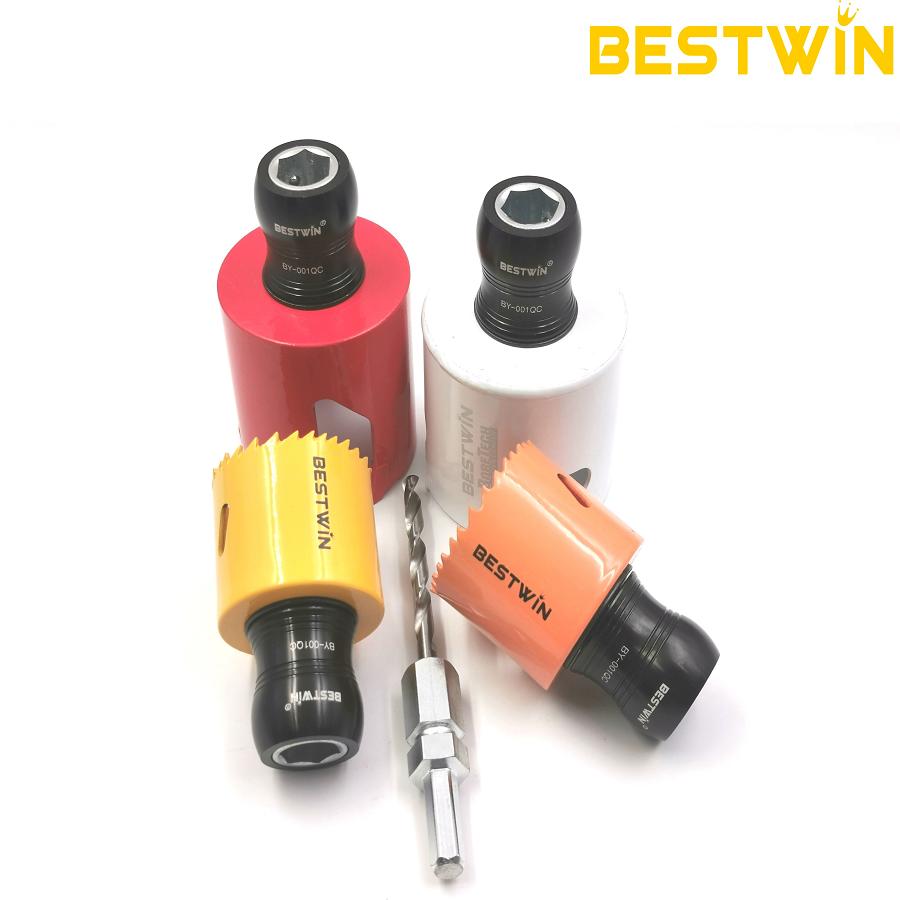
BESTWIN’s M42 bi-metal hole saw range is designed for a broad variety of materials, including applications from plasterboard through to stainless steel, while our T.C.T. range uses carbide-tipped cutting edges for harder metal cutting applications.
A practical starting point looks like this:
| Material | Typical Plumbing Application | Hole Saw Direction |
| Plywood / wood | Pipe openings in cabinets and vanities | Bi-metal or suitable general-purpose hole saw |
| MDF / laminated board | Cabinet pipe penetrations | Bi-metal with controlled cutting |
| Plastic panel | Pipe access and service openings | Bi-metal with controlled speed |
| Drywall / gypsum board | Pipe penetrations through interior walls | Bi-metal or suitable light-material hole saw |
| Thin steel | Metal cabinet and panel openings | M42 bi-metal |
| Stainless steel | Sink and metal panel openings | M42 bi-metal or T.C.T., depending on the job |
| Thicker / harder metal | Repetitive service openings | T.C.T. hole saw |
| Tile / ceramic | Finished bathroom or kitchen surfaces | Diamond cutting solution rather than a normal bi-metal hole saw |
The table is only a starting point. Thickness, finish requirements, production quantity, and power tool conditions also need to be considered.
Wood, Plywood, and MDF Are Common Cabinet Plumbing Materials
Kitchen cabinets, bathroom vanities, utility cabinets, and built-in furniture frequently need openings for water supply lines, drain pipes, flexible hoses, and other plumbing connections.
For these materials, cutting speed is rarely the only consideration.
The opening should also have reasonably clean edges, especially when it remains visible after installation.
Plywood and solid wood
A bi-metal hole saw is a practical option for many wood-based plumbing openings because it can handle both wood and other materials encountered on installation sites.
This is particularly useful when one tool set may be used across cabinet boards, plastics, light metals, and other materials during the same project.
The pilot drill helps locate the center of the opening before the hole saw teeth engage with the surface. A stable arbor and correctly installed pilot bit are therefore important, especially on smooth laminated cabinet surfaces.
MDF and laminated boards
MDF cuts differently from natural wood because of its dense and relatively uniform structure.
Laminated furniture panels create another concern: the decorative surface can chip around the edge of the opening if cutting pressure is excessive or the tool is allowed to move before the teeth establish a stable cut.
For these boards, it is usually better to allow the hole saw to cut progressively rather than forcing it through the panel.
When appearance matters, cutting technique becomes almost as important as the cutter itself. Supporting the back of the board and controlling the final breakthrough can reduce rough edges around the exit side.
Choose enough cutting depth
Cabinet panels are usually not extremely thick, but double layers, reinforcing structures, countertops, or stacked materials can increase the required cutting depth.
The hole saw needs enough usable depth to pass through the complete material without the body bottoming out before the cut is finished.
That makes diameter and cutting depth two separate specifications rather than one selection.
Stainless Steel Sinks Need More Attention to Heat and Tooth Material
A stainless steel sink creates a very different cutting condition.
Stainless steel can generate considerable heat at the cutting edge. Excessive speed, insufficient cutting control, or a worn cutter may shorten tool life and make the opening more difficult to complete.
Plumbing openings in sinks may be required for:
- Faucets
- Soap dispensers
- Filtered-water taps
- Drain accessories
- Sprayer fittings
- Additional plumbing connections
For these jobs, both M42 bi-metal and T.C.T. hole saws can be relevant depending on material thickness, working conditions, and expected cutting frequency.
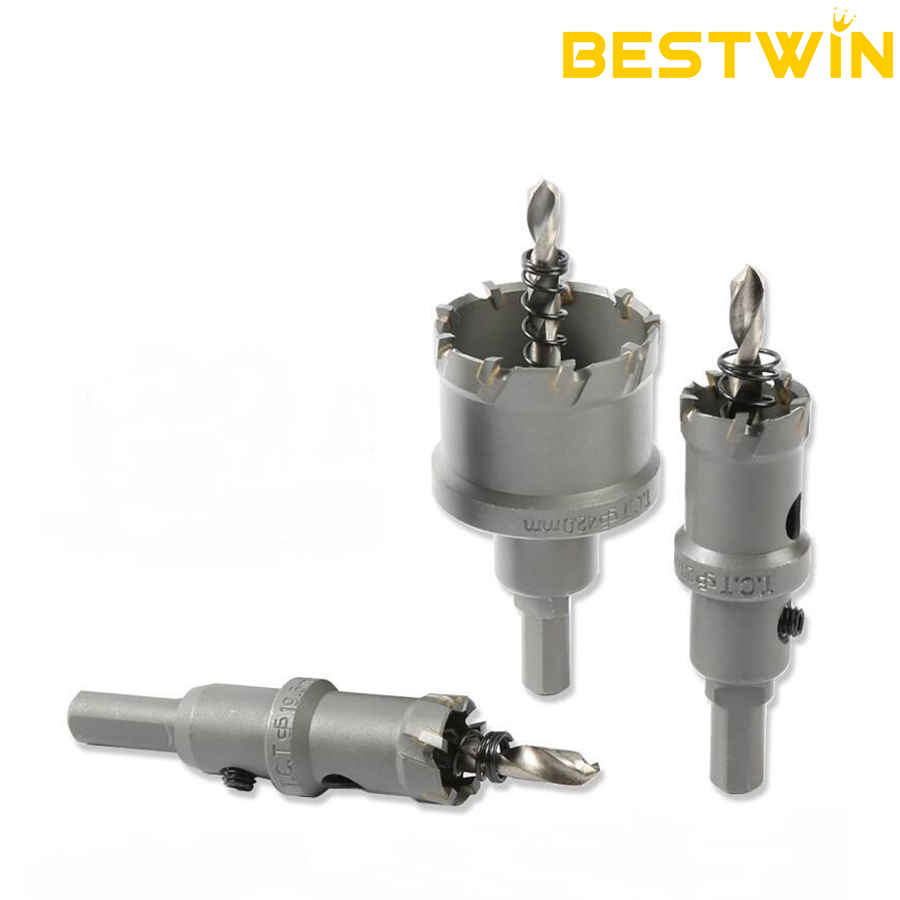
BESTWIN M42 bi-metal hole saws use an M42 high-speed steel cutting edge with cobalt and are designed for a wide range of materials extending to stainless steel. Our T.C.T. series uses tungsten carbide tipped cutting edges and includes models intended specifically for steel and stainless steel cutting.
When M42 BI-Metal makes sense
A quality bi-metal hole saw is particularly useful when versatility is important.
For example, an installer may need to cut:
- A wooden cabinet panel
- A plastic service cover
- A thin metal sheet
- A stainless steel sink
A versatile M42 bi-metal series reduces the need to change between completely different hole saw systems for every material.
When T.C.T. becomes more attractive
T.C.T. hole saws become especially useful where metal cutting is a larger part of the work.
This can include:
- Repeated stainless steel openings
- Thicker metal sections
- Steel plumbing service panels
- Metal cabinets
- Fabricated sink or equipment applications
- Workshop-based repetitive hole production
Carbide-tipped teeth provide high hardness and heat resistance, which makes this type of hole saw particularly suitable for harder metal applications. BESTWIN’s T.C.T. series includes models for stainless steel, steel, brass plate, and other demanding metal cutting work.
Regardless of cutter type, stainless steel should not simply be approached by running the drill at maximum speed. Controlled speed, stable feed pressure, and appropriate cooling or lubrication where required can make a significant difference to cutting performance and tool life.
Plastic Panels Need a Different Cutting Approach
Plastic is generally easier to cut than stainless steel, but that does not mean it is impossible to damage.
Excessive friction can generate heat, while aggressive feed pressure may crack thinner or more brittle panels.
Plumbing installations may require openings through:
- PVC panels
- Plastic cabinets
- Utility panels
- Bathroom access panels
- Polymer service covers
- Plastic equipment housings
For many of these applications, a bi-metal provides a useful balance between cutting ability and versatility.
BESTWIN’s M42 bi-metal hole saw products include versions suitable for materials such as wood, iron sheet, pipe, and plastic, making them practical when several material types appear within one installation.
The main consideration with plastic is heat control.
If the hole saw rotates too quickly, friction may soften the material around the cutting edge. Instead of producing a clean opening, melted material can accumulate around the teeth and leave a rough edge.
A controlled cutting speed is therefore generally more useful than simply trying to finish the hole as quickly as possible.
For thin plastic panels, excessive downward pressure should also be avoided. Once the hole saw is close to breaking through, the cut should remain controlled to reduce the chance of cracking or tearing the material.
Drywall and Wall Panels Often Favor Versatility
Plumbing pipes frequently pass through interior walls before reaching fixtures, cabinets, equipment, or service spaces.
Common openings include:
- Water pipe penetrations
- Drain and waste pipe routes
- Pipe access holes
- Heating and service lines
- Utility penetrations
- Maintenance openings
Gypsum board itself is relatively easy to cut. The challenge is that wall construction is not always limited to one material.
Behind or around the panel there may be:
- Timber framing
- Thin metal profiles
- Multiple board layers
- Plastic components
- Insulation
- Other concealed building materials
This is one reason a versatile hole saw can be useful for general plumbing installation work.
BESTWIN’s M42 bi-metal range is specified for materials ranging from plasterboard to stainless steel, while the product range also includes hole saw solutions for gypsum board, wooden board, and acrylic applications.
However, identifying what lies behind the wall remains important before drilling.
The suitability of the hole saw does not remove the need to check for electrical wiring, existing pipes, structural elements, or other hidden services before making the opening.
Do not treat every wall surface as drywall
A tiled bathroom wall is a different cutting application.
Standard bi-metal or T.C.T. hole saw selection for wood and metal should not automatically be extended to ceramic tile, porcelain, glass, stone, or similar hard brittle surfaces.
These materials generally require a suitable diamond cutting solution.
BESTWIN’s product range therefore separates Diamond Hole Saws from HSS, M42 bi-metal, and T.C.T. hole saw categories rather than treating them as interchangeable cutters.
This distinction becomes especially important in plumbing because a pipe may pass through a wall containing several layers. The visible surface could be tile, while the supporting layer behind it may be board or another material.
Match the Hole Diameter to the Pipe and Fitting, Not Just the Pipe Name
Material determines the cutter type, but diameter still determines whether the opening actually works.
The required hole should normally provide enough clearance for the component that needs to pass through it.
That component may be larger than the nominal pipe itself.
For example, the opening may need to accommodate:
- Pipe outside diameter
- Couplings
- Connectors
- Flexible hoses
- Fittings
- Insulation
- Protective sleeves
- Grommets
- Escutcheons
- Installation tolerance
This is why choosing a hole saw only from a nominal pipe size can lead to problems.
A hole that is slightly too small may prevent the fitting from passing through, while an unnecessarily oversized hole may create poor appearance or make sealing and finishing more difficult.
A more reliable approach is to confirm the actual outside dimension of the largest component that must pass through the opening, then select an appropriate hole saw diameter with the necessary clearance.
For visible faucet or sink openings, the mounting requirements of the actual plumbing fixture should also be checked.
Different faucet, dispenser, drain, or accessory designs can require different opening dimensions even when their applications appear similar.
Diameter Is Only One Part of Hole Saw Selection
Two hole saws with the same diameter can still perform very differently.
Several specifications should be considered together.
Tooth material
This strongly affects the materials the hole saw can cut efficiently.
M42 bi-metal provides a versatile solution across many common installation materials, while T.C.T. becomes particularly useful for demanding metal applications.
Cutting depth
A hole saw must be deep enough for the material being cut.
This becomes more important with thick countertops, structural panels, multiple board layers, or fabricated metal components.
Arbor compatibility
The hole saw must connect securely to the power tool.
Arbors, also called mandrels, connect the hole saw to the drill chuck and normally carry the pilot bit that locates the center of the cut.
BESTWIN supplies hole saw arbors in different configurations, including hex shank, SDS-plus, and quick-change versions for compatible hole saw systems.
Pilot drill
For many conventional hole saw applications, the pilot drill establishes the center before the cutting teeth engage.
A damaged, loose, or unsuitable pilot drill can affect positioning accuracy even when the hole saw itself is in good condition.
Chip clearance
Efficient chip removal becomes increasingly important when cutting deeper sections or working through wood, plastic, and metal repeatedly.
Packed chips increase friction and heat and can slow the cut.
Job frequency
The right choice for an occasional cabinet opening may not be the same as the right choice for repetitive workshop production.
Where hundreds of similar openings are required, cutting speed, tool life, slug removal, and replacement cost become more important than they are for occasional installation work.
One Hole Saw Type Does Not Need to Cover Every Plumbing Material
It is tempting to look for one universal hole saw that can handle every plumbing opening.
In practice, a small selection of complementary cutters is often more useful.
For general installation work involving wood, drywall, plastic, sheet material, and occasional stainless steel, an M42 bi-metal range offers broad versatility.
For repetitive or more demanding metal cutting, T.C.T. hole saws can provide a more specialized solution.
For ceramic tile, porcelain, glass, or similar hard brittle materials, diamond cutting products should be considered instead.
A simple selection logic can therefore be:
General wood, plastic, drywall, and mixed-material work → M42 bi-metal
Frequent stainless steel and harder metal work → consider T.C.T.
Tile, ceramic, porcelain, or glass surfaces → suitable diamond hole saw
This approach also makes it easier to build a hole saw assortment around actual applications rather than accumulating many sizes without a clear material strategy.
For wholesalers, tool distributors, plumbing-tool suppliers, and professional tool ranges, this distinction is particularly useful when determining which diameters and cutter types should form the core of a product series.
Common plumbing dimensions can then be matched with the material types most frequently encountered in the target market.
BESTWIN Hole Saw Solutions for Plumbing and Installation Work
Plumbing openings are a good example of why hole saw selection should go beyond diameter.
The same installation may move from a wooden cabinet to a stainless steel sink, then through plastic, gypsum board, or a metal service panel. Selecting the cutter around the actual material gives a more reliable basis for both cutting performance and tool life.
At BESTWIN, our hole saw range includes M42 bi-metal hole saws, T.C.T. hole saws, HSS hole saws, diamond hole saws, and matching arbor systems, allowing different material requirements to be covered within one product program.
For distributors and professional tool buyers developing a hole saw range for plumbing, construction, installation, and maintenance applications, we can also match cutter types, diameters, arbor configurations, and sets around the intended materials and market requirements.
The most useful starting information usually includes the materials to be cut, preferred diameter range, expected cutting depth, power tool interface, and whether the hole saws are intended for general installation or repetitive professional use.
With those points clear, it becomes much easier to build a practical hole saw series rather than relying on one cutter type for every plumbing opening.

FAQ
What type of hole saw is best for plumbing?
There is no single best type for every plumbing opening. M42 bi-metal hole saws are versatile for wood, plastic, drywall, sheet metal, and many stainless steel applications. T.C.T. hole saws are worth considering for more demanding or repetitive metal cutting, while tile and ceramic surfaces generally require suitable diamond hole saws.
Can I use a bi-metal hole saw on a stainless steel sink?
Yes. A quality M42 bi-metal hole saw can be used for many stainless steel sink openings. Controlled cutting speed, stable pressure, and appropriate lubrication or cooling can help reduce heat and improve cutter life.
Is a T.C.T. hole saw better than a bi-metal hole saw for stainless steel?
Not automatically. T.C.T. offers high hardness and heat resistance and can be particularly useful for demanding or repetitive metal cutting. M42 bi-metal remains a versatile choice when the same hole saw range also needs to cover wood, plastic, drywall, and other materials.
What hole saw should I use for plumbing holes in cabinets?
For plywood, MDF, laminated board, and many other cabinet materials, a suitable bi-metal hole saw is a practical choice. The correct diameter, cutting depth, stable pilot drill, and controlled breakthrough are also important for producing a clean opening.
Can the same hole saw cut wood, plastic, and metal?
Some bi-metal hole saws are designed for a broad range of materials and can cut wood, plastic, plasterboard, and metal. However, harder metals and materials such as ceramic tile or porcelain may be better handled with more specialized T.C.T. or diamond cutting products.
How much clearance should I leave around a plumbing pipe?
The opening should normally be slightly larger than the largest part that needs to pass through it, including fittings, sleeves, insulation, or connectors. The exact clearance depends on the installation and finishing requirements rather than the nominal pipe size alone.
Why does stainless steel require a slower cutting speed?
Stainless steel generates heat quickly during cutting. Excessive speed can overheat the cutting edge, shorten tool life, and make the cut more difficult. A controlled speed and steady feed usually produce better results.
What should I check before cutting through a wall panel?
Confirm the panel material and check for hidden pipes, electrical wiring, metal framing, and other services behind the surface. Wall construction may include several layers, so the visible panel does not always represent everything the cutter will encounter.
Should the opening size be based on the pipe or the fitting?
Use the largest component that needs to pass through the opening as the reference. In many plumbing installations, fittings, sleeves, connectors, or insulation are wider than the pipe itself, so selecting the diameter from the nominal pipe size alone may leave insufficient clearance.










 English
  العربية
  Français
  Português
  Português do Brasil
  Italiano
  简体中文
简体中文  繁體中文
繁體中文  日本語
日本語  한국어
한국어  Deutsch
  Español
  Slovenčina
  ไทย
ไทย  Türkçe