

Steel door and window factories drill thousands of holes for hinges, brackets, handles, locks, anchors, drainage features, and assembly screws. The work may look repetitive, but hole diameter, sheet thickness, profile shape, coating condition, fixture support, and production volume all change the demand on the cutting tool. Bestwin matches the drill bit to the material and hole plan, including product geometry, cutting material, finish, packaging, sample quantity, and inspection needs. A consistent drill bit program helps the line control hole quality, tool changes, and replenishment without turning the purchase into a general lesson on door design.
Quick Answer
For steel door and window production, classify the holes before requesting a quotation. State the steel grade or hardness range, coated or uncoated condition, wall thickness, hole diameter and tolerance, through-hole or interrupted-cut condition, machine type, chuck or holder, expected holes per shift, and desired packaging. Use a twist drill bit for pilot, screw, and clearance holes when the geometry suits the material; use an appropriate metal hole saw for larger circular hardware openings. Validate both on real profiles with the intended fixture, speed, feed, and lubricant. The approved sample should define acceptable entry, exit burr, roundness, coating damage, cutting time, wear limit, and identification for repeat supply.
Why Door and Window Production Exposes Drill Bit Variation
A fabrication line rarely drills one simple flat coupon all day. Door stiles, window frames, reinforcement pieces, hinge plates, and accessory brackets present different wall thicknesses and levels of support. Some holes enter a flat face, while others begin near a radius or cross an internal cavity. A drill bit that performs well in a rigid test plate may wander, chatter, or leave a heavy exit burr when the same cutting edge meets a thin hollow profile.
Coated material adds another requirement. Pre-painted or galvanized profiles must be drilled without unnecessary scratching, flaking, or heat discoloration around the hole. The cutting tool does not control every aspect of finish protection, because clamping, chip removal, handling, and downstream deburring also matter. Still, the drill bit point condition, concentricity, edge sharpness, and chip evacuation influence how cleanly the hole begins and exits.
Production repetition makes small differences visible. If the drill bit varies from batch to batch, operators may compensate with different pressure or repeated pecking. That increases cycle variation and makes it difficult to set a stable replacement interval. Reliable purchasing therefore depends on a defined product, a representative test, and a record that links the approved sample to the supplied batch.
South American customers may run a mixture of manual stations, drill presses, magnetic drills, and CNC profile equipment, sometimes across several factories or contract workshops. The correct response is not one universal drill bit. It is a controlled range matched to the material, hole sizes, equipment, operator conditions, and replenishment plan at each site.
Separate Small Holes from Large Hardware Openings
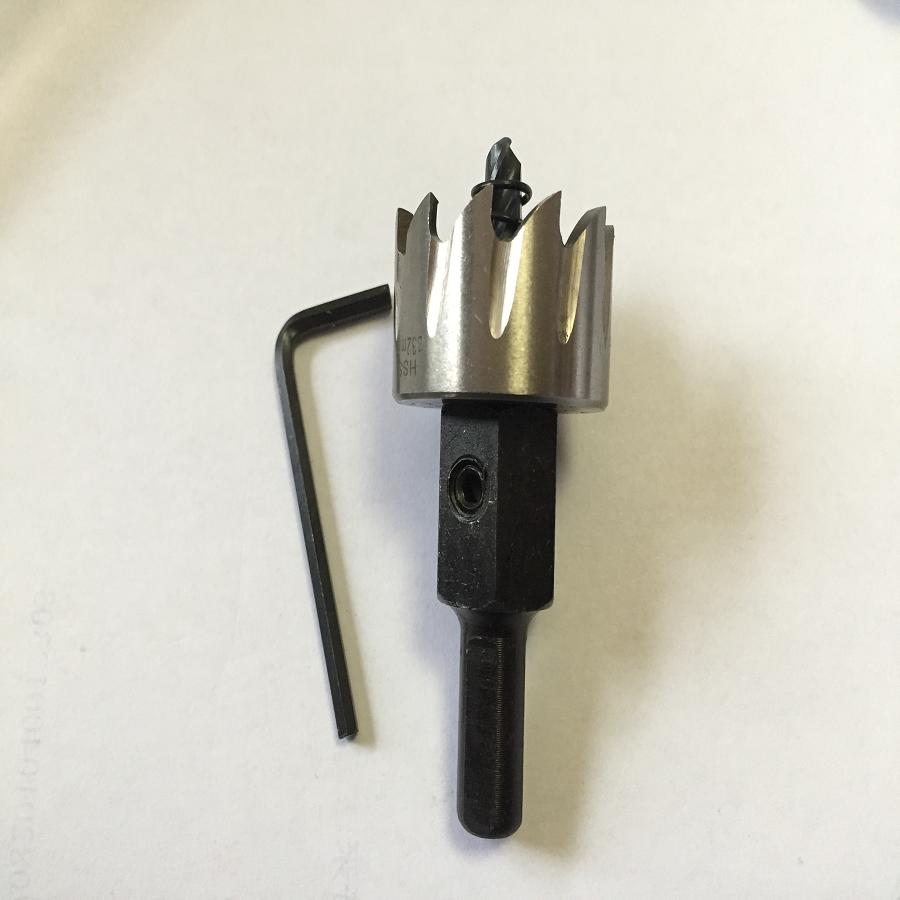
Pilot holes, screw holes, clearance holes, and larger circular cutouts do not place the same demand on a tool. A conventional twist drill bit removes the full diameter through its cutting lips and flutes. It is often the practical choice for smaller holes used in hinges, brackets, and fasteners. A metal hole saw removes an annular ring and can be more appropriate for larger openings used by lock hardware, cable glands, access fittings, or special accessories.
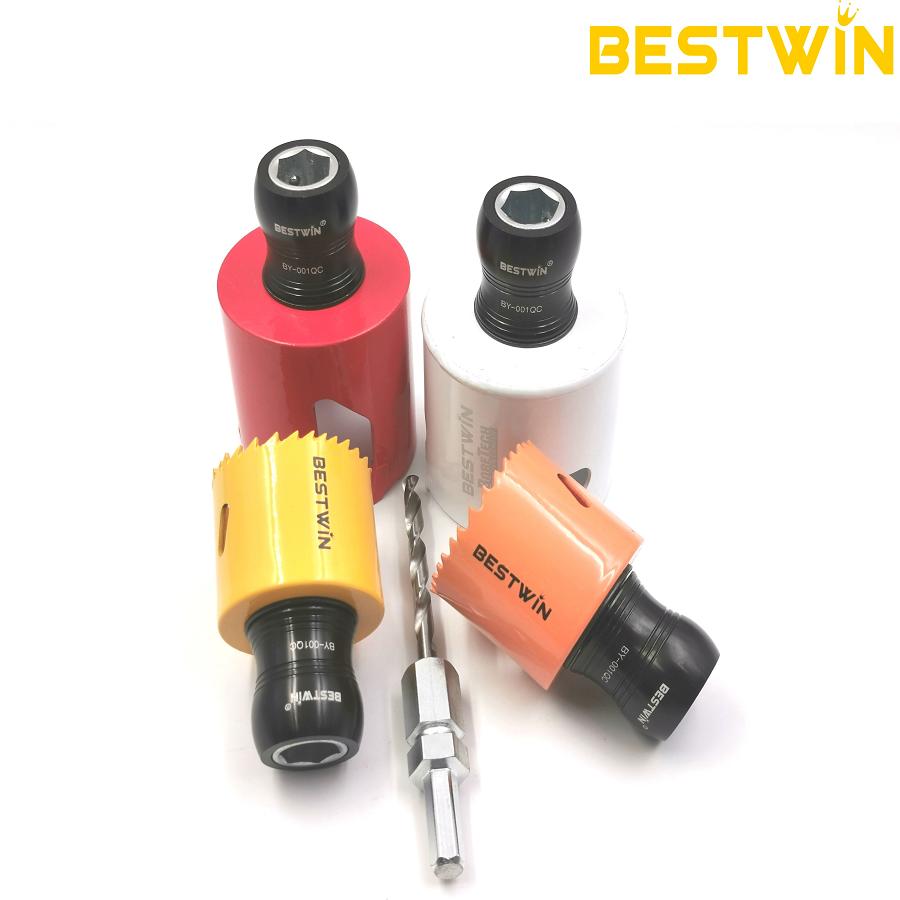
The two product groups should be specified separately even when they are purchased together. The drill bit schedule should show each diameter and material condition. The hole-saw schedule should add the arbor or holder interface, pilot arrangement, cutting depth, and access around the workpiece. Treating a large hole saw as merely an oversized drill bit can hide compatibility and replacement details that affect production.
Table 1. Hole Requirements in Steel Door and Window Fabrication
| Hole type | Common product role | Key purchasing information | Sample acceptance focus |
|---|---|---|---|
| Pilot or locator hole | Starts a later drilling, tapping, or fastening step | Diameter, depth, position tolerance, profile wall, machine type | Low wander, round entry, stable position |
| Screw or rivet hole | Supports assembly hardware and brackets | Fastener size, clearance, steel thickness, coated surface | Diameter consistency, controlled burr, finish protection |
| Hinge and reinforcement hole | Joins thicker local plates or multiple layers | Material stack, total thickness, overlap, access | Straight hole, chip evacuation, no edge chipping |
| Lock or handle opening | Creates a larger circular feature | Diameter, cutting depth, arbor, pilot, hardware tolerance | Roundness, cut completion, slug removal, edge condition |
| Anchor or installation hole | Supports frame attachment components | Diameter range, site or factory drilling, substrate boundary | Correct tool family, repeatability, packaging convenience |
Match Drill Bit Construction to the Steel Condition
Product selection begins with the workpiece. Mild carbon steel, stainless steel, coated sheet, and hardened reinforcement do not cut in the same way. Even within mild steel, a thin hollow profile behaves differently from a thick mounting plate. A useful inquiry identifies the actual material standard when available, or at least supplies representative samples and a practical hardness range.
Cutting material and heat resistance
High-speed steel is widely used because it combines toughness, manufacturability, and suitability for many general metal-drilling tasks. Alloy grade and heat treatment influence hardness retention and resistance to edge breakdown. For higher heat or more demanding steel, a cobalt-bearing drill bit or another suitable construction may extend useful life when the machine and cutting conditions support it. The grade name alone, however, is not a complete performance guarantee; geometry, grinding, surface condition, and process control also matter.
Carbide-tipped or solid-carbide products can offer different wear and speed capabilities, but they are less tolerant of impact, runout, or flexible setups. A manual station drilling thin profiles may favor toughness and predictable handling, while a rigid automated fixture can make use of a more wear-resistant drill bit. The selection should follow the customer’s machine, holder condition, and workpiece support rather than a simple ranking of materials.
Point geometry and centering
The point determines how the drill bit enters the profile. Point angle, chisel-edge form, web thickness, and split-point treatment influence centering and thrust. A self-centering geometry can reduce walking on a flat steel face, but the result still depends on runout, surface curvature, fixture rigidity, and whether a pilot mark is used.
Thin material can amplify breakthrough problems. Excessive thrust near the exit may deform the wall or pull the drill bit through suddenly. A geometry that cuts freely and remains concentric helps, while the test should record the actual burr and distortion on the production profile. We can discuss point and material options after receiving the hole diameter, steel condition, and machine information.
Flutes, chips, and coating
Flute geometry provides chip space and carries chips away from the cutting zone. If chips pack in the flute, heat rises and the surface can be scratched during withdrawal. The drill bit diameter, flute length, helix, surface finish, cutting depth, and drilling cycle all contribute to evacuation. Longer is not always better; unnecessary length can reduce rigidity and increase runout at the point.
Surface treatments or coatings can reduce friction or improve wear behavior in appropriate applications. Their benefit depends on substrate preparation, coating quality, cutting temperature, and the workpiece. A coating should be included in the approval as part of the complete drill bit specification, not added later as a cosmetic description. Colour alone is not reliable evidence of a particular coating or performance level.
Diameter, runout, and shank fit
Door and window hardware often depends on a controlled clearance rather than laboratory-grade precision, but variation still affects fit and assembly time. Diameter tolerance, roundness, point symmetry, and drill bit runout influence the finished hole. The chuck or holder must grip the shank consistently without damage or slip.
State the shank type and maximum holder capacity in the RFQ. If several factories use different machines, the product program may require more than one shank arrangement. A common cutting diameter does not guarantee that the same drill bit package fits every station.
Keep Cutting Conditions inside the Product Approval
Speed, feed, lubricant, and fixture support belong in the sample record because they change observed drill bit performance. They do not need to become a broad machining manual. The purpose is to establish a repeatable condition for comparing samples and production lots.
An excessively high speed can increase heat and accelerate edge wear. A feed that is too light may rub instead of cutting, while excessive force can deform a thin profile or overload the tool. The appropriate setting depends on diameter, tool material, steel condition, machine rigidity, and the manufacturer’s recommendation. Record the range used for approval instead of relying on an operator’s memory.
Lubrication or coolant can reduce heat and assist chip movement, but the factory must confirm compatibility with painted, galvanized, or otherwise finished profiles. Residue control, cleaning, and downstream coating or bonding requirements remain part of the customer’s production process. The drill bit supplier should know whether the test is dry, mist-lubricated, or flooded so that comparisons use the same boundary.
Fixture support is especially important on hollow sections. A loose or flexible profile can vibrate, causing an otherwise suitable drill bit to chatter. The sample test should use the intended clamp location, backing support, and entry face. If the production station changes, the tool result should be reviewed before attributing a new burr pattern solely to the cutting edge.
Build a Controlled Drill Bit Range for the Line
A factory usually benefits from a defined diameter list instead of an open assortment. Start with the hole drawing or bill of process and group identical diameters. Note which holes share the same material and depth, then identify the stations and holder types. The result is a product matrix that separates frequently consumed drill bit sizes from occasional maintenance items.
High-volume diameters deserve the strongest sample evidence and the clearest reorder code. Lower-volume sizes can use the same inspection logic, but packaging quantities should not create excessive dormant stock. If a pilot drill, step tool, or hole saw is paired with a specific operation, keep that relationship visible in the ordering record.
For larger lock or handle openings, a metal hole saw can complement the drill bit range. Confirm tooth material, diameter, cutting depth, arbor connection, pilot, and expected steel stack. The hole saw should be tested for entry control, roundness, slug removal, tooth damage, and finish around the opening. A single successful cut is not enough evidence for a production replacement interval.
Sample a Drill Bit against Measurable Acceptance Criteria
We recommend a short, written sample plan. Use production material from at least the main thickness and coating conditions. Record the machine, holder, measured runout where relevant, speed, feed method, lubricant, fixture, operator or program, and hole sequence. The same conditions should be used when comparing a second drill bit or confirming a repeat lot.
The first holes show centering, entry condition, breakthrough behavior, and basic compatibility. A longer run shows whether cutting force, burr, noise, heat, or cycle time changes as the edge wears. The test length should reflect the customer’s production target without claiming that one laboratory number predicts every factory. Tool life is a result under defined conditions, not an isolated property printed on a box.
Useful acceptance criteria can include:
- Hole diameter within the drawing’s practical tolerance.
- Entry position and roundness acceptable for the hardware.
- Exit burr below the agreed deburring threshold.
- No unacceptable paint, zinc, or surface damage around the hole.
- Cutting time and operator force stable within the approved range.
- No shank slip, point fracture, tooth loss, or abnormal heat colour.
- Wear limit defined by hole quality or cutting behavior rather than visual guesswork alone.
- Product marking and packaging that identify the approved drill bit for reorder.
Retain both pass and fail samples when possible. A labelled piece of production profile makes later discussions more concrete than a general statement that one drill bit “lasted longer.” It also helps separate tool wear from changes in material, fixture, machine condition, or operator practice.
What to Send Drill Bit Suppliers for an Accurate Quotation
A sound commercial comparison begins with the same technical package for every supplier. If one quotation assumes thin mild steel and another assumes stainless reinforcement, price and expected life cannot be compared fairly. Qualified drill bit suppliers should be able to state what product configuration the quotation covers and what still needs sample confirmation.
Table 2. RFQ and Approval Package
| Information field | What to state | Why the drill bit manufacturer needs it |
|---|---|---|
| Workpiece material | Steel grade, hardness range, coating, representative sample | Determines cutting material, geometry, and test condition |
| Profile condition | Wall thickness, hollow or solid, radius, reinforcement stack | Affects rigidity, breakthrough, and flute demand |
| Hole schedule | Diameter, tolerance, depth, quantity per part, hardware purpose | Defines the core product range and critical sizes |
| Equipment | Manual drill, press, magnetic drill, or CNC; holder and speed range | Confirms shank fit and realistic cutting parameters |
| Production demand | Parts per shift, shifts, target replacement interval | Guides sample length, packing quantity, and replenishment |
| Quality limits | Burr, roundness, position, finish damage, cycle time | Converts preference into measurable acceptance |
| Commercial details | Annual quantity, shipment lots, destination, labels, language | Supports pricing, logistics, and stock planning |
| Repeat-control details | Approved sample reference, inspection level, change notification | Connects the first approval to later supply |
As a metal drill bit supplier, Bestwin supports both standard items and OEM or private-label requests after the functional requirement is stable. Logo, label language, barcode, colour treatment, set composition, and carton marks can then be documented. Packaging decisions should support identification and handling rather than obscure product differences.
Plan Packaging and Replenishment for South America
Distance and import lead time can turn a small consumable into a production interruption. For customers in South America, we discuss order frequency, sea or air shipment, distributor stock, factory consumption, and the number of critical diameters. The goal is a drill bit replenishment plan based on measured use, not a claim that one pack suits every market.
Individual sleeves or separated compartments can protect cutting edges and help operators return unused tools to the correct location. Bulk packaging may reduce unit packaging cost for a stable automated line, while smaller labelled packs can simplify issue control across workshops. Humidity protection, inner-box strength, carton marking, and storage time should reflect the route and warehouse conditions.
Labels should show the diameter, construction, finish or coating when applicable, shank, quantity, and traceable item code. Spanish or Portuguese descriptions can be added when agreed, but the technical identifier should remain consistent across quotation, sample, packing list, and reorder. This is where experienced drill bit suppliers add value beyond sending a generic catalogue page.
Forecasting should focus on consumption by critical diameter. If one drill bit size stops the hinge station while another is used only for occasional options, the safety-stock logic will differ. We can align inner quantity and shipment batches with the customer’s consumption record while the customer retains control of inventory policy and local distribution.

Manufacturer Controls behind Repeat Supply
As a steel drill bit manufacturer, Bestwin manufactures against the approved material, geometry, process, inspection, marking, and packaging requirements. Incoming material identity, heat treatment where applicable, grinding or tooth formation, surface treatment, cleaning, and final inspection influence the delivered drill bit. The exact route depends on the product family, so evidence should match the item being purchased rather than a generic factory claim.
Dimensional checks can cover diameter, length, shank, and geometry features identified in the drawing or standard. Visual inspection addresses edge damage, coating condition, corrosion, contamination, and packaging. Functional sampling uses an agreed material and test condition when the order requires it. The inspection plan should be proportional to volume and application risk.
Change control protects the original approval. A different material grade, point geometry, coating process, shank detail, or supplier code can alter drill bit behavior even when the nominal diameter remains the same. The purchase agreement should state which changes require notice, renewed documents, or a new sample. This prevents an unnoticed substitution from reaching several production sites.
Traceability also supports root-cause review. When a customer reports early wear or heavy burr, useful evidence includes the lot code, package label, workpiece material, machine, setting, fixture, lubricant, and photographs of used cutting edges. That record allows the manufacturer to compare the complaint with retained data and avoids assuming that every hole problem has the same cause.
Common Purchasing Errors
The first error is ordering by diameter alone. Two tools with the same nominal size may differ in cutting material, point form, flute length, shank, finish, tolerance, and intended workpiece. A complete drill bit description reduces substitutions that look equivalent on a short purchase line.
The second error is testing on a thick flat plate when production uses thin hollow profiles. The rigid plate may hide walking, vibration, breakthrough deformation, and finish damage. Representative profile material gives a more useful decision.
The third error is comparing tool life without controlling speed, feed, runout, lubricant, and steel. A longer result under a slower or easier condition does not establish a better drill bit. Comparisons need the same acceptance boundary and recorded setup.
The fourth error is purchasing a large assortment that does not match the hole schedule. Unused sizes occupy stock while the highest-consumption diameter runs out. A controlled core range with clear reorder codes supports both cost visibility and production continuity.
The fifth error is approving a sample but omitting the product identifier from the order. If drill bit suppliers cannot connect the purchase order to the exact sample, repeatability becomes uncertain. Keep the approved code, drawing or specification, and packaging identity together.
The sixth error is treating packaging as an afterthought. Unprotected cutting edges, mixed diameters, unreadable labels, or moisture exposure can erase the benefit of a well-made tool before it reaches the drilling station.
Frequently Asked Questions
Which drill bit works for thin steel profiles?
The answer depends on steel grade, thickness, coating, hole size, machine, and support. A sharp high-speed-steel drill bit with suitable point geometry is common for many mild-steel profile holes, but the final choice should be tested on the actual section. Stainless or harder reinforcement may require a different material or geometry.
Can one drill bit cover every door and window hole?
Usually not. Pilot and fastener holes may suit twist drills, while large lock or handle openings may suit metal hole saws. Different thicknesses, materials, holders, and tolerances can also justify separate products. A compact, defined range is preferable to forcing one tool into incompatible operations.
How is drill bit life specified?
Specify life under recorded conditions: workpiece, thickness, hole diameter, machine, holder, speed, feed, lubricant, fixture, and the wear endpoint. The endpoint can be burr, diameter, cutting time, force, edge damage, or another measurable production limit. Without those conditions, a hole-count claim is not comparable.
When should a sample be retested?
Retest when the steel grade, coating, thickness, machine, holder, fixture, setting, lubricant, hole tolerance, or drill bit construction changes. Retesting is also sensible after an approved product change or when production moves to a site with materially different equipment.
What distinguishes reliable drill bit suppliers?
Look for a supplier that can translate the application into a clear product specification, provide representative samples, document the approved configuration, align inspection with the order, and maintain identification through packaging and repeat shipment. Marketing language alone does not establish those controls.
Where can a purchasing team review the product range?
Our drill bit category provides a starting point for product discussion. General background on the drill bit explains common tool forms, but the quotation still needs the steel profile, hole schedule, equipment, acceptance limits, quantity, and destination.
Conclusion
Steel door and window production needs more than a diameter list. Material condition, profile support, point geometry, flute and shank details, large-opening tools, cutting conditions, sample criteria, packaging, and repeat identification all influence the result. Bestwin recommends a drill bit range from this information, prepares samples, discusses OEM details, and manufactures against an approved specification. With a representative profile test and a controlled replenishment record, each critical drill bit can be compared, reordered, and introduced across production with clearer evidence and fewer avoidable surprises.








 English
 العربية
 Français
 Português
 Português do Brasil
 Italiano
 简体中文
 繁體中文
 日本語
 한국어
 Deutsch
 Español
 Slovenčina
 ไทย
 Türkçe