
Introduction
A Drill Bit is one of the most important tool accessories in drilling, chiseling, demolition, wall slotting, floor renovation, woodworking, and surface preparation work. Although many people think of a Drill Bit only as a small part used to make holes, its actual role is much broader. In real job sites, different Drill Bit designs are used to drill into concrete, shape stone, cut grooves in masonry walls, remove thinset from floors, break loose concrete, scrape hard dirt, and create clean holes in wood.
Choosing the right Drill Bit directly affects working speed, tool stability, surface quality, and long-term cost. A bit that works well on wood may not be suitable for concrete. A Drill Bit designed for rotary drilling may not perform well in impact chiseling. A floor scraper blade may remove adhesive efficiently, but it cannot replace an SDS Plus electric hammer bit for anchor hole drilling. This is why users need to consider not only size, but also shank type, cutting head design, flute structure, material hardness, impact resistance, and tool compatibility.
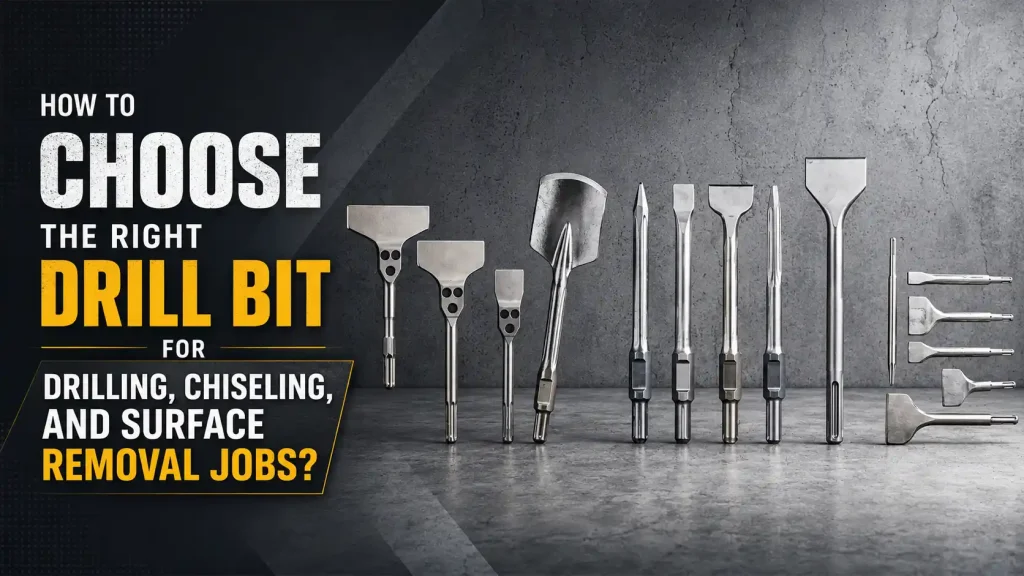
In construction, renovation, industrial maintenance, electrical installation, plumbing, flooring, woodworking, and demolition applications, a complete Drill Bit selection can help reduce downtime and improve job efficiency. Whether the task involves SDS Plus electric hammer bits, SDS Max chisels, PH65A demolition chisels, floor scraper blades, router bit sets, four-flute wood auger bits, or 3 and 4 cutter electric hammer bits, the key is to match the bit with the tool, the material, and the working method.
This article explains how to choose the right Drill Bit for different drilling, chiseling, scraping, and material removal jobs.

What Makes a Drill Bit Suitable for Different Materials?
Different materials place different demands on a Drill Bit. Concrete, stone, brick, masonry, wood, clay, tile adhesive, and loose concrete do not respond to force in the same way. Some materials need impact strength. Some require sharp cutting edges. Some require wide scraping surfaces. Others need smooth chip removal and accurate hole control. Because of this, Drill Bit selection should begin with the material being processed.
Concrete, Stone, and Masonry Need Strong Impact Resistance
Concrete, stone, and masonry are hard materials that often require repeated impact force. For these jobs, the Drill Bit must be able to transfer hammer energy from the tool into the working surface without bending, cracking, or losing efficiency. SDS Plus electric hammer bits and SDS Max electric hammer drill chisels are commonly used in these conditions because they are designed for impact drilling or chiseling.
A high quality 3 or 4 cutter electric hammer bit can improve stability when drilling into concrete. Compared with a simple cutting head, a multi-cutter structure helps the Drill Bit maintain better balance during rotation. This can reduce vibration, improve hole roundness, and make drilling smoother when the surface contains aggregate, stone particles, or uneven hardness.
For heavier concrete and stone work, an SDS Max Electric Hammer Drill Chisel for Concrete Stone is more suitable than a light-duty bit. It is designed for stronger impact energy and heavier material removal. When the task involves breaking, shaping, or chiseling hard surfaces, the Drill Bit must be selected according to impact load rather than only diameter.
Wood Requires Cleaner Cutting and Better Chip Removal
Wood drilling requires a different Drill Bit structure. Instead of breaking hard mineral material, the bit must cut through wood fibers smoothly and remove chips efficiently. A BESTWIN Four-flute wood Auger Drill Bit Straight Flute Dilling Bits style is suitable for wood applications because the flute structure helps guide chips away from the hole.
In woodworking, poor chip removal can cause burning, rough holes, slow drilling, and tool overload. A proper wood Drill Bit should offer clean entry, stable cutting, and reduced clogging. This is especially important for deeper holes or repeated drilling work where efficiency and hole quality both matter.
Woodworking may also use a 12PCS SET ROUTER BIT for shaping, grooving, trimming, and edge forming. Although router bits are not used in the same way as electric hammer bits, they belong to the wider cutting accessory category and must still be matched with the tool and material. A router bit set is useful when the work requires different profiles rather than simple round holes.
Clay, Hard Dirt, and Loose Concrete Need Wider Chiseling Structures
Clay, hard dirt, and loose concrete do not always need a sharp drilling point. In many cases, they require a wider blade or spade structure that can lift, scrape, and break material. A 30mm PH65A Hex Shank Demolition Jack Hammer Clay Spade Chisel for Removing Hard Dirt Clay and Loose Concrete is designed for this kind of work.
The wide blade structure helps distribute impact force over a larger area. Instead of drilling deep into one point, the Drill Bit or chisel accessory loosens and removes material from the surface. This makes it useful for ground preparation, demolition cleanup, trench work, and removal of compacted material.
Tile Adhesive and Thinset Need Scraper-Style Bits
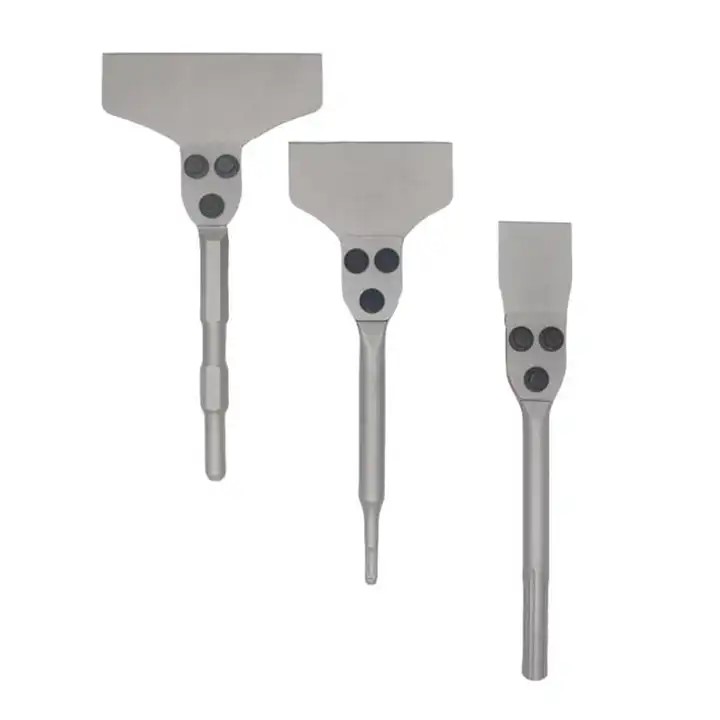
Floor renovation often involves removing old tile adhesive, thinset, mortar residue, or surface coatings. A standard concrete Drill Bit is not suitable for this job because it is designed to penetrate rather than scrape. For surface removal, a 17mm A/F Hex Shank Replacement Blade Floor Tile Thinset Removal Chisel Bit Floor Scraper with 1″, 2″, 3″, 4″, 5″, or 6″ blade sizes can improve efficiency.
The blade width should match the surface condition. Narrow blades provide more control in tight areas, while wider blades cover more surface area and improve productivity on large floors. For renovation contractors and maintenance teams, choosing the right scraper Drill Bit can reduce manual labor and improve surface preparation before new flooring is installed.
How Should You Choose a Drill Bit by Tool Shank Type?
Tool compatibility is one of the most important factors when selecting a Drill Bit. Even if the cutting head is suitable for the material, the bit will not work properly if the shank does not match the tool. The shank determines how power is transferred from the drill, electric hammer, demolition jack hammer, or floor removal tool to the Drill Bit.
SDS Plus for Light and Medium Electric Hammer Work
SDS Plus is widely used for electric hammer drilling and light chiseling. It is suitable for common concrete holes, masonry drilling, wall slotting, and smaller chiseling tasks. An SDS Plus Electric hammer bit can be used for drilling anchor holes, installation holes, and general concrete work.
An SDS Plus Electric Hammer Flat Brazed Shovel U-shaped Concrete Slotted Through Wall Chisel is more suitable for groove cutting and wall slotting. This type of Drill Bit accessory helps create channels for cables, conduits, or pipes in concrete and masonry walls. The U-shaped design gives better groove control than a standard pointed chisel.
SDS Max for Heavier Concrete and Stone Applications
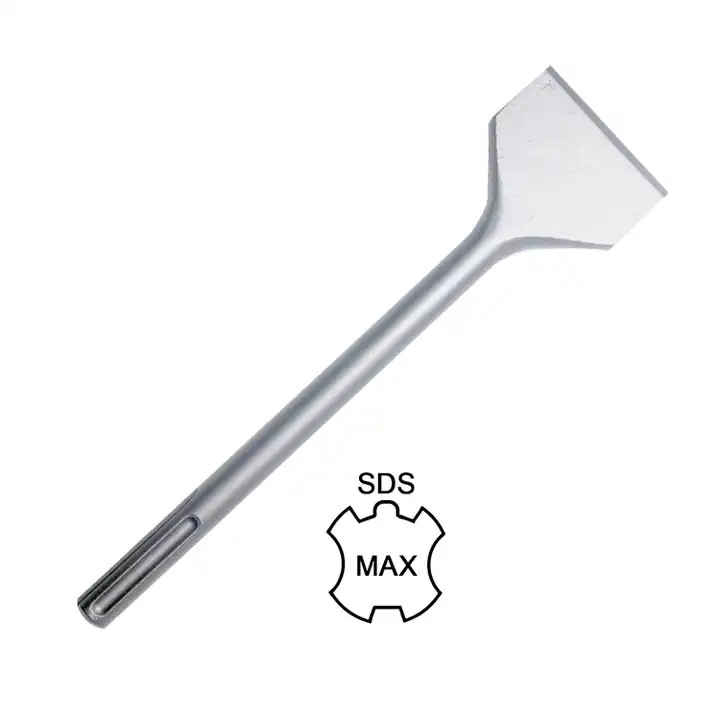
SDS Max is used for heavier electric hammer work. Compared with SDS Plus, it is designed to handle stronger impact energy and larger chiseling loads. An SDS Max Electric Hammer Drill Chisel for Concrete Stone is suitable for harder surfaces, deeper chiseling, and more demanding concrete or stone processing.
When the work involves repeated impact on dense material, SDS Max provides better durability and power transmission. It is commonly selected for construction, demolition, renovation, and heavy maintenance applications where a smaller Drill Bit connection may not be strong enough.
30mm PH65A Shank for Demolition Jack Hammer Work
A 30mm PH65A Shank Demolition Jack Hammer Chisel for Breaker is designed for high-impact demolition tools. This type of Drill Bit accessory is not for light drilling. It is used with demolition jack hammers and breakers to remove concrete, break hard material, and perform heavy-duty chiseling.
The PH65A shank provides strong connection strength for impact-heavy applications. When the work involves concrete breaking, clay removal, or loose concrete clearing, the tool and bit must both be suitable for high shock loads. A weak or mismatched Drill Bit may reduce efficiency and increase safety risks.
17mm A/F Hex Shank for Floor Scraping and Surface Removal
The 17mm A/F hex shank is often used with scraper blades and floor removal accessories. A floor scraper Drill Bit with replacement blades can help remove tile adhesive, thinset, and surface residue. The hex connection provides stable force transfer during scraping work.
For floor renovation, the shank type is especially important because the bit must resist side pressure as well as impact force. A proper connection helps keep the scraper blade stable and reduces unnecessary vibration during surface removal.
Table 1: Common Drill Bit Shank Types and Suitable Applications
| Shank / Connection Type | Suitable Tool Type | Typical Application | Related Drill Bit Type |
| SDS Plus | Electric hammer | Concrete drilling, masonry drilling, light chiseling, wall slotting | SDS Plus electric hammer bit, U-shaped concrete slotted chisel |
| SDS Max | Heavy electric hammer | Concrete chiseling, stone work, heavier impact applications | SDS Max electric hammer drill chisel |
| 30mm PH65A Shank | Demolition jack hammer / breaker | Concrete breaking, demolition, hard material removal | PH65A demolition jack hammer chisel |
| 30mm PH65A Hex Shank | Demolition jack hammer | Clay, hard dirt, loose concrete removal | PH65A clay spade chisel |
| 17mm A/F Hex Shank | Floor removal tool / breaker accessory | Tile adhesive removal, thinset scraping, surface preparation | Replacement blade floor scraper |
| Straight Flute / Auger Style | Wood drilling tool | Wood drilling, chip removal, deeper holes | Four-flute wood auger Drill Bit |
| Router Bit Shank | Router machine | Grooving, shaping, trimming, edge forming | 12PCS router bit set |
Which Drill Bit Works Better for Concrete, Stone, and Demolition Jobs?
Concrete, stone, and demolition jobs require a Drill Bit with strong body structure, reliable impact resistance, and suitable head geometry. These materials can create high vibration and heavy tool stress, especially when the surface contains aggregate, reinforcement, or uneven hardness. The wrong bit can wear quickly, drill slowly, or damage the tool.
Drilling and Chiseling Are Not the Same
A common mistake is treating all Drill Bit types as if they perform the same function. Drilling bits are designed to make holes. Chiseling bits are designed to break, cut, shape, or remove material. Scraper bits are designed to clear surfaces. Router bits are designed to cut wood profiles. Each Drill Bit style has a specific working method.
For concrete hole drilling, an SDS Plus electric hammer bit or a high quality 3 or 4 cutter electric hammer bit is more suitable. For concrete removal or stone shaping, an SDS Max chisel may be better. For heavy demolition, a 30mm PH65A Shank Demolition Jack Hammer Chisel for Breaker is more suitable because it is built for stronger impact force.
Why Multi-Cutter Designs Improve Stability
A 3 or 4 cutter electric hammer Drill Bit can provide better balance during drilling. When drilling into concrete, the bit may hit stone particles or harder sections inside the material. A single unstable cutting edge may cause vibration, wandering, or uneven holes. Multi-cutter designs help distribute cutting force more evenly.
This can be useful for anchor drilling, installation holes, and repeated construction work where hole accuracy matters. A stable Drill Bit helps improve work speed and reduces unnecessary pressure on the tool. It can also help operators maintain better control during drilling.
When to Use SDS Max Chisels
SDS Max chisels are suitable when the work is too heavy for SDS Plus accessories. An SDS Max Electric Hammer Drill Chisel for Concrete Stone is useful for breaking concrete edges, removing stone material, opening surfaces, and handling tougher chiseling jobs.
This type of Drill Bit accessory is common in construction, roadwork, building renovation, and structural modification. It is especially valuable when the job requires stronger impact performance but does not require a full demolition jack hammer.
When to Use PH65A Demolition Chisels
For the heaviest impact applications, a 30mm PH65A shank chisel is a better choice. A PH65A demolition Drill Bit accessory is designed for breaker tools and demolition jack hammers. It can handle stronger impact force than ordinary electric hammer bits.
A 30mm PH65A Hex Shank Demolition Jack Hammer Clay Spade Chisel is useful for removing hard dirt, clay, and loose concrete. Unlike a narrow pointed chisel, the spade structure provides a wider working surface. This helps lift and clear material more efficiently.
A PH65A demolition chisel should be selected when the job requires material breaking rather than precise drilling. It is more suitable for demolition, ground clearing, heavy renovation, and construction preparation.
How Can the Right Drill Bit Improve Floor Removal, Wall Slotting, and Surface Preparation?
Many job sites require more than simple hole drilling. Wall slotting, floor scraping, surface cleaning, adhesive removal, and material preparation all require special Drill Bit styles. Choosing the right accessory can reduce manual work and improve surface quality before the next construction step.
U-Shaped Chisels for Wall Slotting
A U-shaped concrete slotted through wall chisel is designed to create grooves in concrete, brick, or masonry walls. This type of Drill Bit accessory is often used for cable routing, pipe channels, conduit installation, and renovation work.
Compared with a flat chisel, a U-shaped chisel helps control groove shape more effectively. It can make the slot cleaner and reduce unnecessary damage around the working area. This is useful for electrical installation, plumbing modification, and building repair.
Floor Scraper Blades for Thinset and Adhesive Removal
Floor renovation often requires the removal of old tile adhesive, mortar, thinset, and bonding material. This work can be difficult with hand tools, especially on large surfaces. A 17mm A/F Hex Shank Replacement Blade Floor Tile Thinset Removal Chisel Bit Floor Scraper can help improve productivity.
Blade size matters. A 1″ or 2″ blade may be suitable for corners, edges, and controlled removal. A 4″, 5″, or 6″ blade can cover more surface area and speed up large floor projects. The right Drill Bit scraper blade helps remove old material without unnecessary surface damage.
Clay Spade Chisels for Ground and Loose Material Removal
A clay spade chisel is useful when the material is not solid concrete but still difficult to remove. Hard dirt, clay, and loose concrete require a wide blade that can dig, lift, and break material. A 30mm PH65A Hex Shank Demolition Jack Hammer Clay Spade Chisel is designed for this type of application.
This Drill Bit accessory can be used in renovation, trench preparation, demolition cleanup, and construction site work. The wide shape allows better material clearing compared with a narrow chisel.
Router Bits for Wood Shaping and Detail Work
A 12PCS SET ROUTER BIT is useful for wood shaping, trimming, groove cutting, and edge forming. While it is different from a hammer Drill Bit, it plays an important role in woodworking applications.
Router bits require careful matching with the router machine, wood type, cutting depth, and desired profile. A complete set allows users to handle multiple cutting patterns without changing the entire tool system.
Table 2: Drill Bit Selection by Job Type
| Job Type | Recommended Drill Bit Style | Key Feature | Typical Use |
| Concrete hole drilling | SDS Plus electric hammer bit | Stable impact drilling | Anchor holes, installation holes, masonry drilling |
| Hard concrete drilling | 3 or 4 cutter electric hammer bit | Better balance and hole stability | Repeated concrete drilling, construction installation |
| Concrete and stone chiseling | SDS Max drill chisel | Strong impact performance | Stone shaping, concrete removal, surface breaking |
| Heavy demolition | 30mm PH65A demolition chisel | High impact strength | Breaker use, concrete demolition |
| Wall slotting | U-shaped concrete slotted chisel | Controlled groove cutting | Cable channels, pipe slots, wall renovation |
| Clay and hard dirt removal | PH65A clay spade chisel | Wider blade surface | Clay, hard dirt, loose concrete clearing |
| Tile adhesive removal | 17mm A/F floor scraper blade | Replaceable blade widths | Thinset removal, floor renovation |
| Wood drilling | Four-flute wood auger Drill Bit | Smooth chip removal | Deep wood holes, clean drilling |
| Wood shaping | 12PCS router bit set | Multiple cutting profiles | Grooving, trimming, edge forming |
What Should You Check Before Buying a Drill Bit for Long-Term Use?
Selecting a Drill Bit should not only focus on price or size. For long-term use, users should consider working material, tool type, shank compatibility, bit structure, replacement needs, and job frequency. A suitable Drill Bit can improve productivity, reduce tool wear, and support more consistent results across different job conditions.
Confirm the Tool Type First
Before buying any Drill Bit, the first step is to confirm the tool type. An SDS Plus bit cannot be used properly in an SDS Max tool. A PH65A shank is designed for demolition jack hammers, not standard electric drills. A 17mm A/F scraper blade needs the correct compatible tool or holder.
Tool mismatch can cause poor power transfer, unstable operation, faster wear, and safety problems. For professional use, matching the Drill Bit with the correct tool connection is essential.
Match the Bit to the Working Material
The second step is to confirm the material. Concrete, stone, wood, clay, thinset, and tile adhesive all require different working edges. A wood auger Drill Bit should not be used for concrete. A concrete chisel should not be used for clean woodworking holes. A floor scraper blade should not be used as a drilling bit.
Material matching helps improve cutting speed and extends bit life. It also protects the working surface from unnecessary damage.
Consider Working Depth and Force
Some jobs need shallow drilling, while others require deep holes or heavy impact. A longer Drill Bit may be needed for through-wall work, but a shorter bit may provide better control for shallow drilling. For demolition, the bit body must handle repeated impact force. For wood drilling, flute design must support chip removal at the required depth.
Working depth should be considered together with tool power. A bit that is too long or too weak for the job may reduce accuracy and increase vibration.
Check Cutting Head and Flute Design
The cutting head determines how the Drill Bit contacts the material. A multi-cutter head can improve stability in concrete. A flat chisel can remove surface material. A U-shaped chisel can create controlled grooves. A spade chisel can clear clay and hard dirt. A scraper blade can remove thinset and adhesive. A wood auger flute can remove chips during wood drilling.
The flute design is especially important for drilling applications. Poor chip removal can slow down the job and increase heat. In wood drilling, straight flute or auger-style designs help remove chips and maintain clean holes.
Think About Replacement and Maintenance
For long-term use, replacement cost also matters. Floor scraper blades may need replacement after repeated use on hard surfaces. Demolition chisels may wear at the tip after heavy impact work. Electric hammer Drill Bit edges may become dull when used on abrasive concrete or stone.
Choosing a suitable Drill Bit range allows users to replace only the worn accessory instead of changing the entire tool setup. This helps reduce downtime and keeps work moving efficiently.
Build a Complete Drill Bit Range for Different Jobs
Many users need more than one bit type. A complete selection may include SDS Plus electric hammer bits, SDS Max chisels, PH65A demolition chisels, clay spade chisels, floor scraper blades, router bit sets, and wood auger bits. This allows users to handle drilling, chiseling, scraping, shaping, and removal tasks with better flexibility.
For teams working across construction, renovation, maintenance, woodworking, and demolition, a complete Drill Bit range can make daily work more efficient. Instead of forcing one bit to handle unsuitable jobs, each task can be matched with the correct accessory.
Conclusion
Choosing the right Drill Bit depends on more than size. Users need to consider material type, tool connection, shank design, cutting head structure, flute performance, impact strength, working depth, and job purpose. A suitable Drill Bit can improve drilling speed, reduce vibration, protect the tool, create cleaner holes, remove material more efficiently, and support safer long-term operation.
For concrete and masonry drilling, SDS Plus electric hammer bits and 3 or 4 cutter electric hammer bits are practical choices. For heavier concrete and stone chiseling, SDS Max drill chisels provide stronger performance. For demolition, PH65A shank chisels and clay spade chisels are more suitable. For floor renovation, 17mm A/F hex floor scraper blades can remove thinset and adhesive efficiently. For woodworking, four-flute wood auger bits and router bit sets help support clean cutting, grooving, and shaping.
Bestwin provides a wide range of Drill Bit options for concrete, stone, wood, wall slotting, demolition, clay removal, floor scraping, surface preparation, and woodworking applications. By matching the right bit with the right tool and working material, users can improve efficiency, reduce replacement cost, and achieve more stable results across different job conditions.










 English
  العربية
  Français
  Português
  Português do Brasil
  Italiano
  简体中文
简体中文  繁體中文
繁體中文  日本語
日本語  한국어
한국어  Deutsch
  Español
  Slovenčina
  ไทย
ไทย  Türkçe