
Introduction
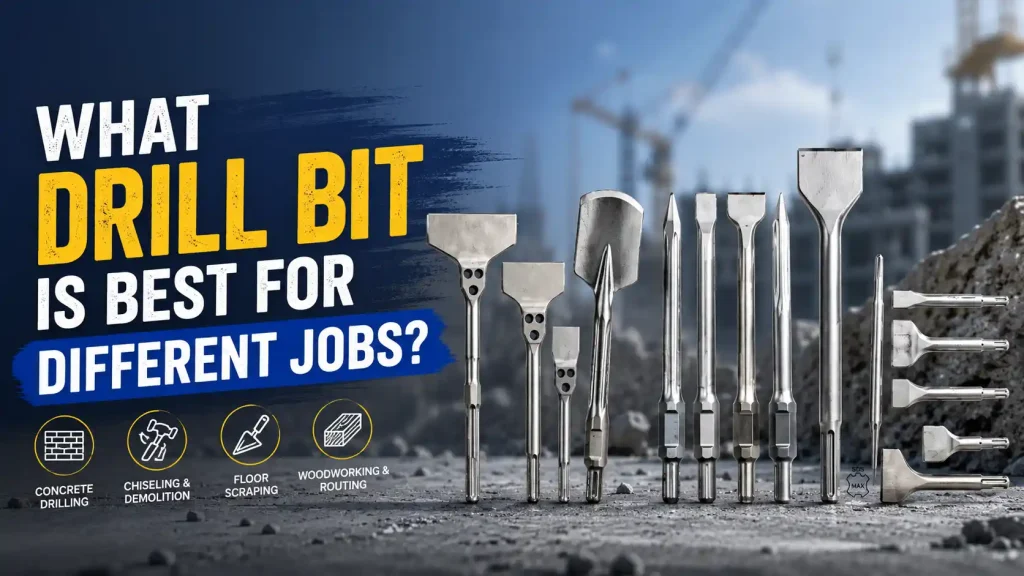
A Drill Bit may look like a small tool accessory, but it has a direct influence on drilling speed, hole accuracy, chiseling efficiency, material removal quality, and tool stability. In many jobs, the difference between smooth progress and repeated tool failure often comes down to whether the correct Drill Bit is matched with the right tool, material, and working method.
Different jobs require different cutting structures. Concrete drilling needs impact resistance and reliable carbide cutting edges. Stone chiseling needs strength and wear resistance. Wall slotting requires a shape that can remove material in a controlled groove. Demolition work needs a heavy-duty shank and strong chisel body. Floor scraping requires a wide blade that can remove thinset, tile adhesive, and surface residue. Woodworking requires a Drill Bit that cuts cleanly and removes chips efficiently. Routing work requires a different bit structure for trimming, grooving, shaping, and edge forming.
This is why choosing a Drill Bit should not be based only on diameter or length. A suitable Drill Bit should match the tool type, shank system, material hardness, working depth, cutting purpose, and expected workload. SDS Plus, SDS Max, PH65A shank, 17mm A/F hex shank, router bits, electric hammer bits, wood auger bits, and demolition chisels all serve different jobs. Understanding these differences helps improve efficiency, reduce tool wear, and achieve better working results.

What Is a Drill Bit Used for in Different Jobs?
A Drill Bit is used to create holes, remove material, shape surfaces, break hard substrates, or support cutting and chiseling work. However, not every Drill Bit works in the same way. Some are designed for rotation, some for impact, some for scraping, and some for heavy demolition. A wood auger Drill Bit and a demolition chisel may both be called tool accessories, but their structures and working principles are completely different.
Drilling Jobs Need Accuracy and Stability
For standard drilling work, the main purpose of a Drill Bit is to create a clean and controlled hole. This may include drilling into concrete, brick, masonry, wood, or other materials. In these jobs, the Drill Bit must stay stable during rotation and maintain cutting accuracy. If the bit is not suitable for the material, it may overheat, slip, wear quickly, or create an irregular hole.
For concrete and masonry, an electric hammer Drill Bit is usually preferred because it combines rotation with impact force. This helps the Drill Bit break hard material while clearing debris from the hole. For wood, a wood auger Drill Bit is more suitable because it is designed to cut fibers cleanly and remove chips efficiently.
Chiseling Jobs Need Impact Strength
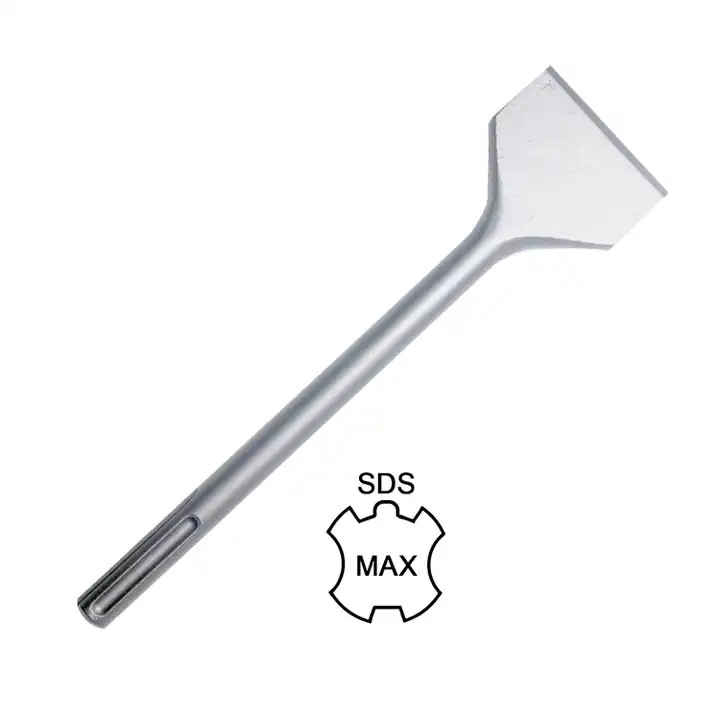
A chiseling Drill Bit is different from a standard drilling bit. Instead of creating a round hole, it is used to break, chip, cut, or remove material. For example, an SDS Max electric hammer drill chisel for concrete stone is suitable for tougher chiseling jobs where stronger impact power is required. A flat brazed shovel chisel can be used for wall slotting or surface removal, depending on the job.
In chiseling applications, the Drill Bit must handle repeated impact force. If the steel body, brazed edge, or shank design is weak, the bit may deform, crack, or lose working efficiency. That is why shank compatibility and impact resistance are especially important.
Scraping and Removal Jobs Need Blade Width
For tile adhesive, thinset, flooring residue, or surface preparation work, a wide scraper-style Drill Bit is often more effective than a narrow chisel. A 17mm A/F hex shank replacement blade floor tile thinset removal chisel bit, for example, may come with different blade widths such as 1″, 2″, 3″, 4″, 5″, or 6″. A narrow blade offers better control in small areas, while a wider blade removes more material across larger surfaces.
Demolition Jobs Need Heavy-Duty Shank Design
Demolition work places much higher stress on a Drill Bit than ordinary drilling. Breaking concrete, removing loose concrete, digging hard dirt, and loosening clay all require a strong shank and durable chisel body. A 30mm PH65A shank demolition jack hammer chisel is designed for this type of heavy impact work. The shank must fit the breaker securely, while the working end must withstand repeated impact against hard or compacted materials.
Table 1: Common Drill Bit Types for Different Jobs
| Drill Bit Type | Suitable Job | Suitable Material | Main Advantage |
| SDS Plus Electric Hammer Bit | General drilling | Concrete, brick, masonry | Good for medium-duty drilling and anchor holes |
| SDS Max Electric Hammer Drill Chisel | Heavy chiseling | Concrete, stone | Stronger impact performance for harder work |
| U-shaped Concrete Slotted Chisel | Wall slotting | Concrete, brick wall, masonry wall | Helps create controlled grooves for cable or pipe work |
| 30mm PH65A Demolition Chisel | Demolition and breaking | Concrete, loose concrete, hard surfaces | Heavy-duty structure for breaker work |
| PH65A Clay Spade Chisel | Digging and scraping | Hard dirt, clay, loose concrete | Wide spade shape for material loosening |
| 17mm A/F Hex Floor Scraper Bit | Surface removal | Thinset, tile adhesive, flooring residue | Replaceable blade options for floor preparation |
| Router Bit Set | Cutting and shaping | Wood, board, panel materials | Suitable for grooving, trimming, and edge forming |
| Wood Auger Drill Bit | Wood drilling | Timber, wood panels | Strong chip removal and clean deep drilling |
Which Drill Bit Works Best for Concrete and Stone?
Concrete and stone are hard, abrasive, and often inconsistent materials. A Drill Bit used for these jobs must deal with impact, friction, dust, and resistance at the same time. Choosing the wrong Drill Bit may result in slow drilling, excessive vibration, poor hole quality, or rapid tip wear.
SDS Plus Drill Bit for Medium-Duty Concrete Work
An SDS Plus electric hammer Drill Bit is commonly used for concrete, brick, block, and masonry drilling. It is suitable for anchor holes, installation holes, light construction work, and general drilling tasks. SDS Plus systems are often used with rotary hammers because they allow the bit to move slightly forward and backward during impact. This improves drilling efficiency in hard materials.
For medium-duty jobs, an SDS Plus Drill Bit provides a practical balance between power, control, and tool size. It is easier to handle than heavier systems and works well when the job does not require extreme impact force.
SDS Max Drill Bit for Heavy Chiseling
When the job becomes more demanding, SDS Max is often a better choice. An SDS Max electric hammer drill chisel for concrete stone is designed for stronger impact applications. It can be used for concrete chiseling, stone removal, surface breaking, and heavy construction preparation.
Compared with SDS Plus, SDS Max has a larger shank structure and is usually paired with more powerful hammers. This makes the Drill Bit more suitable for heavy-duty chiseling rather than small precision holes. For work involving thick concrete, hard stone, or continuous impact, SDS Max provides better durability and force transfer.
U-Shaped Chisel for Wall Slotting
Wall slotting requires more than impact strength. It also requires control over the groove shape. An SDS Plus electric hammer flat brazed shovel U-shaped concrete slotted through wall chisel is designed for this type of application. The U-shaped working end helps remove material along a defined path, making it useful for cable grooves, pipe grooves, and through-wall slotting preparation.
For wall slotting work, the Drill Bit should have enough hardness to cut into concrete or brick while maintaining a consistent groove shape. A poorly matched bit may create uneven slots, increase dust, or require repeated passes.
3-Cutter and 4-Cutter Drill Bit Designs
For concrete drilling, cutter design also matters. A high-quality 3 or 4 cutter electric hammer Drill Bit can improve stability during drilling. Multi-cutter structures help distribute cutting force more evenly and may reduce the chance of bit jamming when drilling through reinforced or uneven materials.
A 4-cutter Drill Bit is often preferred when hole shape and stability are important. It can help keep the hole rounder and reduce vibration. A 3-cutter design may offer efficient cutting performance while still maintaining good durability. The best choice depends on the material, hole size, and working conditions.
Which Drill Bit Is Better for Demolition and Material Removal?
Demolition and material removal require a different approach from normal drilling. In these jobs, the Drill Bit is not mainly used to make a clean hole. It is used to break, chip, loosen, scrape, or remove material. Because the working force is higher, the structure must be stronger and more impact resistant.
PH65A Shank Chisel for Heavy Breaking
A 30mm PH65A shank demolition jack hammer chisel for breaker applications is designed for heavy impact work. It is suitable for breaking concrete, removing damaged surfaces, and handling demanding demolition jobs. The 30mm shank provides a strong connection with the breaker, helping transfer force from the tool to the working end.
For this kind of job, the Drill Bit must not only be hard. It must also have toughness. If the material is too brittle, it may crack under impact. If it is too soft, it may deform quickly. A suitable demolition Drill Bit needs a balance between strength, toughness, and wear resistance.
Clay Spade Chisel for Hard Dirt and Loose Concrete
A 30mm PH65A hex shank demolition jack hammer clay spade chisel is useful for removing hard dirt, clay, and loose concrete. Its wider spade shape allows it to loosen and lift material rather than only break it into small pieces. This makes it useful for ground preparation, trench cleaning, and removal work where compacted material must be separated efficiently.
Unlike pointed chisels, a clay spade Drill Bit spreads impact over a wider area. This makes it suitable for scraping, prying, and loosening. However, it should be matched with the correct tool power to avoid inefficient operation or excessive stress on the tool.
Floor Scraper Bit for Thinset and Tile Adhesive
Floor renovation and surface preparation often require removal of thinset, tile adhesive, old flooring residue, and bonded surface layers. A 17mm A/F hex shank replacement blade floor tile thinset removal chisel bit is designed for this purpose. It works more like a scraper than a traditional drilling Drill Bit.
Blade width is important here. A 1″ or 2″ blade may work better in corners, edges, or narrow areas. A 4″, 5″, or 6″ blade can remove material faster on open floor surfaces. Choosing the right width helps balance control and productivity.
Flat Chisel and Shovel Chisel for Surface Removal
Flat chisels and shovel chisels are useful when material must be removed layer by layer. They can be used for concrete surface preparation, mortar removal, wall cleaning, and similar jobs. The working edge should stay sharp enough to penetrate the material but strong enough to resist impact wear.
For removal jobs, the best Drill Bit is not always the hardest one. The shape of the working end is equally important. A narrow tip breaks material; a flat edge peels material; a wide blade scrapes material; a spade shape loosens material.
Table 2: How to Choose a Drill Bit by Job Type
| Job Type | Recommended Drill Bit Structure | Key Selection Factor | Common Problem If Selected Wrong |
| Concrete anchor drilling | SDS Plus electric hammer bit | Diameter, length, cutter quality | Slow drilling or rough holes |
| Heavy concrete chiseling | SDS Max drill chisel | Impact strength and shank fit | Bit wear, vibration, low efficiency |
| Wall slotting | U-shaped slotted chisel | Groove shape and edge durability | Uneven slot or repeated correction |
| Demolition breaking | 30mm PH65A demolition chisel | Shank strength and toughness | Chisel deformation or breakage |
| Hard dirt and clay removal | PH65A clay spade chisel | Blade width and tool power | Poor material loosening |
| Thinset removal | 17mm A/F hex scraper bit | Blade size and replaceability | Surface damage or slow removal |
| Wood drilling | Four-flute wood auger drill bit | Chip removal and cutting edge | Burning, clogging, rough holes |
| Routing and trimming | Router bit set | Profile shape and cutting precision | Poor edge quality or inaccurate cuts |
How Should You Choose a Drill Bit for Woodworking and Routing?
Woodworking requires a different type of Drill Bit because wood is fibrous, softer than concrete, and more sensitive to tearing, burning, and rough edges. A bit designed for concrete impact work is not suitable for clean wood drilling. Similarly, a wood auger bit cannot replace a demolition chisel.
Wood Auger Drill Bit for Deep and Clean Holes
A four-flute wood auger Drill Bit with straight flute design is suitable for drilling into wood, timber, and similar materials. The main goal is to cut wood fibers cleanly while removing chips from the hole. Good chip removal is important because clogged chips can increase friction, create heat, and reduce drilling accuracy.
For deep wood drilling, flute design becomes especially important. If the Drill Bit cannot remove chips effectively, the tool may slow down or burn the wood surface. A suitable auger Drill Bit should enter the material smoothly, maintain direction, and leave a cleaner hole.
Router Bit Set for Grooving and Shaping
A 12PCS set router bit is used for woodworking applications such as grooving, trimming, shaping, edge forming, and decorative cutting. A router bit is not usually called a standard drilling bit in the strictest sense, but it belongs to the broader category of cutting accessories used with power tools.
Router bits are selected by profile, cutting diameter, material compatibility, and desired finish. For example, one bit may be used for straight grooves, another for edge rounding, and another for shaping decorative profiles. In these jobs, precision and surface finish are more important than impact strength.
Matching Bit Speed with Wood Material
When using a woodworking Drill Bit, speed control matters. Too much speed can burn the wood, especially when chip removal is poor. Too little speed may cause rough cutting or tool grabbing. The correct speed depends on bit diameter, wood hardness, feed pressure, and tool type.
For production or repeated work, users should also consider long-term consistency. A good Drill Bit should keep its cutting edge longer and maintain stable performance across multiple workpieces.
Avoiding Cross-Use Between Materials
One common mistake is using the same Drill Bit for different materials without checking its structure. A bit used for concrete may become too worn or rough for clean wood drilling. A wood bit used on masonry may lose its edge quickly. A router bit used outside its intended material may overheat, chip, or produce poor surface quality.
The best practice is to separate Drill Bit types by job category. This protects the tool, improves results, and reduces replacement cost.

What Should You Check Before Buying a Drill Bit?
Before buying a Drill Bit, users should evaluate the complete working condition instead of focusing only on price or size. The best Drill Bit is the one that fits the tool, material, and job purpose.
Check the Material First
The first question is: what material needs to be drilled, cut, chiseled, or removed? Concrete, stone, masonry, wood, tile adhesive, hard dirt, clay, and loose concrete all require different structures. A concrete Drill Bit needs impact resistance. A wood Drill Bit needs sharp cutting and chip removal. A floor scraper bit needs a blade shape that can lift and remove surface layers.
Material hardness, abrasiveness, and thickness should all be considered. Harder materials usually require stronger tips, better steel, and more stable shank systems.
Check the Tool Type
The second question is: what machine will be used? A rotary hammer, electric hammer, jack hammer, breaker, router, and standard electric drill do not use the same connection system. SDS Plus, SDS Max, PH65A, and 17mm A/F hex shank structures are not interchangeable.
If the shank does not match the tool, the Drill Bit cannot be installed safely or may fail during operation. Correct tool compatibility is one of the most important selection points.
Check the Working Method
The third question is: what is the actual job? Drilling, chiseling, wall slotting, scraping, routing, and demolition all require different working ends. A pointed chisel breaks. A flat chisel removes layers. A U-shaped chisel creates grooves. A scraper blade removes thinset. A router bit shapes wood. A wood auger bit drills clean holes.
Choosing by job method helps avoid inefficient work and unnecessary tool wear.
Check the Shank and Cutter Structure
The shank transfers power from the machine to the Drill Bit. A weak or mismatched shank reduces efficiency and may create vibration. Cutter structure affects drilling speed, hole quality, and wear resistance. For electric hammer bits, 3-cutter and 4-cutter designs may improve stability in concrete drilling. For wood auger bits, flute design affects chip removal. For scraper bits, blade width affects surface coverage.
Check Durability and Replacement Cost
A low-cost Drill Bit may seem attractive, but if it wears quickly, breaks easily, or slows down work, the total cost may be higher. Durability should be evaluated together with efficiency. A more stable Drill Bit can reduce downtime, improve work quality, and extend tool life.
For jobs involving frequent replacement, such as floor scraping, replaceable blade options can also be valuable. For heavy demolition, shank strength and chisel toughness are more important than small price differences.
Conclusion
The best Drill Bit depends on the job. For concrete and masonry drilling, SDS Plus electric hammer bits are practical for general work, while SDS Max drill chisels are better for heavier concrete and stone applications. For wall slotting, a U-shaped concrete slotted chisel provides better groove control.
For demolition, a 30mm PH65A shank chisel offers the strength needed for breaker work. For hard dirt, clay, and loose concrete, a clay spade chisel helps loosen and remove material more efficiently. For floor preparation, a 17mm A/F hex scraper bit with different blade widths can improve thinset and tile adhesive removal. For woodworking, a wood auger Drill Bit and router bit set are more suitable for clean cutting, deep holes, trimming, and shaping.
A good Drill Bit should always match the material, tool, shank type, cutting structure, and working purpose. When these factors are considered together, the result is better efficiency, cleaner work, longer service life, and lower replacement cost. For users who need options for concrete drilling, stone chiseling, wall slotting, demolition, floor scraping, routing, and woodworking, Bestwin offers a range of Drill Bit and related tool accessories designed for different job requirements.










 English
  العربية
  Français
  Português
  Português do Brasil
  Italiano
  简体中文
简体中文  繁體中文
繁體中文  日本語
日本語  한국어
한국어  Deutsch
  Español
  Slovenčina
  ไทย
ไทย  Türkçe