

A recessed light opening may look simple, but the result depends on more than choosing a hole saw with a similar diameter. The ceiling material, fixture cutout size, panel thickness, cutting depth, pilot drill, arbor stability, drill speed, and required number of holes all affect the finished opening.
An unsuitable hole saw may leave torn paper around gypsum board, splintered edges in wood, an oversized opening, or a damaged decorative surface. These problems become more serious when multiple lights must be installed in one straight line or when the same tool specification will be supplied across several lighting projects.
For clean and repeatable recessed lighting openings, start with the actual cutout requirement and ceiling construction. Then select the hole saw, arbor, pilot drill, and working parameters as one complete cutting system.
Quick Answer
Choose a hole saw for recessed lighting according to four main factors:
- The cutout diameter specified by the light manufacturer
- The ceiling material and surface finish
- The total thickness that the cutter must pass through
- The number and consistency of openings required
Gypsum board is relatively easy to cut, but its paper surface can tear if the cutter vibrates or enters too aggressively. Wood ceilings require sharper, more stable cutting because the grain can splinter at the entry or exit side. Plywood, laminated boards, PVC panels, and acrylic decorative sheets may need different tooth geometry and cutting control.
For many gypsum board, plywood, and general wood ceiling applications, an appropriate HSS or bi-metal hole saw can provide a practical balance of cutting speed, edge quality, and service life. The final choice should also account for diameter, cutting depth, arbor connection, pilot drill length, drill power, and the expected number of holes.
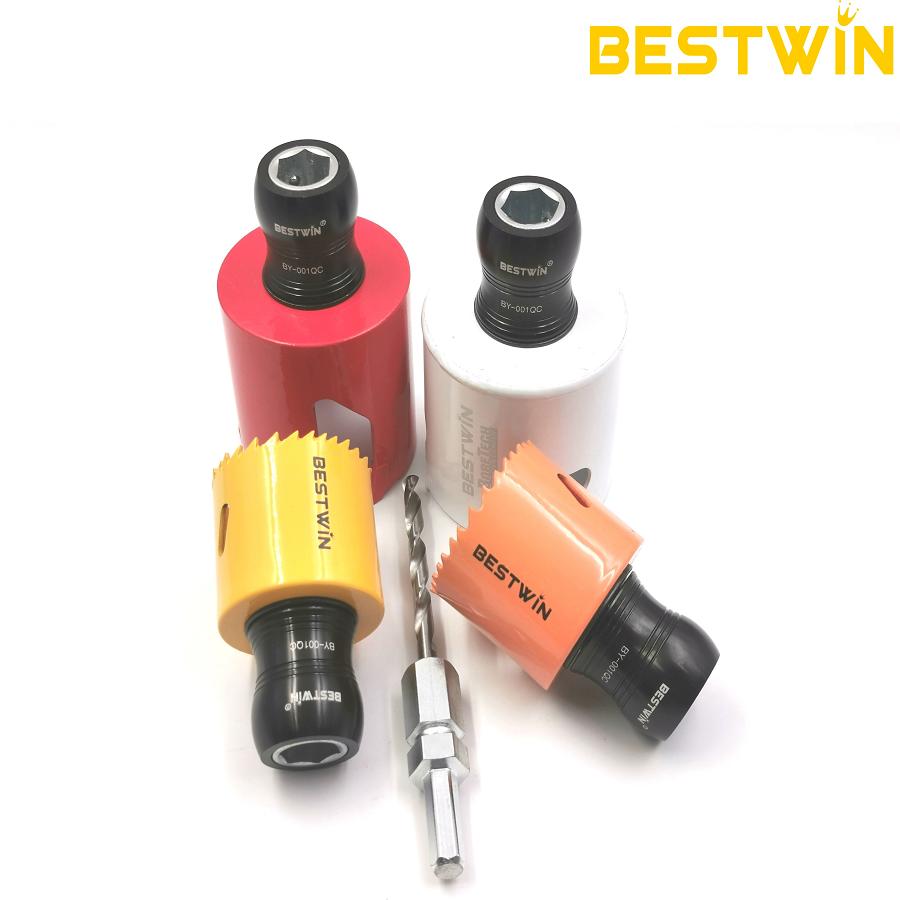
BESTWIN manufactures hole saw systems and matches cutter bodies, arbors, and pilot drills for distributors, OEM programs, and project supply according to ceiling material, cutout size, drill setup, and order requirements.
Use the Fixture Cutout Size, Not the Outer Trim Diameter
The correct hole saw diameter should be based on the required ceiling cutout, not the visible diameter of the finished light.
Most recessed lights have an outer trim or flange that covers the edge of the opening. The body behind that trim passes through a smaller cutout. A light with a large visible diameter may therefore require a noticeably smaller ceiling opening.
This difference matters because an oversized opening may prevent the spring clips from gripping the ceiling correctly. The light may sit loosely, tilt, or leave a visible gap around the trim. An opening that is too small creates a different problem: the housing may not pass through, and enlarging the hole by hand can leave an uneven edge.
Before ordering a hole saw, confirm the following dimensions:
- Required cutout diameter
- Allowable cutout tolerance
- Outer trim diameter
- Housing diameter and shape
- Position of spring clips or retaining brackets
- Maximum ceiling thickness accepted by the fixture
Do not assume that two lights described as the same nominal size require identical openings. A “4-inch downlight,” for example, does not always use a 4-inch cutout. Product design, trim width, mounting clips, and regional sizing practices can change the actual requirement.
For projects using several light models, prepare a diameter list based on the fixture drawings. This helps determine whether individual hole saw sizes or a multi-size set will be more suitable.
Match the Hole Saw to the Ceiling Material
The same diameter does not guarantee the same cutting result in different materials. Gypsum board, solid wood, plywood, laminated panels, PVC, and acrylic respond differently to heat, tooth pressure, vibration, and chip removal.
Gypsum Board Needs Stable, Controlled Entry
Gypsum board is soft, but the paper layer on its surface can tear beyond the intended cut line. A hole saw that runs out of center, vibrates, or enters at an angle may pull the paper away before the teeth establish a complete circular groove.
The cutter should begin square to the ceiling. The pilot drill must establish the center without excessive wandering, and the hole saw should contact the surface evenly. Once the teeth have created a stable circular path, the cutter can continue through the gypsum core with controlled pressure.
A sharp hole saw is important even when the material is soft. A dull cutter may rub against the paper and gypsum rather than cutting cleanly. It can also create more dust, require greater pressure, and increase the chance of breaking the edge around the opening.
Solid Wood Requires Attention to Grain Direction
Wood ceilings and decorative timber panels are more sensitive to splintering. The hole saw teeth cut across changing grain directions as they travel around the circumference. If the cutter is dull, unstable, or pushed too quickly, fibers may lift outside the intended opening.
The visible side usually deserves the most protection. Starting from the finished face helps the hole saw establish a clean edge where appearance matters. For through-cuts with access to both sides, completing the opening from the opposite face after the pilot drill appears can reduce exit-side breakout.
This method may not be practical for an installed ceiling, so the hole saw must be selected with the visible finish and available access in mind.
Plywood Can Splinter Between Layers
Plywood is generally stable, but its cross-laminated structure can still produce torn veneers. Thin decorative face layers are especially vulnerable when the cutter exits the panel or when the teeth repeatedly lift the surface rather than slice through it.
A sharp cutter, firm panel support, and steady feed help maintain a cleaner edge. If the plywood is already installed overhead, confirm that it does not flex excessively around the cutting point.
Laminated Panels Need Surface Protection
A laminated board may have a clean decorative surface over a softer wood-based core. The top layer can chip before the main body of the hole saw is fully engaged.
The hole saw should run concentrically and contact the surface evenly. Excessive side movement is likely to widen the opening and damage the laminate. A test cut in a representative offcut is useful when the acceptable edge quality has not yet been established.
Plastic Panels Need Heat Control
PVC, acrylic, and other plastic ceiling panels can soften, melt, crack, or produce rough edges if the cutting speed and feed are unsuitable.
Too much speed creates frictional heat. Too little feed can also cause rubbing instead of cutting. The panel must be supported because thin plastic may flex when the pilot drill enters or when the hole saw teeth begin cutting.
Table 1: Material considerations when selecting a hole saw for recessed lighting openings
| Material | Main cutting concern | What the hole saw setup should control |
|---|---|---|
| Gypsum board | Torn surface paper and excessive dust | Stable entry, sharp teeth and controlled pressure |
| Solid wood | Splintering along the grain | Sharp cutting edge, low vibration and steady feed |
| Plywood | Torn face veneer and exit breakout | Firm support and controlled tooth engagement |
| Laminated board | Chipped decorative coating | Concentric rotation and even surface contact |
| PVC panel | Melting and deformation | Moderate speed, active cutting and panel support |
| Acrylic panel | Cracking and heat damage | Smooth entry, low vibration and careful speed control |
Clean Edges Depend on Cutter Stability
A premium cutting edge cannot compensate for an unstable connection between the hole saw and the drill. Edge quality depends on the complete assembly: hole saw body, arbor, pilot drill, chuck, drill spindle, and operator control.
Runout Can Make the Opening Oversized
Runout means the cutter does not rotate around a perfectly stable center. Even a small amount of movement becomes more noticeable as the hole saw diameter increases.
An unstable hole saw may produce:
- An opening larger than the marked diameter
- An uneven circular edge
- Chatter marks around the surface
- Heavy vibration in the drill
- Faster wear on one side of the teeth
- Difficulty keeping several openings consistent
This is particularly important for recessed lights because the trim may only cover a limited margin around the cutout. If the opening is already close to the maximum size accepted by the retaining clips, additional runout can make the fixture difficult to secure.
The Arbor Must Match the Hole Saw
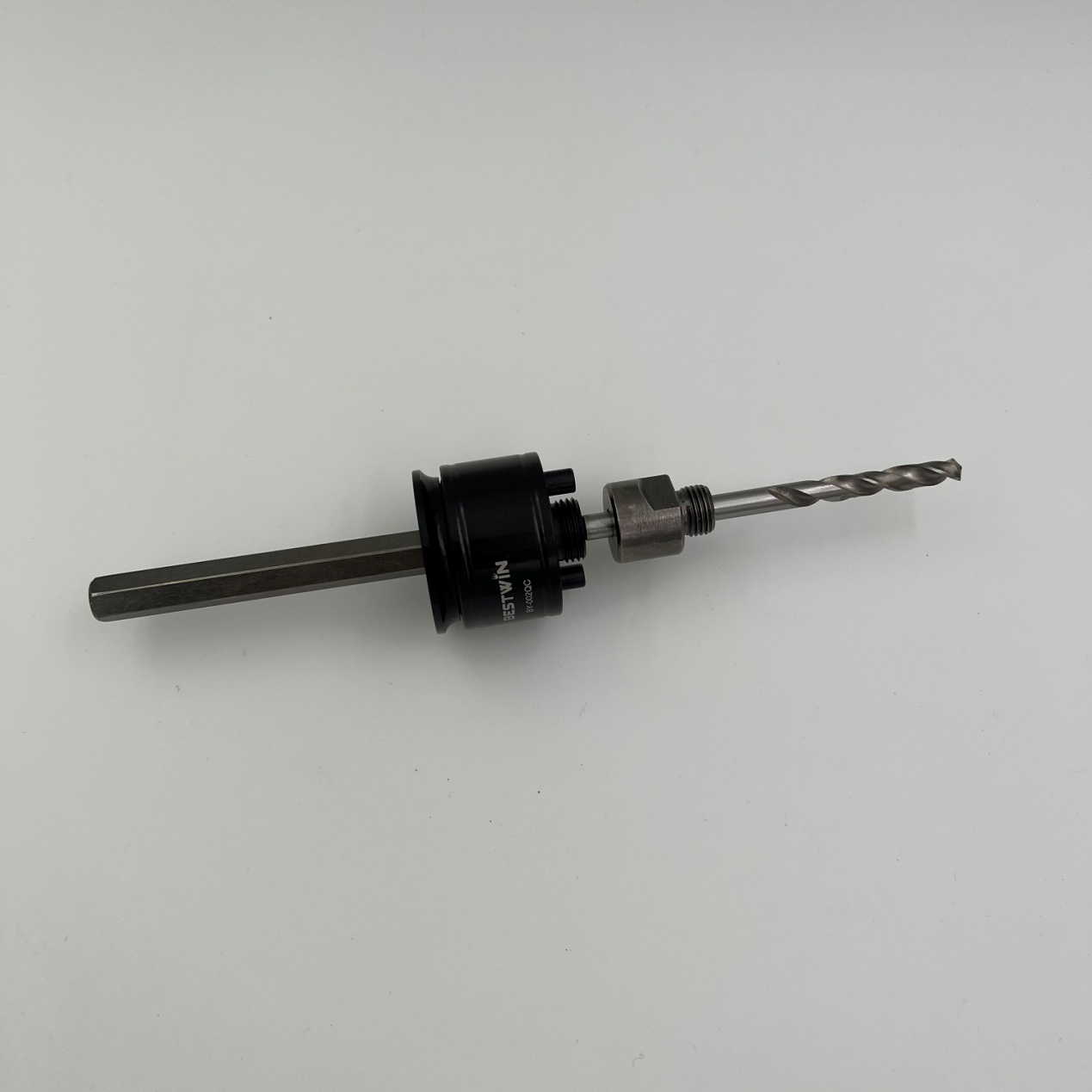
The arbor connects the hole saw to the drill and holds the pilot drill. It must match the hole saw thread or mounting system, the cutter diameter, and the drill chuck.
Larger hole saws generate more torque than small cutters. The arbor must remain secure without allowing the body to loosen or wobble. A weak connection can cause vibration, rough edges, or sudden grabbing when the teeth encounter a denser section of wood.
For projects that use several hole saw diameters, a compatible quick-change arbor can reduce changeover time. However, speed of replacement should not come at the cost of connection stability.
The Pilot Drill Establishes the Center
The pilot drill is the first part of the assembly to enter the ceiling. It keeps the hole saw centered until the circular cutting edge is fully engaged.
A bent, loose, blunt, or incorrectly extended pilot drill can allow the hole saw to walk before cutting begins. This may shift the opening away from the marked position or create an enlarged center hole.
The pilot drill projection also matters. It should extend far enough to establish the center before the teeth touch the surface, but excessive projection can increase flexing and may contact concealed components sooner than necessary.
Confirm What Is Behind the Ceiling
The hole saw should not be selected or used without considering the space above the ceiling panel.
Recessed lighting openings may be located near:
- Electrical cables
- Water pipes
- Ventilation ducts
- Ceiling joists
- Metal framing channels
- Insulation
- Existing junction boxes
- Fire-resistant or acoustic ceiling layers
The drawing position may appear clear from below while a framing member sits directly behind the panel. A standard hole saw chosen only for the visible ceiling board may not be suitable if the cutter unexpectedly contacts metal.
Before cutting, confirm the ceiling layout and available depth. Detection equipment, drawings, inspection openings, or access from above may be needed depending on the project.
This check also affects hole saw selection. A cutter intended only for gypsum board or wood should not be expected to cut hidden steel framing. If mixed material contact is likely, the cutter specification must be selected accordingly.
The cutting depth should exceed the total material thickness, but excessive depth is not automatically better. A deeper body may require more chip clearance and can increase resistance if the material plug becomes trapped inside the cutter.
Select Diameter, Cutting Depth, Arbor, and Pilot Drill Together
A Hole Saw is often ordered by diameter alone. For recessed lighting work, that is not enough.
Diameter Controls Fixture Fit
The diameter must stay within the acceptable cutout range for the light. The required tolerance should reflect both fixture retention and trim coverage.
For a single installation, a small amount of manual adjustment may appear manageable. For repeated work, however, inconsistent openings create installation delays and uneven finished results. The hole saw diameter should therefore be evaluated using actual test cuts rather than only the nominal marking.
Cutting Depth Must Cover the Complete Ceiling Build-Up
A ceiling may contain more than one visible board. Possible constructions include:
- Single-layer gypsum board
- Double-layer fire-rated gypsum board
- Gypsum board over timber backing
- Plywood with decorative veneer
- Acoustic board with a support panel
- Ceiling panel combined with insulation or spacer material
Measure the total thickness that must be cut. Also confirm whether the hole saw body can release the material plug conveniently after each opening.
Arbor Size Must Match the Drill
Check the drill chuck capacity and arbor shank. A cutter that physically fits the hole saw but cannot be held securely by the available drill is not a complete solution.
For cordless drills, battery condition and low-speed torque also matter, particularly with larger diameters. A large hole saw can load the drill heavily when the teeth engage the full circumference.
Pilot Drill Type Must Suit the Surface
The pilot drill should enter the selected material cleanly. A general-purpose pilot may work for common wood and gypsum board, while harder decorative layers or mixed material assemblies may require a different point design.
The pilot drill should also be replaceable. It often contacts the material before the hole saw and can wear independently from the main cutter.
Repeated Lighting Openings Need Consistent Results
A hole saw used for one repair opening and a hole saw supplied for repeated lighting installations face different requirements.
When dozens or hundreds of recessed lights are involved, the main concern is no longer whether the cutter can make one hole. The concern is whether it can maintain acceptable diameter, edge quality, cutting speed, and handling from the first opening to the last.
Tooth Wear Changes the Cutting Result
As the teeth become dull, the operator usually applies more pressure. This increases heat, vibration, and the chance of rough edges. Cutting time becomes longer, and the opening may no longer match the quality of the first samples.
For repeated work, establish a replacement point based on actual cutting performance. Do not wait until the hole saw completely stops cutting.
Useful indicators include:
- Longer cutting time
- Increased drill load
- More surface tearing
- Darkened or overheated wood edges
- Higher vibration
- Difficulty clearing the material plug
- Visible tooth damage
- Enlarged or irregular openings
Plug Removal Affects Working Speed
Every completed opening leaves a circular material plug inside or around the hole saw. If the plug is difficult to remove, the operator loses time between cuts and may damage the cutter by using unsuitable removal methods.
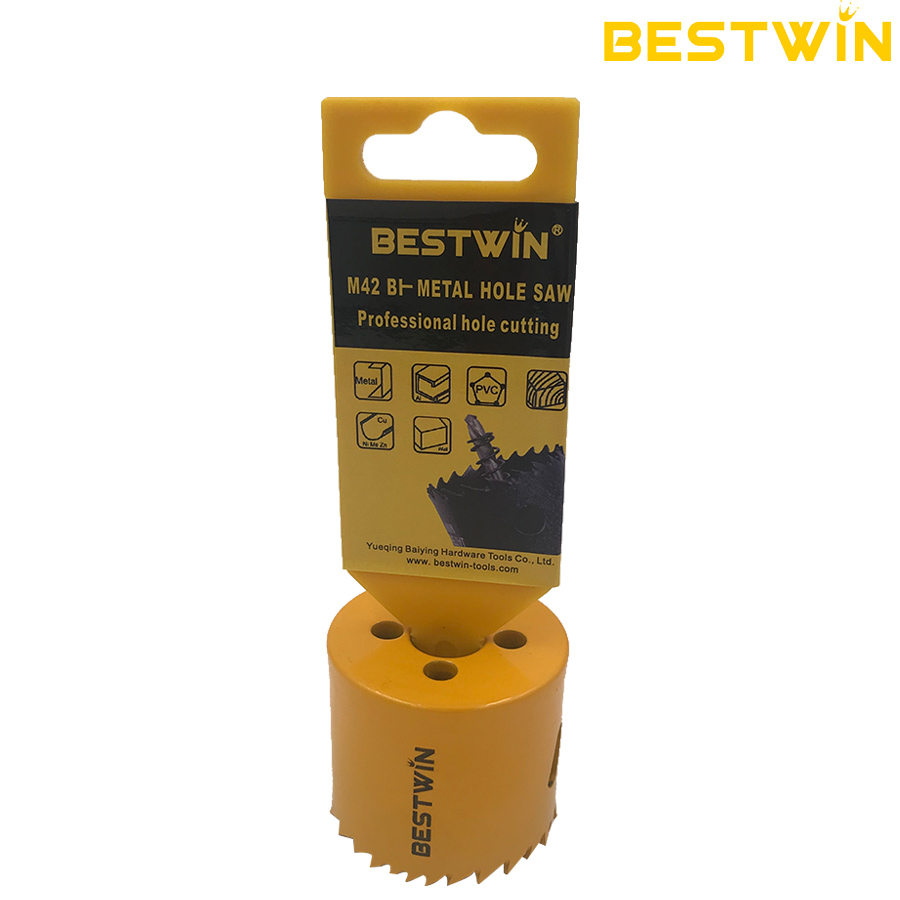
Relief slots in the hole saw body can help provide access to the plug. The plug-release process should be evaluated during sample testing, particularly for thick wood, laminated panels, or double-layer ceiling materials.
Dust and Chips Must Be Cleared
Gypsum dust and wood chips can collect inside the cutter. Packed debris increases friction and may prevent the teeth from cutting freely.
The hole saw should be withdrawn periodically when needed so loose material can clear. This becomes more important as cutting depth and diameter increase.
For overhead work, dust collection and operator protection must also be considered. The tool choice should fit the available extraction method and working position.
Common Problems Usually Point to a Setup Mismatch
When a recessed lighting opening is rough or inaccurate, the cause is not always the hole saw material itself. The complete setup should be checked before changing cutters.
The Opening Is Larger Than Expected
Possible causes include:
- Arbor or chuck runout
- A loose hole saw connection
- Excessive side pressure
- Starting the cutter at an angle
- An incorrect nominal diameter
- A pilot drill that moved before the teeth engaged
Measure an actual sample opening and compare it with the fixture requirement. Do not rely only on the number printed on the cutter.
The Gypsum Paper Tears
The teeth may be dull, the cutter may be vibrating, or the tool may be pushed into the surface too aggressively. The hole saw should establish a complete circular groove before heavy feed pressure is applied.
The Wood Edge Splinters
The cutter may be dull, the panel may lack support, or the teeth may be exiting too quickly. The visible side, grain direction, and access to the back of the panel should all be considered.
The Hole Saw Jams
Jamming can occur when dust and chips pack inside the cut, when the body rubs against the kerf, or when the material plug wedges inside the cutter. Large diameters also create higher torque reaction.
The drill should be controlled firmly, but excessive force should not be used to push through a jammed cut.
The Pilot Drill Breaks Through but the Cutter Will Not Enter Evenly
The drill may not be held perpendicular to the ceiling, or the pilot hole may have enlarged. Check pilot drill straightness, extension length, chuck security, and the working angle.
The Edge Melts on a Plastic Panel
The cutting speed may be too high, the teeth may be rubbing, or the feed may be too light. A representative material sample should be tested before starting finished ceiling panels.
What Should You Confirm Before Ordering?
A useful hole saw recommendation depends on the real application. Providing only a diameter may result in a cutter that fits the nominal size but does not match the ceiling material, cutting depth, drill, or expected workload.
Table 2: Information needed to select a hole saw for recessed lighting projects
| Information to provide | Why it matters |
|---|---|
| Recessed light model or drawing | Confirms the actual cutout and retention method |
| Required cutout diameter | Determines the hole saw size |
| Allowable diameter tolerance | Prevents loose or difficult fixture installation |
| Ceiling material | Guides cutter and tooth selection |
| Surface finish | Shows how much chipping or tearing is acceptable |
| Total material thickness | Determines the required cutting depth |
| Number of openings | Helps evaluate durability and replacement planning |
| Drill type and chuck size | Confirms arbor and shank compatibility |
| Available speed range | Helps match the cutter to the power tool |
| Access from one or both sides | Affects entry and exit edge control |
| Hidden framing or mixed materials | Prevents selecting a cutter for the visible panel alone |
| Packaging requirement | Supports individual, set, retail, or OEM supply planning |
For a new product or larger order, representative ceiling material and a sample light fitting can make evaluation more accurate. A test opening can then be checked for diameter, trim coverage, clip retention, surface damage, cutting time, plug release, and cutter wear.
How Can BESTWIN Support Recessed Lighting Hole Saw Selection?
The most suitable hole saw is the one that matches the material, required opening, available drill, and expected cutting volume.
For a gypsum board ceiling, the priority may be clean paper edges and easy dust clearance. For a decorative wood ceiling, surface finish and splinter control may be more important. For a mixed installation kit, the requirement may include several diameters, compatible arbors, replaceable pilot drills, and practical packaging.
As a Hole Saw manufacturer, BESTWIN can review and match these requirements as a complete hole saw application rather than treating the cutter diameter as the only selection point. The cutter body, tooth design, cutting depth, arbor connection, pilot drill, size range, and packaging can be considered together.
When evaluating an option, send us the fixture cutout drawing, ceiling material, thickness, required sizes, drill information, expected number of holes, and acceptable edge condition. This makes it easier to prepare a relevant sample or hole saw combination for your project.
Frequently Asked Questions
What size hole saw is needed for a recessed light?
Use the cutout diameter specified by the light manufacturer, not the visible outer trim diameter. Check the fixture drawing and allowable tolerance before selecting the hole saw. When possible, verify the size with a test opening in the actual ceiling material.
Can one hole saw cut both gypsum board and wood?
Some HSS or bi-metal hole saws can handle both materials, but the required edge quality, wood density, panel thickness, and number of openings should still be considered. A cutter that works acceptably in gypsum board may produce different results in decorative timber or laminated plywood.
Why does the recessed light feel loose after installation?
The opening may be oversized, out of round, or beyond the gripping range of the fixture clips. Confirm the required cutout size, measure the actual opening, and check arbor runout and cutting technique.
How can splintering be reduced in a wood ceiling?
Use a sharp and stable hole saw, begin from the visible face, support the panel where possible, and avoid forcing the cutter. When both sides are accessible, finishing the cut from the reverse side after the pilot drill breaks through can reduce exit damage.
Is a pilot drill always required?
A conventional hole saw normally uses a pilot drill to establish the center and prevent the cutter from walking. Some specialized guided systems may use a different starting method, but the guidance arrangement must still keep the cutter accurately centered.
Final Takeaway
A hole saw for recessed lighting should be chosen according to the complete opening requirement, not simply the nominal light size.
Start with the fixture cutout drawing. Confirm the ceiling material, surface finish, total thickness, hidden structure, number of openings, drill type, arbor connection, and acceptable edge condition. Then test the complete cutter assembly in representative material.
The right setup should produce a circular opening that fits the fixture securely, remains hidden beneath the trim, and can be repeated without excessive tearing, splintering, vibration, heat, or installation adjustment.
For help selecting a hole saw, arbor, pilot drill, or multi-size set for recessed lighting applications, contact BESTWIN, a Hole Saw supplier, with your material, dimensions, tool information, and purchasing requirements. We will help you evaluate a practical cutting solution for your project.










 English
  العربية
  Français
  Português
  Português do Brasil
  Italiano
  简体中文
简体中文  繁體中文
繁體中文  日本語
日本語  한국어
한국어  Deutsch
  Español
  Slovenčina
  ไทย
ไทย  Türkçe