
A round opening looks simple on a drawing, but the cut can become messy quickly. The saw starts cleanly, then smoke appears, the edge turns hot, the tool pulls to one side, or the cup locks in the material. That is when a simple hole becomes a fight between the tool, the workpiece, and the operator. A Hole Saw cuts with many teeth around a wide circle, so heat, chips, alignment, and support matter more than they do in a small drilled hole.
빠른 답변
A Hole Saw binds or burns when the teeth rub instead of cutting freely, chips cannot escape, the pilot bit wanders, the speed is too high, the workpiece moves, the arbor is loose, or the saw type does not match the material. Binding is a mechanical problem. Burning is a heat problem. In many real jobs, they happen together because packed chips and high friction create both drag and temperature.
To keep the cut clean, choose the right Hole Saw for the material, start with a steady pilot, keep the drill square, use controlled speed, clear chips often, support the workpiece, and use suitable lubrication or cooling when needed. A Hole Saw works best when the teeth are cutting a clean path and the plug has room to release.
Why a Hole Saw Behaves Differently From a Drill Bit
A twist bit cuts across a smaller area. A Hole Saw removes only the ring around the hole and leaves a center plug. That makes it efficient for larger openings, but it also creates new risks. The teeth contact a wide circle. The cup can trap chips. The plug can jam inside the saw. The pilot bit must keep the tool centered until the teeth are established.
Because the cutting edge is wide, torque rises quickly. If one side of the saw bites harder than the other, the drill can twist. If the cup fills with chips, the teeth rub. If the operator tilts the tool, one side cuts deeper and the other side drags. A Hole Saw is useful, but it needs a steadier setup than many people expect.
The cut should feel controlled. The tool should not bounce, chatter, smoke, or grab. When those signs appear, the solution is usually not more force. It is better alignment, speed, chip clearing, support, or a different saw style.
Match the Hole Saw to the Material
Material choice comes first. A Hole Saw for wood is not the same as a bi-metal saw for metal. A TCT saw for steel sheet is different from a diamond saw for tile or masonry. The teeth, body, depth, and heat resistance all matter. Choosing only by diameter can lead to burning, binding, or broken teeth.
Wood usually needs clean tooth action and good chip space. Metal needs controlled speed, suitable tooth material, and often lubrication. Stainless steel needs more care because heat and rubbing can damage the edge. Tile, brick, and concrete need the correct abrasive or diamond style. Plastic needs controlled heat so the cut does not melt and grab.
| 재료 또는 직무 | Better Hole Saw choice | Main risk to control |
| Wood and plywood | Wood or bi-metal saw suitable for the job | Burning, plug sticking, exit tear-out |
| 연강판 | Bi-metal, HSS, or TCT style as appropriate | Heat, tooth wear, grabbing at breakthrough |
| 스테인리스강 | Suitable metal-rated saw | Heat buildup and edge damage |
| Plastic panels | Sharp saw with controlled speed | Melting, chatter, rough edge |
| 타일 또는 깨지기 쉬운 표면 | Diamond or suitable abrasive style | Cracking, skating, overheating |
| Installed panels | Saw depth and arbor clearance | Hidden obstruction, poor support |
A correct Hole Saw does not remove the need for good technique, but it gives the operator a fair starting point.
Start With a Stable Pilot
The pilot bit sets the path. If it wanders, the saw teeth enter unevenly. One side digs in while the other side rubs, which can cause a rough hole or sudden binding. Mark the center clearly. In metal, use a center punch when suitable. In finished surfaces, use a guide or template when a punch would damage the face.
Start slowly until the pilot is established. Do not let the cup teeth slam into the surface at full speed. Once the teeth begin cutting evenly around the circle, feed steadily. If the saw starts to wobble, stop and correct alignment before the kerf becomes oversized.
For high-accuracy holes, a guide plate or drill press can help. In field work, even a simple guide block can reduce wandering. A Hole Saw needs the pilot and the cup to agree on the same center.
The starting method should also match the surface finish. On a painted panel, a visible scratch outside the hole may matter as much as the hole size. On a curved pipe, the pilot can slide before it bites unless the part is held in a fixture. On a laminated board, the pilot may start correctly but the teeth can tear the surface if the cup is dropped too quickly. A slower start gives the operator time to confirm that the pilot has found the center and that the teeth are entering evenly. Once the kerf is established, the cut can continue with steadier pressure.
드릴을 표면에 직각으로 유지하세요
Tilting the drill is one of the fastest ways to make a Hole Saw bind. When the cup is angled, one side of the teeth cuts deeper. The opposite side drags. The kerf becomes uneven, heat rises, and the saw may lock in the material. This is especially common in thick wood, pipe, and handheld drilling.
Check alignment from two directions. Keep both hands steady. If the drill is heavy, support your stance before starting. For vertical panels, avoid leaning the tool downward as the cut deepens. For overhead or awkward positions, reduce pressure and take more clearing pauses.
Once the saw has entered deeply, do not use the drill to pry the hole wider. A Hole Saw is not a lever. Side pressure can bend the arbor, damage the pilot bit, or break teeth.
Control Speed and Feed
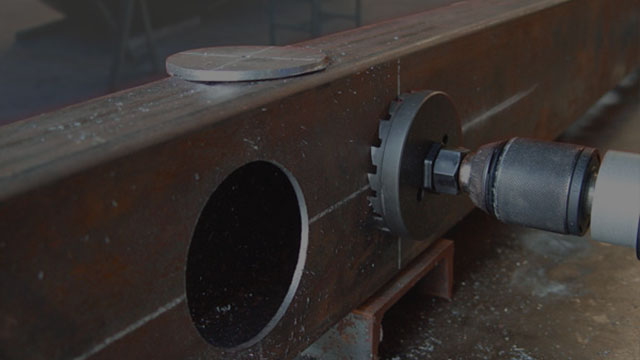
Speed should match diameter and material. A larger Hole Saw usually needs slower speed than a small one. Metal needs more control than wood. Plastic may melt if speed is too high. Tile and masonry need the method specified for the saw type. Running too fast creates heat before chips can clear.
Feed pressure should be steady. Too much pressure can overload the teeth and cause grabbing. Too little pressure can make the teeth rub and polish instead of cut. The right feel is a steady cutting action with chips, dust, or shavings leaving the kerf.
If the saw stops advancing, do not simply push harder. Pull back, clear chips, check the teeth, and let the cut cool if needed. A Hole Saw that is forced while packed with chips is likely to burn the edge or bind suddenly.
Clear Chips Before the Cup Packs Full
Chip clearing is central to clean hole saw work. The cup shape can hold chips and dust. As the kerf deepens, material has less room to escape. Packed chips create friction against the saw body and teeth. That friction creates heat, which can burn wood, dull metal teeth, melt plastic, or discolor the workpiece.
Use a pecking rhythm. Cut a short distance, withdraw the saw while maintaining control, clear chips, and continue. For thick material, remove the plug when it becomes tight. Some jobs benefit from drilling a relief hole inside the waste area so chips can escape. In metal, suitable cutting fluid can reduce heat and help the teeth cut cleanly.
The broader 홀쏘 cutting method depends on clearing the ring-shaped kerf. If the kerf fills with waste, even a sharp saw begins to act like a hot rubbing cup.
Prevent Burning in Wood and Plastic
Burning in wood usually comes from high speed, dull teeth, packed chips, or too little feed. The teeth spin against the same fibers without clearing material. The rim darkens, smoke appears, and the plug may become hard to remove. A sharp Hole Saw, slower speed, steady feed, and frequent clearing usually solve the problem.
Plastic has a different problem. Heat can soften or melt the cut edge. Melted material can grab the teeth and then harden around the saw. Use a sharp saw, controlled speed, and pauses. Support the panel so it does not vibrate. If the cut begins to smear, stop before the material bonds to the teeth.
Backing material can help both wood and plastic. It supports the exit side and reduces tear-out. When the appearance of both sides matters, cut partway from one side, then finish from the other side using the pilot hole as a guide.
Prevent Binding in Metal
Metal binding often comes from speed, feed, tooth selection, chip packing, or breakthrough. A Hole Saw in metal should not be treated like a wood saw. Use a saw rated for the material, keep the speed controlled, and use suitable fluid when needed. Let the teeth cut; do not grind the rim into the workpiece.
Thin sheet can grab at breakthrough. Clamp the sheet, support it from behind, and reduce pressure near the exit. Thick metal needs chip clearing and heat control. Stainless steel needs special care because rubbing can damage the edge and make the surface harder to cut.
If the tool jerks, stop. A binding Hole Saw can twist the drill, damage the arbor, or distort the workpiece. Reset the cut before continuing.
Check the Arbor, Pilot Bit, and Plug
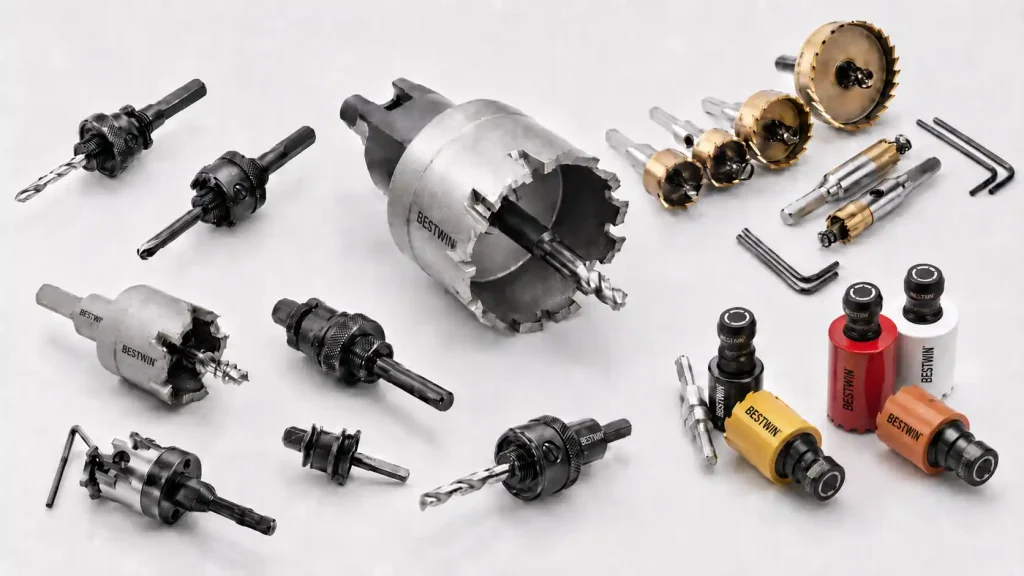
The arbor holds the saw and pilot bit together. If it is loose, worn, or poorly assembled, the saw can wobble. Wobble makes the kerf wider, heats one side, and increases the chance of binding. Check the arbor before the cut. Make sure the saw is seated, the pilot bit is straight, and any locking pins or threads are secure.
The pilot bit should extend enough to guide the saw but not so much that it bends easily. If the pilot bit is dull, it may wander or overheat before the cup starts cutting. If it is bent, the Hole Saw will not run true.
The plug can also cause trouble. In wood, the plug may swell or stick inside the cup. In metal, a slug can be hot and sharp. Remove plugs safely and keep the cup clear before starting the next hole. A saw packed with old waste will heat faster on the next cut.
Depth is part of this check. Some cuts are shallow enough that the plug releases easily, while thick material may trap the plug before the teeth have finished the hole. If the cup depth is close to the material thickness, stop before the saw is fully buried and clear the waste. Do not use the arbor as a lever to pull a stuck plug from the workpiece. That can bend the pilot bit or distort the arbor threads. A clean plug release protects the Hole Saw and keeps the next cut from starting with hidden chips already packed inside the cup.
For repeated openings, make plug clearing a fixed step between cuts instead of a reaction after the tool starts to drag.
Support the Workpiece
A workpiece that moves will make the Hole Saw move. Vibration causes chatter. Chatter damages teeth, roughens the edge, and can make the saw grab. Clamp the workpiece whenever possible. Support thin sheet, plastic panels, and boards near the cut. For pipe or round stock, use a fixture or V-block.
Installed panels need extra caution. Check for hidden wires, pipes, fasteners, or empty space behind the surface. A Hole Saw can grab when it breaks through into an unsupported area. Reduce pressure near the exit and keep the tool square.
If the cut is near an edge, support becomes even more important. The saw may pull toward the weaker side. A guide or backing plate can keep the hole round and reduce the chance of binding.
Troubleshooting Common Hole Saw Problems
When a cut goes wrong, the symptom usually points to the cause. Use the pattern instead of guessing.
| Symptom | 가능한 원인 | What to change |
| Smoke in wood | Speed too high, dull teeth, packed chips | Slow down, clear chips, use a sharp Hole Saw |
| Saw locks in the kerf | Tilt, chip packing, too much pressure | Keep square, clear waste, reduce feed |
| Rough or oversized hole | Wobble, loose arbor, wandering pilot | Tighten arbor, guide pilot, stabilize tool |
| Teeth dull quickly in metal | Wrong saw type, high heat, no fluid | Match saw to metal and control heat |
| Plug stuck in cup | Deep cut, soft material, no clearing | Stop and remove plug before continuing |
| Exit side tears out | No backing support, too much pressure | Use backing board and ease through |
This table also helps when several people share tools. If the same Hole Saw keeps causing the same problem, the issue may be technique, not the saw alone.
When to Replace a Worn Hole Saw
A worn Hole Saw wastes time and raises risk. Missing teeth, rounded edges, cracked welds, bent cups, damaged threads, and repeated overheating are signs to stop using it. A saw that has lost its cutting edge will create more heat, which makes the next failure more likely.
Some dulling is gradual. The saw still cuts, but it needs more pressure. That extra pressure causes binding. If a saw used to cut cleanly and now smokes or grabs under the same conditions, inspect it before blaming the material.
Store hole saws so teeth do not strike each other. Keep arbors and pilot bits with the correct saw sizes. A clean, organized kit makes it easier to choose the right tool instead of forcing a worn one through another opening.
베스트윈 제품이 자연스럽게 어울리는 곳
Different hole saw problems call for different tool choices. TCT hole saws may fit some metal-cutting tasks. Bi-metal kits can help with common installation sizes. Diamond styles suit certain tile or masonry work. Arbors and pilot bits matter because they control the center and keep the cup running true.
베스트윈 supplies hole saws, TCT hole saws, bi-metal hole saw kits, diamond hole saws, and related arbors for workshop and installation use. A Hole Saw should be selected around the material, diameter, depth, tool power, and finish requirement so the operator can cut cleanly without turning the job into a binding or burning problem.
최종 요약
A Hole Saw binds or burns when the cut stops clearing itself. The causes are usually practical: wrong saw type, high speed, weak pilot control, tilted drilling, packed chips, poor support, or a loose arbor. Clean cutting depends on choosing the right saw, starting accurately, keeping the drill square, clearing waste, and reducing heat before the teeth are damaged.
The best cut feels controlled from start to finish. When the tool begins to smoke, chatter, or grab, stop and correct the setup. A good Hole Saw lasts longer and makes cleaner openings when the operator gives the teeth room to cut instead of forcing the cup through heat and packed chips.










 English
  العربية
  Français
  Português
  Português do Brasil
  Italiano
  简体中文
简体中文  繁體中文
繁體中文  日本語
日本語  한국어
한국어  Deutsch
  Español
  Slovenčina
  ไทย
ไทย  Türkçe