

Quick Answer
One hole saw can cover some wood, plastic, and metal jobs when its material rating allows them, but a toothed cutter is not a universal choice for tile. An M42 bi-metal hole saw is a practical starting point for mixed installation work involving timber panels, plastic components, and suitable sheet metal. Ceramic, porcelain, stone, and drillable glass call for a compatible diamond cutting product. Stainless steel can require a more specific metal-cutting option, including a suitable carbide-tipped cutter.
At Bestwin, we manufacture and supply these different product families for contractors, workshops, distributors, and OEM tool ranges. The useful choice begins with the finished opening, the material, and the installation conditions at that location. A cabinet cable passage, a metal service-panel opening, and a pipe opening through tile can share a diameter while needing different cutting edges, connections, and working methods.
Common Installation Jobs Need Different Cutting Edges
A fit-out crew may move from a timber cabinet to a metal cover and then to a tiled wall during the same project. Each opening has a straightforward purpose: pass a cable, accommodate a fitting, or leave space around a service pipe. The tools can look similar in the case, yet their suitability changes as soon as the surface material changes. A hole saw chosen only by diameter leaves that important difference unresolved.
For wood and wood-based panels, the main concern is usually a controlled circular opening with an edge that the finished fitting can cover. In sheet metal, secure engagement and a manageable burr become more important. With tile and stone, damage to the visible surface can make an otherwise correctly sized opening unusable. These are different finished results, rather than three versions of an identical cutting task.
Our hole saw range includes bi-metal, HSS, carbide-tipped, and diamond directions. Keeping those families distinct makes a mixed-material assortment useful. The purpose of the assortment is to give each common installation task a suitable cutter, rather than encourage the same hole saw to travel through every material on site.
Table 1. Common Installation Tasks and Product Directions
| Installation task | Product direction | Result that matters |
|---|---|---|
| Cable or pipe opening in timber and MDF panels | Wood-rated toothed or bi-metal hole saw | Fitting clearance and controlled breakout |
| Service opening in suitable sheet metal | Metal-rated M42 bi-metal or HSS cutter | Stable round opening and manageable burr |
| Repeated openings in harder stainless panels | Specifically suitable carbide-tipped or metal-cutting product | Material compatibility and consistent edge condition |
| Pipe or fixture opening in ceramic, porcelain, or stone | Diamond cutter rated for the actual surface | Intact visible edge and suitable fitting coverage |
| Opening through different surface and backing layers | Separate compatible cutters where necessary | Correct opening through the full build-up |
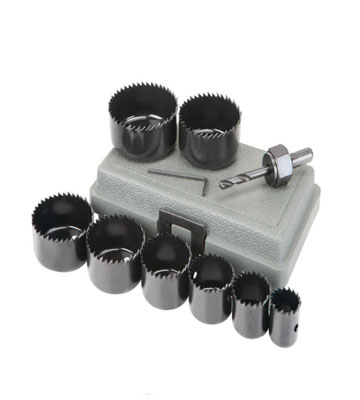
Woodwork Openings Start With the Installed Fitting
Cabinet panels, furniture components, and timber linings regularly need larger circular passages. A cable grommet has to sit in its opening, a pipe needs enough room to pass, and a decorative trim must cover the finished edge. These familiar jobs are where a wood-rated hole saw becomes more useful than enlarging a small drilled hole by repeated passes. The hole saw creates the perimeter while leaving a removable central plug.
The fitting provides the first meaningful size reference. A cable passage is not sized simply from the cable bundle if a grommet will occupy the panel. Likewise, the outside diameter of a pipe does not automatically include a sleeve or finishing ring. The opening belongs to the complete installed arrangement. Checking the fitting against a sample panel makes the relationship visible before several finished components are cut.
Solid timber, plywood, and MDF also present different edge expectations. A concealed passage in a utility panel may tolerate a rougher exit than a visible furniture surface. A suitable toothed hole saw, sound support, and a backed-up exit help protect the latter. A sharp hole saw cannot compensate for a thin panel that moves during the cut, so the actual support condition remains part of the product application.
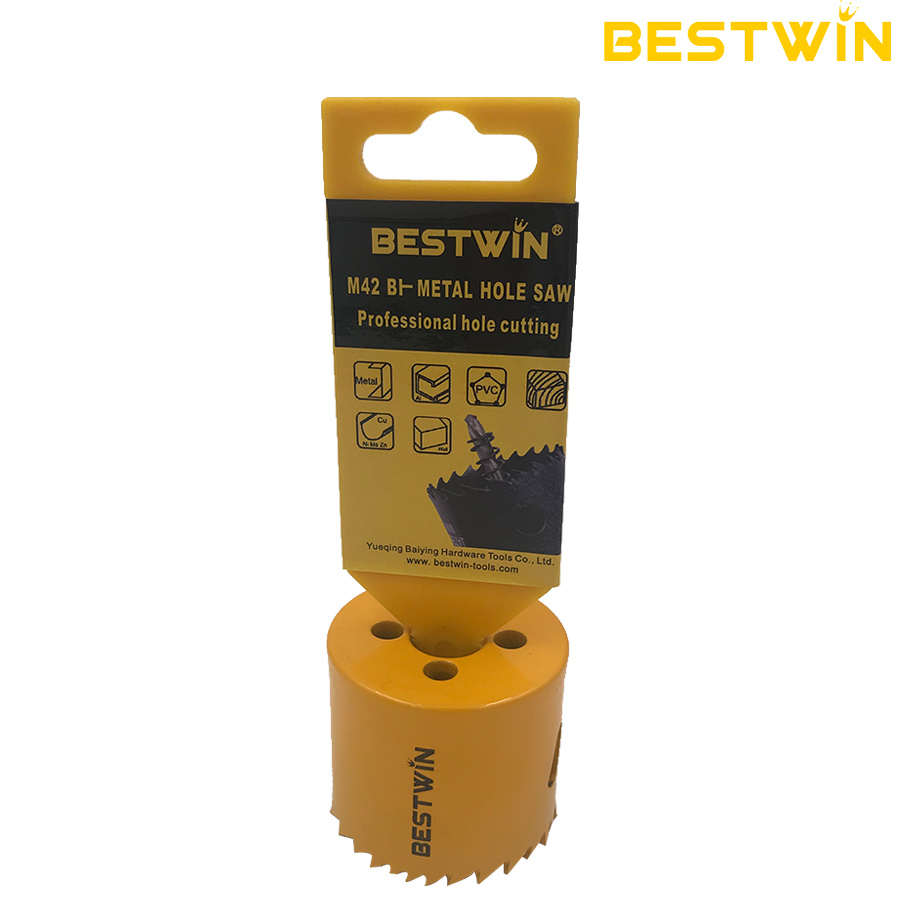
Our M42 bi-metal product family includes a version for wood, iron sheet, pipe, and plastic. That makes it a useful option for installations that combine cabinet panels with suitable service materials. Its suitability for one timber task does not establish unlimited cutting depth or compatibility with every composite. Laminated surfaces and abrasive boards still need attention to the particular cutter rating and the finish required.
For a workshop producing several cabinet variants, a small group of regularly used diameters is often more practical than a large case with many rarely used sizes. Replacement cups for the busy openings keep the assortment useful. The hole saw remains an installation tool with a clear job: leave a circular passage that accepts the intended component without unnecessary damage to the surrounding panel.
Metal Panel Openings Need a Metal-Rated Cup
Sheet-metal covers, fabricated panels, and service plates bring a different set of demands. A hole saw can produce openings for cable protection, pipe passages, and mounted accessories, but the cut must leave enough sound material for the final fitting. A thin cover that flexes during cutting may produce an irregular opening even when the selected diameter is correct. Stable support therefore matters as much as the nominal size printed on the hole saw.
M42 bi-metal is a useful direction for suitable mixed metal work. The product decision still depends on the actual metal, thickness, and pattern of use. Mild steel sheet and a harder stainless component are not interchangeable test pieces. An assortment intended mainly for occasional sheet-metal openings has a different duty from one used repeatedly on stainless service panels in a fabrication shop.
For harder metal tasks, our carbide-tipped product range provides another direction. The relevant comparison is whether the particular cutter suits that material and thickness under the intended machine conditions. Carbide-tipped does not mean that every hole saw is interchangeable, nor does it make a metal cutter suitable for ceramic simply because both materials feel hard. Tooth construction and product rating remain tied to the workpiece.
The finished edge also affects the value of the opening. A fitting may need to sit flat, a protective grommet may need a continuous edge, and an exposed panel may need an acceptable appearance. Burr removal can be a separate finishing operation. A hole saw is successful when it creates a usable opening that can be finished and assembled, rather than merely reaching the other side of the sheet.
At Bestwin, we supply HSS, M42 bi-metal, and carbide-tipped products within the wider range. This gives metalworking assortments room for both general service work and more specific material requirements. A clear distinction between those products helps preserve the purpose of each hole saw when several cutters share a storage case or are supplied under a distributor’s own product line.
Tile and Stone Call for a Different Product Family
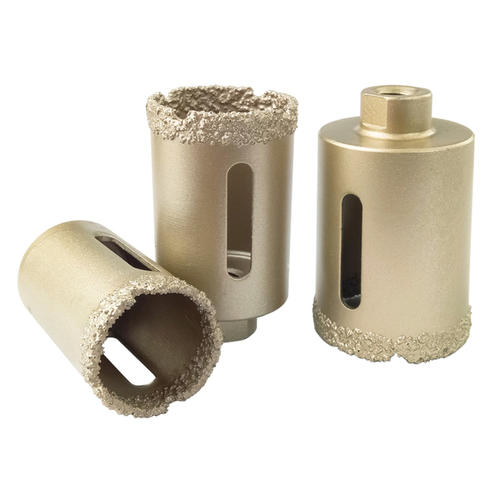
A tiled wall may need openings around pipework or plumbing fittings, while a stone surface may need a circular passage for a fixture. Here the visible finish is often the expensive part of the workpiece. A correctly positioned opening can still be unacceptable if its edge chips beyond the cover ring. A diamond hole saw rated for the actual surface is the appropriate product direction for these applications.
Diamond products remove material with an abrasive cutting rim rather than the conventional saw teeth used on a bi-metal hole saw. That difference explains why keeping the same diameter does not justify keeping the same cutter. Wood, steel, ceramic, porcelain, and natural stone do not present the same cutting conditions. A hole saw that handles timber and suitable sheet metal has not thereby gained a useful tile rating.
We supply brazed diamond products for stone, ceramic, and glass. Ceramic wall tile and dense porcelain nevertheless need the correct individual product and operating arrangement. The choice also has to fit the intended machine. A threaded diamond accessory and a conventional arbor-mounted hole saw can require different connections, so a matching diameter alone does not make them interchangeable in the drill.
Cooling arrangements belong to the selected tool. Some diamond products require water, while other products have a specified dry-use method. The working method cannot be inferred from a gold finish, a diamond label, or the appearance of another hole saw in the case. Use the conditions for the particular product and material, including the compatible equipment and any cooling requirements. A surface trial is useful where the visible edge will remain close to the fitting.
Glass adds an important boundary. A drillable glass component needs a suitable diamond product and a permitted fabrication method. Finished toughened glass is not an installation surface to drill on site. That limitation affects when the opening is made and which component is supplied, rather than simply which hole saw is fitted to a machine.
For finish-sensitive installation work, the useful product advantage is controlled access to the required diameter in the correct material family. The finished opening needs enough edge coverage for the fitting and a surface condition suited to the installation.
Mixed Layers Can Require More Than One Cutter
Several common openings pass through a decorative surface and a separate backing. Tile over board, a metal facing on a timber panel, and a plastic liner behind a cover are all examples where the first visible layer tells only part of the story. A hole saw that suits the facing may reach a second material with very different cutting requirements. The complete stack determines whether a continuous cut is appropriate.
A bathroom pipe passage illustrates the point. The tile-facing opening belongs to a diamond-rated operation. The backing may need a separate wood-rated or other compatible tool once the finished surface has been completed. Keeping the openings aligned is essential, but alignment does not require forcing the same cutter through both materials. The assembly needs a usable passage through the build-up and an acceptable visible entry.
A similar distinction applies to hole saw depth. The distance from the cutting edge to the useful inside space limits how much material the hole saw can accept. Extending the reach of the machine connection does not create extra room for the plug. A deeper panel therefore needs an appropriate cutter depth or a suitable staged method. The exact method depends on the accessible faces and the workpiece construction.
The basic hole saw form cuts a ring and leaves a core, which makes plug clearance part of its practical use. In layered work, the plug may include several materials. It has to be removed without damaging the hole saw or the finished edge. Easy access to the central plug can matter more on repeated panel openings than a minor difference in the initial cutting time.
We offer different cutting families because the useful combination changes with the build-up. As a hole saw manufacturer, we keep material boundaries clear across our range for mixed installation applications. The most versatile assortment may use several dedicated cups while retaining a simple, familiar set of finished opening sizes.
Diameter, Depth, and Connection Work Together
After the material family is settled, the hole saw still has to match the opening in three practical ways. Its diameter must suit the installed component, its usable depth must suit the workpiece, and its connection must suit the permitted machine arrangement. Solving only the first of these can leave a correctly sized hole saw that is awkward or unsuitable for the actual task.
A nominal pipe size is a particularly easy source of confusion. The pipe designation, its outside dimension, the sleeve, and the required installation clearance can all differ. A cable gland or furniture grommet has its own panel-opening requirement. The relevant size comes from the fitting detail. Copying a diameter from another project can create avoidable rework when the fitting changes.
Arbor compatibility matters whenever cups are exchanged. Thread, drive engagement, shank fit, and the intended cutter-size range determine whether an assembly works together. A quick-change feature reduces handling during compatible changeovers; it does not remove those compatibility requirements. A diamond accessory with a threaded machine connection may remain a separate system from the toothed cups elsewhere in the kit.
A pilot drill also has a defined purpose. It guides a compatible toothed assembly at the start, but its projection must suit the available clearance behind the panel. Some diamond arrangements use a separate guide rather than a conventional central pilot. Reusing an unsuitable pilot simply because it is already fitted can undermine an otherwise sensible cutter choice.
We supply arbor and accessory options alongside our cutting cups. That relationship is valuable for replacement stock: the spare hole saw needs to preserve the established connection, rather than merely match the worn hole saw’s diameter. Clear product identification makes the replacement usable when the original kit is already in service.
A Useful Assortment Follows the Work
A mixed installation kit benefits from a clear application split. Timber and plastic passages can share suitable general-purpose toothed products. Common metal openings need their material-rated cups. Tile and stone work need compatible diamond products kept identifiable as a separate family. The case then follows real jobs rather than suggesting that one cutting edge covers everything inside a building.
Diameter choices can follow the fittings used repeatedly in that work. For a fit-out contractor, cabinet service passages and metal-panel entries may justify different sizes even when both use bi-metal products. A tile installer may need a smaller selection tied to pipe and fixture details. The useful measure is whether the kit covers actual openings, with room for the correct connection and replacement parts.
As a hole saw supplier, Bestwin offers OEM and ODM support for tool products, custom branding, and kit packaging. Our OEM range supports material-specific kit configurations and bulk supply. We supply an assortment whose identification distinguishes the material family and the relevant connection. These capabilities support distributor ranges and contractor kits without turning packaging into a substitute for product suitability. The contents still need to reflect the materials named on the assortment.
Replacement availability deserves attention because wear is rarely even across a case. A frequently used hole saw may need replenishment while the other diameters remain serviceable. Compatible pilots and arbors also have separate replacement value. Keeping them identifiable allows the useful parts of the kit to stay in service rather than treating one worn component as a reason to discard the full assortment.
Table 2. Practical Acceptance Checks for a Mixed-Material Assortment
| Check | Useful confirmation |
|---|---|
| Material coverage | Each cup has a defined role in wood, metal, or mineral-surface work |
| Fitting compatibility | The finished opening accepts the actual installed component |
| Cup depth | The cutting and plug space suits the real workpiece thickness |
| Connection | Cup, arbor or thread, guide, and machine form a compatible assembly |
| Surface finish | The visible edge remains within the fitting’s coverage and finish requirement |
| Replenishment | Busy sizes and compatible wear parts can be identified separately |
A Trial Opening Should Prove the Finished Result
A useful product trial follows the installation closely enough to reveal a mismatch. A hole saw that cuts a loose timber offcut has not demonstrated its result on a laminated cabinet panel. A cup tested on mild steel has not demonstrated its suitability for the intended stainless surface. Using a representative workpiece connects the product comparison to the opening that actually needs to be produced.
The fitting belongs in that trial. Its body has to pass, its flange or ring has to cover the edge, and its seating surface has to remain usable. For a cable grommet, that may mean checking retention in the panel. For a pipe finish ring, it may mean checking coverage around the visible opening. These are installation results, and they can reveal problems that a quick diameter measurement misses.
Repeated work also benefits from observing more than the first hole. Plug removal, changing between diameters, and the condition of subsequent openings affect the usefulness of the assortment. There is no meaningful universal holes-per-cup promise across wood, steel, and tile. Comparing the right product on the actual material gives a more relevant basis for stocking or specifying the range.
Our hole saw offering supports that material-led approach through separate cutting families and accessory options. For manufacturers assembling installation kits or distributors maintaining repeat stock, the aim is a range that continues to create usable openings after its most frequently used components are replaced.
Frequently Asked Questions
Can a bi-metal hole saw cut both wood and metal?
Yes, when the particular product is rated for both materials. Our M42 bi-metal range includes a version for wood, iron sheet, pipe, and plastic. The actual metal, thickness, cutting depth, and machine arrangement still define the application. That cross-material use does not extend automatically to tile or stone.
Is a carbide-tipped metal cutter also suitable for porcelain?
A carbide label alone does not establish porcelain suitability. A metal-cutting cup has a different intended job from a diamond product for a hard tiled surface. Use the individual product’s material rating. A mixed kit can carry both families in the same diameter when the installation needs them.
Can the same cup cut a tiled panel and its wooden backing?
That depends on the product and construction, but separate suitable cutters are often the practical direction. The visible tile and the backing place different demands on the cutting edge. The finished passage needs alignment through both layers, suitable depth, and an entry that the final fitting can cover.
Does a quick-change arbor fit every cutter?
No. A quick-change system works with its compatible cups and connections. Threaded diamond accessories may need a different machine arrangement, while conventional toothed cups still need the correct thread, drive engagement, and shank. Connection compatibility remains part of the product choice when a worn cutter is replaced.
What makes a smaller kit useful for regular installation work?
A focused selection covers the fittings used frequently, includes the right material families, and allows busy sizes to be replaced separately. A large number of diameters adds little when the needed tile cutter, compatible arbor, or correct panel-opening size is absent. Application coverage matters more than case size.
Match the Cutter to the Surface and the Opening
One cup can serve several suitable materials, but wood, metal, and tile work do not call for one universal cutting edge. We manufacture and supply distinct Bestwin product families so the opening, surface, and connection can be matched together. A practical assortment keeps common installation sizes available while preserving the right cutter for each material.


 English
 العربية
 Français
 Português
 Português do Brasil
 Italiano
 简体中文
 繁體中文
 日本語
 한국어
 Deutsch
 Español
 Slovenčina
 ไทย
 Türkçe