

Quick Answer
A hole saw can make a useful opening for a plastic tank fitting when the cutter is rated for the actual plastic, the tank allows that modification, and the finished cutout matches the fitting specification. The required opening comes from the fitting, not simply the pipe’s nominal size. Wall shape, local thickness, access, and the sealing surface also matter. A round hole alone does not establish that a bulkhead fitting will seat or seal correctly.
At Bestwin, we manufacture and supply hole cutting tools, arbors, and installation accessories. Our bi-metal range includes products for specified plastics as well as other materials, with options for contractors, workshops, distributors, and OEM customers. We match our hole saw product families to the material and opening while the tank and fitting requirements define where and how an opening may be made.
Tank Connections Begin With a Fitting-Specific Opening
A plastic tank can need an opening for an inlet, outlet, overflow, or an approved additional connection. Similar work occurs on water-storage containers and service reservoirs, but the fittings do not all pass through the wall in the same way. Some use a through-wall body and nut; others have different mounting arrangements. The cutting product serves the opening required by that particular connection.
A suitable hole saw removes a ring around a core and can be practical for a larger circular cutout. Its usefulness depends on a material match and a manageable cutting setup. Plastic is a broad material description: a product that works in one polymer or wall form does not automatically cover every moulded tank, layered wall, or reinforced shell.
The ordinary application is a permitted fitting opening in a known tank construction. It is not an invitation to modify an unidentified vessel or a container that previously held hazardous material. The tank manufacturer determines whether a proposed connection and location are appropriate. That decision precedes the cutting operation and keeps the accessory’s role clear.
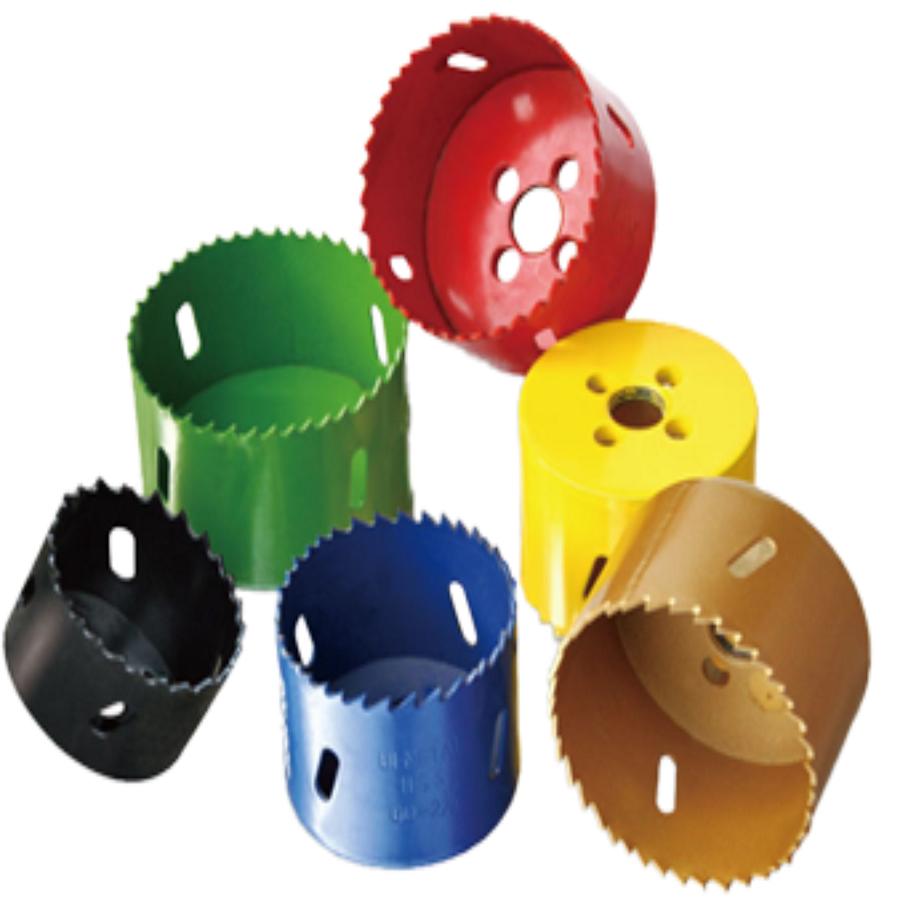
Our range provides cutting cups and compatible accessories for installation work involving several materials. For plastic tanks, the useful product question is narrower: which rated cup and connection can produce the required opening in the actual wall? This keeps the hole saw central without turning tool selection into a complete tank or plumbing system design exercise.
Table 1. Tank Fitting Openings and Product Considerations
| Application detail | Why it affects the cutting product | What defines the finished requirement |
|---|---|---|
| Inlet or outlet fitting | The fitting body needs a particular cutout | Fitting manufacturer’s opening dimension |
| Overflow connection | Position and fitting clearance matter | Tank and fitting installation details |
| Flat wall area approved for a fitting | Provides a more predictable supporting surface | Permitted mounting location and seating area |
| Curved or locally thickened wall | Changes initial contact and usable depth needs | Actual wall shape and thickness |
| Replacement in an existing opening | The pilot may lack starting material | Approved guided enlargement method |
Match the Cutout to the Complete Fitting
The pipe size is not necessarily the hole size. A through-wall fitting can have a body, thread, flange, sealing element, and retaining nut with different dimensions. The hole saw therefore follows the specified cutout rather than a convenient pipe label. A small dimensional assumption can leave the body unable to pass or leave less useful material around the opening than intended.
The outer seating area matters as much as passage through the wall. The fitting needs the surface arrangement specified by its manufacturer. A hole saw can make a circular opening, but it cannot flatten an unsuitable wall area or provide support for a flange where the tank shape prevents proper seating. Product matching includes that distinction before the diameter is selected.
A fitting may also need room inside the tank. A retaining nut or backing part can require access through a lid or another opening. Cutting the correct diameter does not help if the internal component cannot be placed and tightened as specified. The complete connection should fit the available space without using a larger cutout as a substitute for a workable mounting arrangement.
The useful sample check pairs the actual fitting with representative wall material. It confirms that the body passes, the surrounding edge is suitable, and the components can sit in their intended arrangement. This connects the hole saw decision to a real result. A visually tidy hole in a thin flat scrap sheet may not represent a thick or curved tank wall.
Plastic Type and Wall Construction Set the Product Direction
Moulded tanks can use different polymers and manufacturing methods. Their walls can vary in thickness around ribs, corners, and connection areas. A cutter described as suitable for plastic still needs to be appropriate for that particular material and section. The broad label is a starting point for a product family, not a universal cutting approval.
Our M42 bi-metal range includes products with stated uses in plastic, wood, and specified metals. For an approved plastic tank opening, a compatible toothed cup can provide a practical direction when its rating and geometry fit the wall. The relevant hole saw size, usable cutting depth, and connection remain separate checks within that material match.
Reinforced plastic, layered construction, and a double-wall design are different applications from an ordinary single polymer wall. Fibres, gaps, or multiple skins can change how the cutter contacts and clears the material. A product choice for a simple wall should not be extended to those constructions without suitable product and vessel information.
Material response also affects the edge. Some plastics can flex, soften, or produce stringy cuttings under an unsuitable setup. The point for product selection is to choose a cutting tool and operating arrangement that suit the material, with space for removed material to clear. Applying more force is not a reliable solution to an incorrect cup or an unstable wall.
Wall Shape and Support Affect the Start
A flat panel and a curved tank side meet a circular cup differently. On a curved surface, the pilot and cutting rim do not necessarily reach their working positions together. A large hole saw can begin with only part of its circumference in contact. This makes stable location and suitable support important to the cutting arrangement, particularly where the wall can move.
The tank’s permitted fitting area may already account for local shape and support. Ribs, moulded pads, corners, and seams should not be treated as interchangeable locations simply because there is space to place the hole saw cup. The tank details determine the suitable region. Moving the opening to make the drill easier to hold can change the fitting’s seating condition.
Support needs to suit the wall and avoid damaging the container. The aim is a controlled opening in the approved location, not simply restraining the tank until a cutter can be forced through it. A product-appropriate guided setup can be important where the surface offers poor starting control. The particular method follows the tool and tank requirements.
Access for the drill body is another practical condition. Handles, the tank rim, a nearby wall, or an installed pipe can limit the approach. The hole saw and arbor need enough reach while the machine remains manageable. A long assembly can clear one obstruction and create another if it leaves insufficient room to maintain the intended drilling direction.
Cup Depth and Plug Clearance Need Separate Attention
The depth available inside a cutting cup limits the core it can hold during the operation. Overall arbor length does not create extra internal capacity. A tank wall may look thin from the outside while an approved mounting pad or local reinforcement is much thicker. Usable cutting depth belongs with the actual wall section, not an estimate based on the rest of the container.
A core can also occupy the hole saw after the opening is complete. Leaving it in place can interfere with a later cut or with proper inspection of the tool. Access slots and the product’s plug-removal arrangement affect convenience when several openings are made. Clearing the tool follows the product instructions with the equipment stopped and isolated as needed for handling.
The wall can flex as the remaining material becomes thin near completion. The relevant product decision includes a cutting form and support arrangement appropriate to that behaviour. A nominally correct diameter does not by itself guarantee a clean exit edge. Representative testing is useful because it shows how the actual wall and tool interact through the complete cut.
A hole saw cuts around a circular core rather than removing the entire opening as loose material. In a tank application, that core and any swarf must be accounted for before the container returns to service. The opening operation is only one stage; inspection and cleaning follow the tank’s intended use and the fitting requirements.
Arbor, Pilot, and Machine Form One Tool Assembly
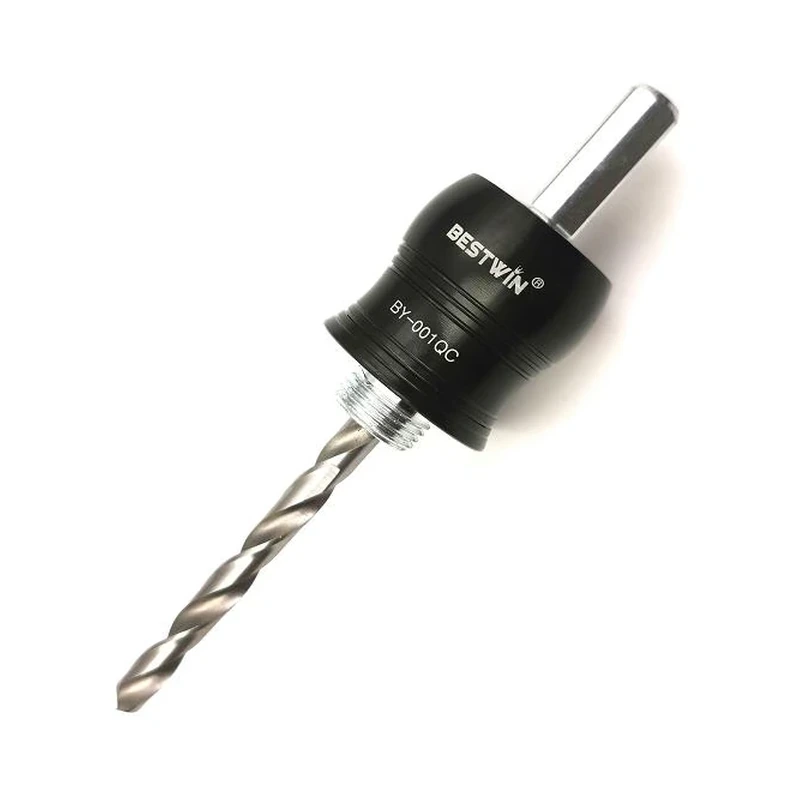
The arbor carries the hole saw cup and connects it to the machine. The cup’s thread or mounting system must match the arbor’s drive arrangement, and the pilot must suit the particular assembly. A connection that appears to engage is not sufficient evidence of compatibility. The complete hole saw assembly needs to be secure and appropriate for the selected product.
Our quick-change arbor range provides options for compatible cups where diameter changes are part of normal work. That can be useful in a workshop serving more than one fitting family. A conventional compatible connection can also suit repeated work with one size. The choice concerns the actual products and operating pattern rather than a universal requirement for one connection style.
The pilot reaches into the work before the hole saw cup completes the opening. Its projection and the space behind the wall therefore matter. An internal baffle, fitting, or nearby component can affect clearance. More projection is not automatically more control, and a longer arbor does not remove the need to understand what lies beyond the cutting surface.
An existing opening changes the starting condition. If the material where the pilot would normally begin is absent, ordinary centering may no longer be available. Enlargement needs a suitable supported and guided method. Selecting a larger hole saw without addressing that missing starting support can produce an inaccurate opening or damage the surrounding seating area.
Judge the Hole by the Fitting and the Wall
After cutting, inspect the opening and surrounding surface rather than relying only on the hole saw cup’s size marking. The fitting body needs to pass as specified, and the wall around the cut needs to remain suitable for the connection. Uncontrolled cracks, notches, distortion, or an oversized cutout can change the result even if the fitting can be inserted.
Edge finishing may be necessary where the product and fitting instructions allow it. The purpose is to leave the required condition without changing the cutout beyond its specified size. A hole saw does not establish sealing performance on its own. The fitting, sealing elements, tank surface, and installation all contribute to the completed connection.
A trial fitting is useful before repeated work, but it should follow the intended installation arrangement. The body, gasket or seal, nut, and backing components need their proper positions. An opening that seems acceptable with only one component present can prove unsuitable once the complete fitting is assembled against the actual wall.
Replace a hole saw that no longer produces a suitable opening or has damaged teeth, an unstable connection, or another condition that affects the cut. A replacement helps future work; it does not automatically make an already damaged tank opening usable. The existing wall and fitting location still need their own assessment.
Useful Assortments Follow Fitting Families
A tank-fitting kit is more useful when its cup sizes relate to the connectors being installed. The assortment can distinguish common inlets, outlets, and overflows while keeping their compatible arbors and pilots identifiable. A larger case with unrelated diameters does not necessarily improve coverage. The important sizes are the ones tied to actual permitted connections.
As a hole saw manufacturer, Bestwin supports OEM and ODM configurations, brand identification, packaging, and bulk supply. Our cutting tools and accessory range allow product-focused assortments for plastic and other stated materials. We keep material suitability and connection compatibility central to these configurations rather than treating every toothed cup as a general-purpose tank tool.
Our cordless drill range includes the MT6013B for suitable drilling and driving duties. It offers a related machine option within our tool range, while the selected cup still requires a compatible chuck, operating arrangement, and capacity. Machine convenience does not remove the material or vessel limits that apply to the opening.
For a hole saw supplier, separate replacement identification matters because one fitting size can dominate the work. The high-use cup may wear while other sizes remain serviceable. Compatible replacement cups and pilots preserve the useful assortment. This is a practical supply consideration for workshops and installation customers who need the same opening on repeated jobs.

Keep Replacement Work Separate From New Openings
A new fitting hole in a permitted tank location has a different starting condition from repairing an existing connection. Previous damage, a changed fitting size, or a distorted wall can affect the available seating area. The hole saw can serve a properly specified new cutout, but it cannot restore missing wall material or recover a sealing surface that no longer meets the fitting requirement.
For replacement work, the useful decision may be a compatible fitting for the existing preparation or another permitted tank arrangement. The cutting product follows that decision. This keeps a larger cup from becoming the default answer whenever a fitting does not fit and helps preserve the distinction between a cutting operation and a suitable completed connection.
Frequently Asked Questions
Can a metal-cutting cup also cut a plastic tank?
Only where the particular product is rated for the actual plastic and wall form. Some bi-metal products have stated plastic applications, but a metal rating alone does not establish that use. The tank must also permit the modification. Match the hole saw to the material and the specified fitting opening rather than relying on a broad family name.
Is the pipe’s nominal size the required cutout?
Not necessarily. A fitting can have a threaded body or other mounting section larger than the connected pipe. Its instructions define the opening. Using the pipe label as the hole saw cup size can leave a cutout that does not fit. The complete through-wall component is the relevant reference for the drilling product.
Can a larger cup correct a fitting that does not sit flat?
A larger opening does not flatten the wall or provide the surface the fitting requires. The approved location, local curvature, and seating area need to be suitable. If they are not, the connection needs a different permitted arrangement. Removing more wall material can reduce the useful seating area rather than solve the underlying mismatch.
Does a clean opening guarantee a leak-free connection?
No. The hole is one part of the assembly. The fitting, seal, wall condition, and installation requirements all matter. The hole saw should produce the required cutout, but it cannot establish the completed tank’s sealing performance. Inspection and any required checks follow the tank and fitting instructions.
What makes a sample cut useful?
Use representative wall material and the actual fitting with the intended cup, arbor, and machine arrangement. Check passage, edge condition, and component seating. This provides information about the real connection. A sample in an unrelated flat sheet may miss the thickness, curvature, or flexibility that governs the actual tank opening.
Make the Opening Serve the Connection
A suitable hole saw can support clean, repeatable plastic tank openings when the material, cutout, depth, and tool connection are matched. The tank and fitting requirements still establish the permitted location and completed assembly. Our bi-metal products and compatible accessories support that practical cutting task without confusing the ability to make a hole with the suitability of the finished connection.


 English
 العربية
 Français
 Português
 Português do Brasil
 Italiano
 简体中文
 繁體中文
 日本語
 한국어
 Deutsch
 Español
 Slovenčina
 ไทย
 Türkçe